Russia has an interest in derailing the TRIPP transport project, Iran is sending conflicting signals and the coming months could be decisive for opening transport links between Azerbaijan and Armenia, experts from both countries said.
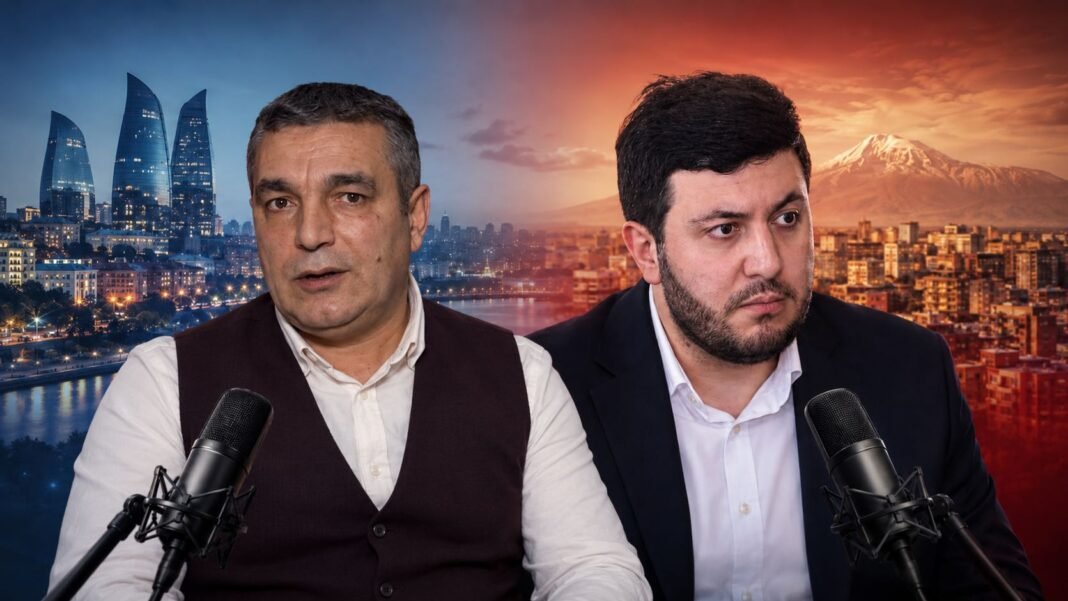
Azerbaijani economist and political analyst Natig Jafarli and Armenian expert Areg Kochinyan discussed the project on PressClubs TV’s “Events of the Week” program, available here, Vesti Baku reported.
The discussion focused on TRIPP, which envisions transport links through Armenian territory with U.S. participation. The experts assessed the positions of Moscow and Tehran, possible construction timelines and the effect of Armenia’s domestic politics on peace with Azerbaijan.
Why Russia Has an Interest in TRIPP’s Failure
Kochinyan said Russia views TRIPP as a threat to its geopolitical interests.
The project would create alternative east-west transport routes, reduce regional dependence on Russia and strengthen the U.S. presence in the South Caucasus, he said.
“Russia will try in every possible way to undermine this project,” Kochinyan said.
He described the coming months as the most vulnerable period, while the project is still being prepared and technical decisions remain under negotiation.
Once the transport route is operating, it would be considerably harder to stop, Kochinyan said, pointing to the Baku-Tbilisi-Ceyhan oil pipeline, which has continued to function despite geopolitical disputes.
He said the central question is whether Baku and Yerevan can overcome mutual distrust and move the joint infrastructure project into implementation.
When TRIPP Construction Could Begin
Armenia, Azerbaijan and the United States have begun work through two technical groups focused on transport infrastructure and electricity transmission, the experts said.
Kochinyan said the participants must agree on the precise railway alignments, technical specifications for border crossings and the sequence of construction.
The railway route through Meghri is especially important, although energy infrastructure would not necessarily follow the same route, he said.
Kochinyan forecast that construction could begin in March or April 2027. No official start date has been announced.
Jafarli also said movement into a practical phase could give the peace process additional momentum.
He expects transport links to open gradually rather than through a single route. He cited the Gazakh-Ijevan line and other potential connections between Azerbaijan and Armenia.
Jafarli said the main technical and financial questions surrounding TRIPP were close to resolution, although some details still required agreement.
Why Iran Is Speaking With Different Voices
Iran’s position prompted a separate debate.
Kochinyan pointed to a contradiction between statements by Iranian officials expressing readiness to cooperate with Yerevan and sharp criticism of TRIPP by Ali Akbar Velayati.
After Velayati’s critical remarks, Iran’s vice president arrived in Armenia on a visit that had not been announced in advance.
Kochinyan suggested that Velayati’s rhetoric may not have been coordinated with Iran’s government and that Tehran was now trying to ease the resulting tensions.
Jafarli attributed Iran’s inconsistent policy to rivalry among competing centers of influence.
The absence of a unified position makes negotiations with Tehran more difficult for both Armenia and Azerbaijan, he said.
Jafarli also urged caution over reports of increased Iranian military activity near the Azerbaijani border. He noted that claims circulated in the media had not received official confirmation and may have originated with Iranian opposition sources abroad.
Erdoğan’s Visit and Azerbaijan-Türkiye Tensions
The experts also discussed recent tensions between Baku and Ankara following political disagreements and public statements in Türkiye.
Jafarli said President Recep Tayyip Erdoğan’s visit to Azerbaijan signaled de-escalation.
Political, economic and social ties between the two countries are so deep that a serious rupture is almost impossible to imagine, he said.
At the same time, the recent dispute showed how Türkiye’s domestic political processes can directly affect relations with Azerbaijan.
Jafarli pointed to Turkish nationalist parties that opposed attempts to interfere in Azerbaijan’s internal affairs.
He said the phrase “one nation, two states” did not erase differences between the two societies. Baku and Ankara need a deeper understanding of each other’s political and social attitudes, particularly on religious and ideological questions, he said.
Armenian-Turkish Border Could Open Before a Peace Treaty
Kochinyan said negotiations between Yerevan and Baku had accelerated in recent weeks, creating conditions for regional transport links to reopen.
He argued that a peace agreement, diplomatic relations and border openings did not necessarily have to occur at the same time.
Under one scenario, transport routes among Armenia, Azerbaijan and Türkiye could begin operating before all political agreements were formally completed.
What the Democratic Victory Could Mean for TRIPP
The discussion also addressed the U.S. midterm elections, after which the Democratic Party gained control of both chambers of Congress.
Jafarli said the results mainly reflected dissatisfaction among American voters with President Donald Trump’s administration.
He does not expect a fundamental change in U.S. interests in the South Caucasus, saying Democrats and Republicans do not have a basic disagreement over the importance of developing regional transport links.
Kochinyan took a similar view. He said U.S. participation in TRIPP was gradually becoming a long-term commitment rather than a policy tied solely to the current administration.
American interest in Trans-Caspian transport links developed long before Trump returned to the White House, he said.
Kochinyan also called for deeper Armenian ties with Washington and said a possible next step could be U.S. designation of Armenia as a major non-NATO ally. That was his proposal, not an announced decision by the U.S. government.
Armenia’s Constitution as a New Risk
A political fight over a new Armenian constitution could become a serious domestic obstacle to normalization, Kochinyan said.
Opposition forces have begun organizing against constitutional reform even though a draft had not been published at the time of the discussion, he said.
Kochinyan called the opposition’s actions premature and linked resistance to the reform partly to Russian interests.
He said the constitutional process could become one of Moscow’s last major tools of political influence inside Armenia.
Jafarli said Azerbaijan should keep as much distance as possible from Armenia’s domestic constitutional debate.
The content of a future constitution is Armenia’s internal matter, he said, and harsh statements from Baku could strengthen opponents of reform.
Jafarli said conclusions should be drawn only after the draft is published.
If the document includes significant changes affecting citizens’ rights, government administration and social protections, Prime Minister Nikol Pashinyan’s government could shift public debate from foreign-policy disputes toward domestic reform, he said.
TRIPP Moves From Political Statements to Technical Work
The technical groups discussed by the experts have received official confirmation.
A joint statement by Azerbaijan, Armenia and the United States published Nov. 6-7 said the parties had begun trilateral planning in two areas: transport and electricity transmission.
The document said the work should prepare the transition to later stages of TRIPP implementation, including connections with existing regional infrastructure.
The central question is therefore no longer only whether the project has political support, but whether the three countries can agree on its practical implementation.
The experts from Baku and Yerevan largely agreed that TRIPP was likely to proceed despite possible resistance from Moscow, conflicting rhetoric from Tehran and domestic political complications.
Their predictions about construction dates and Russia’s possible actions remain expert assessments. No official construction start date has been announced.