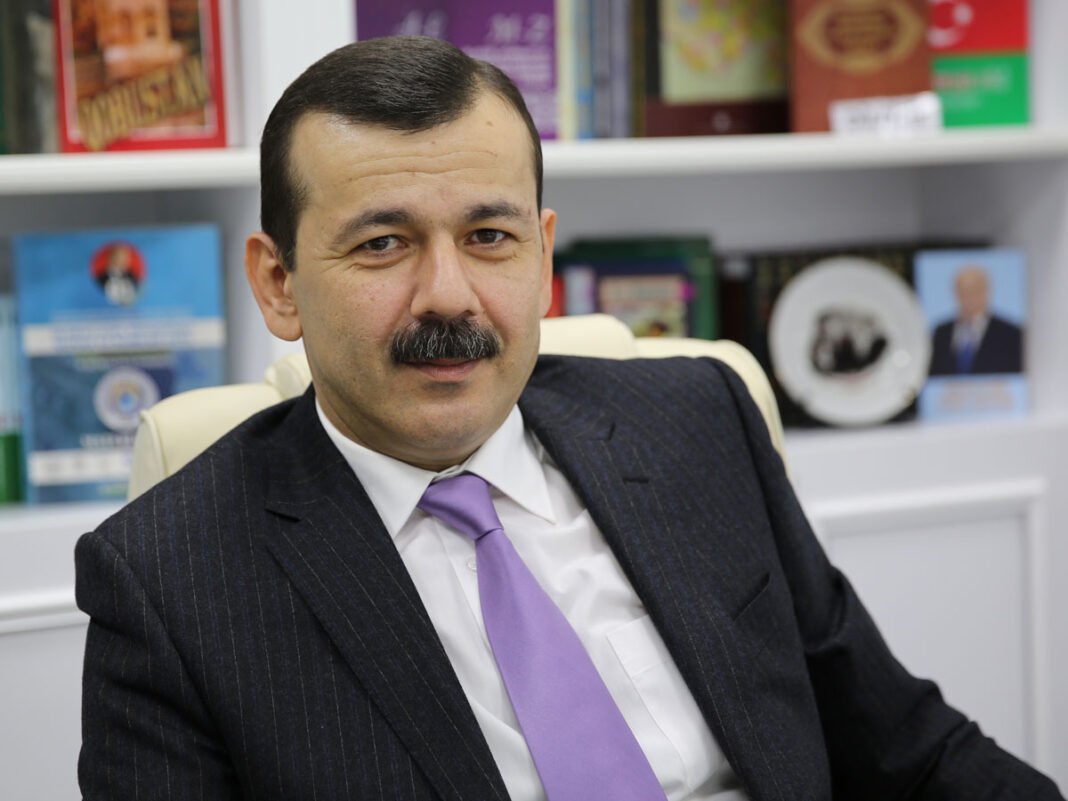
Azerbaijan’s strategic alliance with Türkiye can withstand recent tensions, but Ankara must respect Baku’s independent foreign and domestic policy, political commentator Murad Sadaddinov said.
Sadaddinov discussed Azerbaijan-Türkiye relations, the consequences of the Democratic Party’s U.S. election victory, the possibility of renewed strikes on Iran and prospects for peace with Armenia in an interview with the YouTube channel “A Modern Conversation With Rasim Babayev,” Vesti Baku reported.
He said the formula “one nation, two states” reflects historical and cultural closeness but also requires each side to recognize the other’s right to act according to its own national interests.
Azerbaijan and Türkiye cannot have completely identical foreign-policy priorities, he said. Developments in the Mediterranean are especially important for Ankara, while Baku focuses heavily on security in the Caspian region and relations with neighboring states.
Against that background, Sadaddinov described attempts by some Turkish political circles to influence Azerbaijani decisions as misguided.
He called Turkish President Recep Tayyip Erdoğan’s planned Victory Day visit to Azerbaijan an important signal. After the interview was recorded, Erdoğan arrived in Azerbaijan on Nov. 8, met President Ilham Aliyev in Shusha and concluded his visit the same day.
Democratic Victory in the United States
Sadaddinov also addressed the U.S. midterm elections, after which the Democratic Party gained control of both chambers of Congress.
He said the new political balance would strengthen congressional oversight of President Donald Trump’s administration but was unlikely to cause a fundamental shift in U.S. policy toward the South Caucasus.
Democrats would gain greater influence over federal spending, investigations into the administration and some presidential appointments, he said.
Sadaddinov does not expect Congress to halt U.S.-backed initiatives connected with the Azerbaijan-Armenia peace process, including the TRIPP transport project.
He said Armenian lobbying groups could become more active in Congress on issues including Section 907, Washington’s relations with Baku and Armenian prisoners. However, he argued that such initiatives were unlikely to substantially alter the regional balance.
Sadaddinov also suggested that lobbying on behalf of Ruben Vardanyan could intensify. That was his assessment, not an established finding about the financing of any specific politician.
Risk of New U.S. Strikes on Iran
One of Sadaddinov’s more concerning forecasts involved a possible new phase of military confrontation between the United States and Iran.
He said the end of the midterm elections could give the Trump administration more political room for military action.
The commentator linked possible escalation to the U.S. military presence in the Middle East and what he described as the deployment of additional air-defense and aviation-support assets.
Sadaddinov said the previous negotiating process may have been used by Washington to prepare for another phase of confrontation.
His forecast does not mean that a decision to carry out new strikes has been made. Claims in the interview about U.S. military redeployments require independent confirmation.
Peace With Armenia and the Turkish Border
Turning to Azerbaijan-Armenia normalization, Sadaddinov questioned whether Türkiye should fully open its border with Armenia before Baku and Yerevan complete their peace process.
He pointed to Azerbaijan’s position that Armenia should amend its constitution and remove provisions Baku views as a basis for territorial claims.
Sadaddinov argued that premature normalization between Ankara and Yerevan could weaken incentives for Armenia’s government to carry out constitutional reform.
He also connected the issue to historical disputes between Türkiye and Armenia, including recognition of the Armenian genocide.
His reading of Armenia’s constitutional provisions and their potential effect on Turkish-Armenian relations is a political interpretation.
Azerbaijani Gas as an Alternative to Russian Supplies
Sadaddinov also discussed relations between Russia and Armenia. He said Moscow was trying to use Yerevan’s economic dependence, particularly in the energy sector, to limit closer ties with the European Union.
He argued that Armenia’s government was gradually preparing to reduce its dependence on Russian gas, even if doing so led to higher costs.
Sadaddinov named Azerbaijan as a potential alternative supplier, saying the countries’ proximity and Azerbaijan’s developed gas-transport infrastructure could create conditions for future energy cooperation.
Such a scenario would require the necessary political agreements before it could be put into practice.
Turkic Cooperation, India and Lessons From the Karabakh War
Sadaddinov said diplomatic engagement between Azerbaijan and India could gradually reduce tensions, including disagreements linked to India’s military and technical cooperation with Armenia.
He expressed hope that closer relations would encourage New Delhi to adopt a more balanced approach to South Caucasus issues.
The interview also addressed Kazakh President Kassym-Jomart Tokayev’s remarks about Russia and the Organization of Turkic States.
Sadaddinov said Moscow was seeking to use Armenia’s economic dependence to constrain Yerevan’s European ambitions. He also said Turkish states should prioritize economic integration, transport links and regional cooperation rather than trying prematurely to turn the Organization of Turkic States into a military-political bloc.
A substantial part of the interview marked the sixth anniversary of Azerbaijan’s victory in the 44-day war.
Sadaddinov said Azerbaijan’s growing independence was changing its relations with outside powers. In his view, Baku is no longer as dependent on decisions by major international actors and can more actively defend its interests in regional and global affairs.