AZE.US
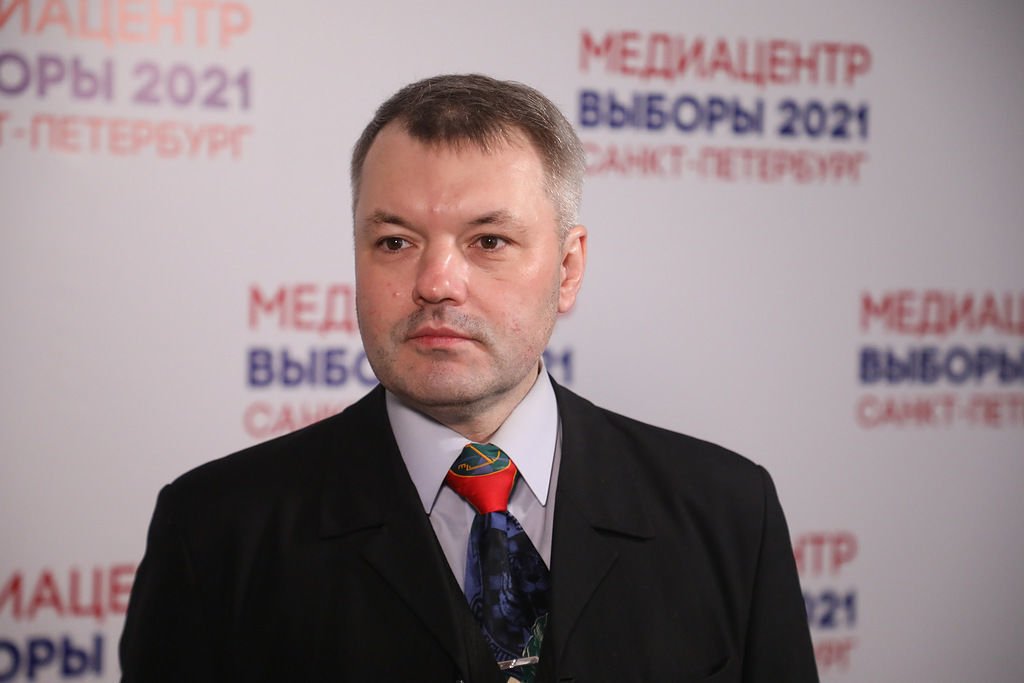
A lack of new decisions in the Azerbaijan-Armenia peace process could revive mutual accusations and deepen the current pause, Russian political analyst Dmitry Solonnikov said.
Solonnikov, director of the Institute of Contemporary State Development, said the next political opening depends largely on Armenia’s constitutional process. He also said transport projects could create opportunities for cooperation involving Azerbaijan, Russia and Iran.
He made the comments in a YouTube discussion with analyst Marina Lagutina on the Vestnik Kavkaza channel about the week’s developments in the South Caucasus.
A Pause in the Peace Process
Solonnikov linked the cooling between Baku and Yerevan to the absence of a mutually agreed next step. He supported Azerbaijan’s position that Armenia must remove constitutional language Baku interprets as a territorial claim before a final peace agreement can be signed.
Azerbaijani President Ilham Aliyev has repeatedly presented constitutional change as a condition for formally concluding the peace agreement. Armenia’s prime minister, Nikol Pashinyan, has said his government plans to propose a new constitution in a referendum in 2027. Those positions are documented in official Azerbaijani statements and a 2025 interview published by the Armenian government.
Solonnikov described 2027 as a possible point for renewed momentum if the referendum is held and the constitutional dispute is resolved. Otherwise, he said, the cooling could continue.
“If we are not moving up, then we are moving down,” Solonnikov said, arguing that a prolonged wait shifts attention from practical results back to blame and unresolved grievances.
Russia’s Possible Role
Solonnikov said Moscow could contribute to practical work, including the use of archival maps in border delimitation and the development of transport links. Russia, he said, is interested in routes connecting Armenia and Azerbaijan with the Russian market.
Opening regional communications could expand trade and create incentives for cooperation, he said. However, any Russian role would depend on the consent of both Baku and Yerevan, and Moscow’s proposals alone would not mean the parties were ready to accept it as a mediator.
Solonnikov described Russia-Azerbaijan relations as being in a recovery phase and said political contacts should be supplemented by economic projects, cultural exchanges, education programs and broader social ties.
Armenia’s Balancing Act
On Russia-Armenia relations, Solonnikov pointed to what he described as a contradiction between Yerevan’s effort to expand ties with the West and its continued economic benefits from cooperation with Moscow, including access to the Russian market and energy supplies.
He said further political distancing could lead to those terms being reconsidered, but presented that as a risk rather than a decision. No confirmed new gas tariffs or timetable for changes were cited in the interview.
Iran and the North-South Route
Solonnikov said Iran’s interest in regional cooperation is driven largely by transport links and the need to diversify foreign economic ties. He highlighted two land branches of the International North-South Transport Corridor: a western route through Russia, Azerbaijan and Iran, and an eastern route through Russia, Kazakhstan, Turkmenistan and Iran.
Expansion of the western route could strengthen Azerbaijan’s transit role, while northern connections could provide Iran with additional economic and diplomatic options, he said.
Caspian Sea Risks
Solonnikov also pointed to the falling level of the Caspian Sea as a threat to regional transport plans. Lower water levels can affect ports, access channels and ships with deeper drafts, potentially requiring new infrastructure and rail connections.
He said the prospects for wider regional cooperation therefore depend on political decisions between Baku and Yerevan, agreements on transport routes and the ability of Caspian states to keep their infrastructure operating. Economic interest alone, he added, does not remove those obstacles.
AZE.US