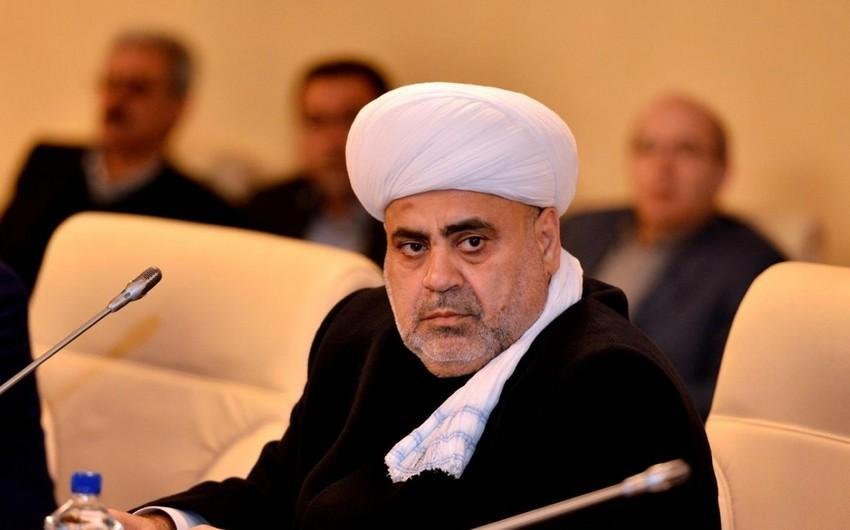
Allahshukur Pashazade, chairman of the Caucasus Muslims Office, said the dispute over Azerbaijan’s school-uniform rules was being used to provoke confrontation between religious believers and the state, though he did not identify who he believed was organizing the effort.
In an interview with Real TV, the sheikh-ul-Islam rejected attempts to portray the government’s uniform decision as a “hijab ban.” He said the word “hijab” does not appear in the document, which concerns clothing requirements in state schools.
Pashazade said the religious framing had been introduced deliberately to draw reactions outside Azerbaijan and give the dispute international resonance.
“They call it hijab in order to influence other states, people and Muslims. That name was chosen deliberately,” he said.
He accused unspecified individuals of exploiting citizens’ religious feelings to turn them against the state. Pashazade did not name any country, organization or person he believed was behind the effort.
“It is as though they want to create a chasm between the state and believers. There is no such chasm. They want to create something that does not exist,” he said.
The religious leader said Azerbaijan’s believers support the country’s statehood and urged them to remain calm. He expressed confidence that disputed issues would be resolved with the participation of education authorities and school administrators.
Pashazade also criticized those who are now raising the hijab issue but, in his view, failed to respond when mosques were damaged in Azerbaijani territories during the conflict with Armenia. He said he had sent photographs showing animals being kept in the Agdam mosque to officials in several countries, including Muslim-majority states.
“So many mosques were destroyed, but they provided no help. Today, by raising the hijab issue, they want to provoke a protest against the state,” he said.
He also opposed using the names of fallen service members or their families in the school-uniform confrontation. Pashazade said it was unacceptable to turn a discussion about religious practice into a political struggle against the state system.
His central argument was that the Caucasus Muslims Office supports the state’s position and rejects attempts to mobilize believers against it. The question of whom he was accusing of orchestrating the confrontation remained unanswered in the remarks reported by Modern.az.
Source: Vesti Baku