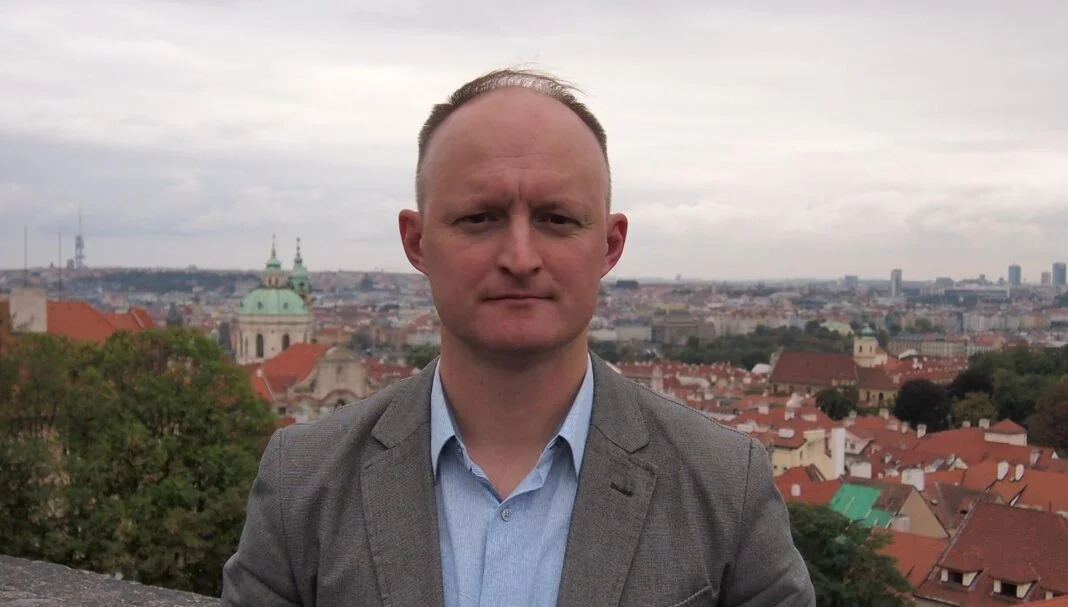
The consequences of Azerbaijan’s victory in the 44-day war extended far beyond Karabakh, reshaping the political balance across the South Caucasus, Ukrainian political analyst Volodymyr Kopchak said.
Kopchak told the Novosti Kavkaza program that Russia has gradually lost much of its former leverage, Türkiye has strengthened its regional position and Baku has gained greater freedom to make strategic decisions.
Moscow Expected a Different Outcome
Kopchak said he believes Moscow initially expected Azerbaijan to achieve limited territorial gains before the fighting was halted through Russian mediation. Under that scenario, Russia could have fixed a new line of contact and retained influence over the conflict through a peacekeeping force.
Azerbaijan’s military advance was much more successful than Russian officials had anticipated, in his assessment, allowing Baku to enter later negotiations from a far stronger position. Kopchak described Moscow’s main miscalculation as underestimating both Azerbaijan’s military capabilities and its leadership’s determination to end the previous status quo.
His description of Russia’s original calculations is an analytical judgment, not an independently established fact.
Türkiye and Israel Changed the Character of the War
Kopchak said Azerbaijan’s military cooperation with Türkiye and Israel mattered not simply because of the quantity of weapons supplied, but because of the quality of the technology, specialist training and the integration of different systems into a single operational structure.
The 2020 war demonstrated the combined use of drones, intelligence, precision strikes, artillery and mobile units. Kopchak cautioned against reducing Azerbaijan’s victory to Turkish Bayraktar TB2 drones alone, emphasizing the role of Azerbaijani troops, commanders and coordination among branches of the armed forces.
In his view, technological preparation, operational organization and troop motivation gave Azerbaijan its advantage. He also argued that Türkiye helped keep the fighting within the conflict zone, reducing the risk of a direct clash with Russia or the involvement of other states.
Why Peacekeepers Did Not Preserve Moscow’s Influence
The deployment of Russian peacekeepers after the Nov. 10, 2020, trilateral statement initially maintained a direct Russian presence in Karabakh. Later developments showed the limits of that instrument, Kopchak said.
Azerbaijan established a border checkpoint on the Lachin road in April 2023, restored control over Karabakh in September 2023 and saw the Russian contingent withdraw ahead of schedule in 2024. Kopchak regards that withdrawal as the final end of the long-running Karabakh confrontation and evidence that Moscow could no longer determine events on the ground.
Baku’s Greater Strategic Autonomy
Kopchak said one of the most important changes has been Azerbaijan’s increased independence in defense and foreign policy. Before 2020, he said, purchases of advanced weapons from Türkiye and other partners were often weighed against possible Russian reactions.
Azerbaijan now develops military-technical cooperation with Türkiye, Israel and Pakistan without the same dependence on the Russian arms market. Kopchak cited the acquisition of Pakistani-Chinese JF-17 fighter aircraft and the continued expansion of drone capabilities as examples.
He said the shift reflects a broader political transformation in which Baku can set its own defense priorities.
Direct Dialogue Without Russian Mediation
Kopchak also linked the war’s aftermath to Azerbaijan and Armenia’s gradual move toward direct negotiations. In his assessment, the earlier model in which major issues passed through Moscow no longer fits the regional balance.
He said transport projects should remain viable regardless of political changes in Washington, including the TRIPP project for developing a route through Armenian territory. Azerbaijan and Armenia, he argued, need a durable cooperation mechanism that does not depend on who leads the United States.
Kopchak’s central conclusion was that the 44-day war began a wider regional transformation: Azerbaijan restored its territorial integrity, Türkiye consolidated its role as Baku’s regional ally, Russia lost many of its mechanisms of influence and conditions emerged for direct Azerbaijani-Armenian dialogue.
Source: Vesti Baku