By the Vesti Baku Editorial Board
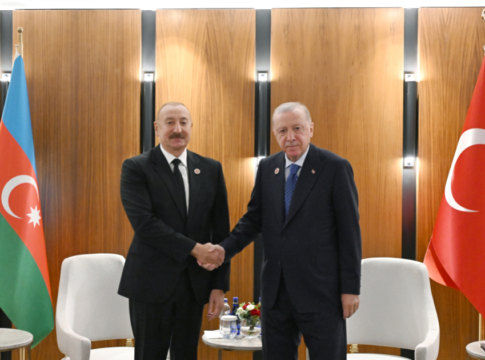
Recep Tayyip Erdogan will arrive in Azerbaijan on Nov. 8. The visit is now officially confirmed: at Ilham Aliyev’s invitation, the Turkish president will travel to Karabakh, where the two leaders will hold bilateral talks.
The announced agenda includes cooperation between the two countries and regional and global issues. After the events of recent weeks, however, the significance of the trip extends beyond ceremonial protocol. The allies must show that they understand the causes of the tension that has emerged.
The choice of date and location is natural. Victory Day and Karabakh are reminders of how important Turkey’s support was at a decisive moment for Azerbaijan. That is a strong foundation for the relationship. Yet even such a foundation requires respect for sovereignty - especially when the political views of allies diverge.
“Two States” Is an Obligation
The current dispute exposed a problem long concealed by familiar language about brotherhood. Some Turkish politicians treat closeness with Azerbaijan as a right to publicly instruct the country on how to organize its domestic affairs.
The immediate trigger was restrictions on religious clothing in Azerbaijani schools. Criticism from Turkish figures, including then-presidential adviser Oktay Saral, prompted a sharp reaction in Baku. Aliyev then did not attend the Organization of Turkic States summit in Ankara, despite Erdogan’s invitation. The disagreement took on an unmistakably political character.
Debate over school rules, children’s rights and freedom of religion is legitimate. Azerbaijani society itself has the right to debate those questions and demand explanations from its government. But a post in the administration of a foreign president does not confer special authority to determine how Azerbaijani schools should be run.
In the formula “one nation, two states,” the second half carries as much weight as the first. Each state has its own laws, institutions and responsibilities to its citizens. That principle cannot be invoked selectively.
A Personnel Decision Has Already Been Made
It would be wrong to say that Ankara has not responded at all. Saral left his post in late October. According to an account published by journalist Talat Atilla, Saral confirmed that he had departed on the president’s instructions and suggested that his statements about Azerbaijan were the reason. That suggestion, however, should be distinguished from an officially established reason for the personnel decision.
Erdogan also said he had spoken by telephone with Aliyev and sent Turkey’s foreign minister and intelligence chief to Azerbaijan. These were successive efforts to settle the disagreement. The visit should give those efforts political closure.
Still, the departure of one official does not by itself establish rules for the future. The broader question is whether the ideological preferences of individual Turkish officials may be turned into demands placed on an ally.
Responsibility Cannot Be Set Aside
In an interview with Prime TV, political commentator Elchin Alioglu linked the tension to the actions of Erdogan’s circle and some pro-government media outlets. His central point is clear: an alliance suffers when Azerbaijan is treated as a territory subject to another country’s political influence.
But an explanation centered on a “bad inner circle” is not enough. A country’s leader also bears responsibility for the political culture of his administration. When public attacks come from people whose influence derives from their proximity to the president, Baku can reasonably expect a clear signal from the president himself.
Erdogan’s visit can provide that signal. Its credibility will depend on whether a similar episode recurs in a month or six months.
Baku Also Needs Precise Answers
Azerbaijan has already defined the limits of what it considers acceptable. On Oct. 21, the Foreign Ministry declared a number of Turkish citizens undesirable persons, citing statements against Azerbaijan’s sovereignty and constitutional order as well as incitement to religious hatred and violence. That was the ministry’s official basis for the entry bans.
Sovereignty, however, should be defended with precision. Calls to impose visas on all Turkish citizens, or to transfer grievances against individual politicians to an entire people, would only widen the conflict. Such measures would affect families, students, business owners and others who had no role in the provocative statements.
Azerbaijan must also preserve its independence in foreign relations. Its ties with third countries should be determined by its own interests. Neither Ankara nor any other partner has a veto over Azerbaijani diplomacy.
On Nov. 8, the presidents will meet in a place that symbolizes the strength of their alliance. The best outcome would be a clear political understanding: support cannot become a right to direct an ally, and disagreements cannot be left to preachers and participants in media campaigns.
Azerbaijan has reasons to be grateful to Turkey. Turkey has reasons to value Azerbaijan. Mutual trust can be preserved on one condition: both states recognize the other’s right to make its own decisions.
This editorial was translated from Vesti Baku.