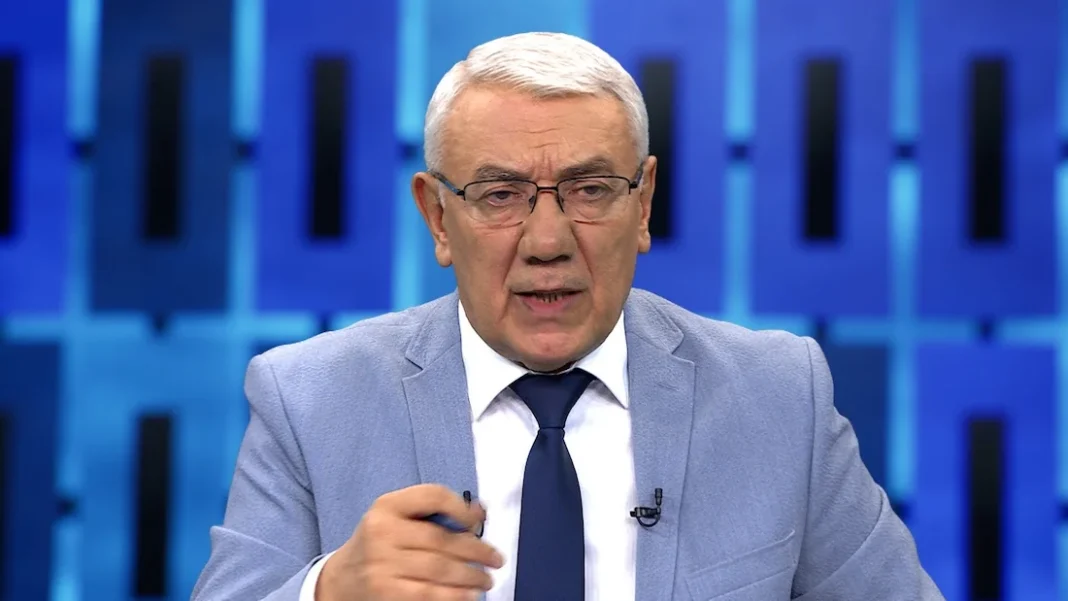
Recent tensions between Azerbaijan and Turkey reflected not only isolated political statements but also deeper differences in foreign-policy priorities, Azerbaijani political analyst Eldar Namazov said.
The dispute did not alter the countries’ strategic alliance, and reciprocal presidential visits helped settle the disagreement. Namazov warned, however, that developments involving Russia and Iran are creating new risks for the South Caucasus.
Namazov made the comments in a conversation with Georgian commentator Gela Vasadze on the “News of the Caucasus” YouTube channel, according to Vesti Baku.
The interview covered Baku-Ankara relations, President Ilham Aliyev’s meetings in Dublin, prospects for a peace agreement with Armenia and the effect of conflicts around the region on Azerbaijan’s security.
What Caused the Dispute With Turkey
Namazov said he had warned in March 2026 that Ankara could face serious disagreements with one of the Turkic states, most likely Azerbaijan or Kazakhstan.
He attributed the risk to changing foreign-policy priorities under Turkey’s governing Justice and Development Party.
In Namazov’s assessment, Ankara has placed greater emphasis on political Islam, confrontation with Israel and competition for influence in the Middle East. Those priorities have created friction with the interests of secular Turkic states, he said.
Public statements about religious policy and the wearing of hijabs in Azerbaijani schools became an especially sensitive issue for Baku. Namazov said some Turkish political figures failed to account for differences between the two countries’ domestic policies.
Despite the dispute, he said, Azerbaijan-Turkey relations retain enough resilience to overcome such disagreements.
Why the Erdoğan and Aliyev Visits Mattered
Namazov described President Recep Tayyip Erdoğan’s Nov. 8 visit to Azerbaijan and Aliyev’s subsequent trip to Antalya as confirmation that the tension had been resolved.
He said the response of political forces beyond the Turkish presidency was also important, pointing to support for Azerbaijan from Nationalist Movement Party leader Devlet Bahçeli and main opposition Republican People’s Party Chairman Özgür Özel.
That support showed that ties with Baku extend across both Turkey’s governing coalition and the opposition, Namazov said.
He described the episode as a reminder that allies must respect one another’s independent foreign-policy decisions.
Turkey cannot pursue its long-term interests in the Caucasus and Central Asia without cooperation with Azerbaijan, he said. For Baku, the strategic alliance with Ankara remains a central element of regional security.
Dublin Meetings and the Peace Process
Namazov also discussed Aliyev’s participation in the European Political Community summit in Dublin on Nov. 12.
One of the summit’s notable events was Aliyev’s meeting with Ukrainian President Volodymyr Zelensky. Namazov said Kyiv is interested in Azerbaijan’s experience rebuilding territories after conflict. The official account of the meeting also cited humanitarian assistance to Ukraine, deliveries of electrical equipment and prospects for broader economic relations.
Namazov said Azerbaijan’s cooperation with European partners is likely to expand primarily in energy, transport and the Middle Corridor. He suggested that the next European Political Community summit in Azerbaijan could provide a venue for discussing more concrete regional projects.
He emphasized cooperation among Azerbaijan, Georgia and Turkey, with Armenia potentially joining new transport links at a later stage.
Aliyev also met Armenian Prime Minister Nikol Pashinyan in Dublin. The leaders discussed the implementation of TRIPP, trade, transport connections and further steps in the peace process, according to the official statement.
A Third Negotiating Track With Armenia
Namazov said negotiations between Baku and Yerevan should not be limited to a peace treaty and transport projects. He proposed a separate track covering humanitarian questions, historical memory and cultural heritage.
His comments followed a dispute involving the Blue Mosque in Yerevan. Namazov criticized a decision to name a ceremonial hall at the mosque after Armenian poet Yeghishe Charents. He said the complex formed part of the heritage of Azerbaijanis who once lived in Yerevan and argued that its modern interpretation raised serious questions.
Armenian and Iranian officials have said the initiative is intended to honor Charents’ literary legacy and his interest in Iranian culture.
Namazov said such disagreements should be discussed separately rather than turned into an additional precondition for signing a peace agreement. Even after a political accord, disputes over historical heritage and mutual perceptions could complicate relations between the two societies, he said.
Russia and Iran Present Risks Under Different Scenarios
Namazov offered his most cautionary assessment when discussing the possible consequences of wars and political crises in Russia and Iran.
Azerbaijan must consider not only the risks created by stronger neighboring powers, he said, but also the consequences of their possible weakening.
If Russia restores its military and political capabilities, Moscow could try to expand its presence in the South Caucasus. Serious internal destabilization in Russia, however, would create a different set of regional dangers.
Namazov applied similar reasoning to Iran. A stronger hard-line camp in Tehran could increase pressure on neighboring states, he said, while a deep internal crisis could produce unpredictable consequences for border areas and regional security.
He called for stronger defense capacity and closer coordination among the South Caucasus states. The scenarios represent the analyst’s assessment, not a prediction that any one outcome is inevitable.
A More Independent South Caucasus
Namazov said Azerbaijan’s main task is to preserve an independent foreign policy while developing relations with Turkey, Europe and neighboring states.
The region is entering a period in which economic projects, security and historical disputes are increasingly intertwined, he said. Resolving one diplomatic crisis therefore does not eliminate longer-term risks.
Namazov said the Azerbaijan-Turkey alliance had survived its latest test, but the South Caucasus’ stability would depend on the region’s ability to prevent new conflicts, expand transport cooperation and address humanitarian disputes.