AZE.US
French media are using disputed historical narratives to encourage revanchist sentiment in Armenia and create new obstacles to peace in the South Caucasus, Azerbaijani historian Rizvan Huseynov said.
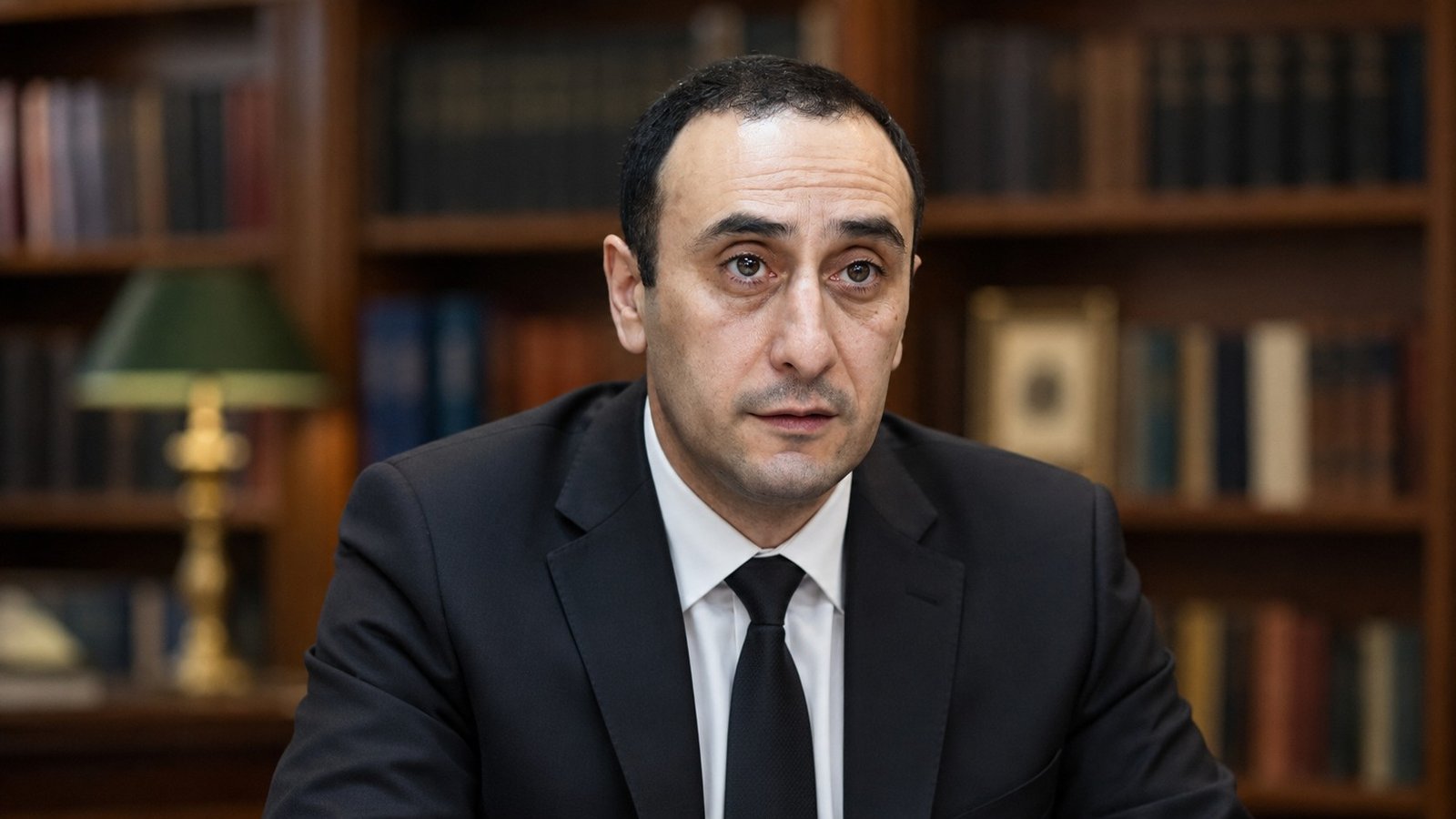
Huseynov, director of the Center for the History of the Caucasus and author of Azerbaijan and the Armenian Question in the Caucasus, made the remarks during an interview with CBC TV.
He was responding to a French television documentary that presented Karabakh as part of an ancient Armenian historical and cultural space.
According to Huseynov, the program offered only an Armenian-French interpretation of the region’s history and failed to include researchers representing an opposing view.
“France’s position is damaging France’s own interests in our region,” he said. “The situation within the French political and media establishment has apparently deteriorated to the point where they continue harming both their own interests and those of their partner, Armenia.”
Huseynov claimed that the documentary was intended to heighten tensions between Azerbaijan and Armenia rather than encourage an academic discussion.
He accused its authors of either treating Caucasian Albania as part of Armenian history or denying its significance as an independent state.
According to Huseynov, these interpretations reflect outdated political and academic narratives developed by some French circles in the late 19th and early 20th centuries.
He argued that archival documents and modern research show that Caucasian Albania existed for more than 1,000 years and that much of its history was connected with the territory of present-day Azerbaijan and the Caucasian, Turkic and Iranian-speaking peoples who lived there.
Huseynov said the French documentary presented areas north of the Kura River as Caucasian Albanian territory while portraying Karabakh, south of the river, as an ancient Armenian state and cultural space.
“The documentary’s conclusion is that Armenians supposedly lived in Karabakh from ancient times and were expelled by Azerbaijanis in 2023,” he said. “It then suggests that the issue of Armenian heritage and churches must be continually raised and kept relevant.”
In his view, such messaging encourages revanchist groups within Armenian society and could influence Armenia’s domestic politics.
“This is not simply a historical film,” Huseynov said. “It pursues political goals. It seeks to preserve and increase tension in Armenian-Azerbaijani relations, damage the peace process and obstruct transport, logistics and transit projects that will cross the region, including Armenia.”
He argued that such broadcasts conflict with the normalization agenda publicly supported by the Armenian government and international mediators.
According to Huseynov, certain political circles in France do not want the South Caucasus to become a common space of peace, cooperation and economic connectivity.
“They do not want Armenia to become a transit hub,” he said. “Historical narratives are being used to suggest that the legacy of the Crusades remains alive and that France will eventually help Armenia become a regional superpower.”
Huseynov said this approach prevents ordinary Armenians from accepting peaceful and neighborly relations with Azerbaijan and Turkey.
He also accused some European institutions of acting against Europe’s own economic, energy and security interests.
Huseynov noted that Azerbaijan plays a central role in the Middle Corridor, linking Central Asia with Europe, and supplies energy resources to eight European Union countries. He argued that certain EU institutions are influenced by narrow political and transnational interests that do not always correspond with the broader interests of Europe.
The historian also announced the publication of his book, A Brief History of Caucasian Albania, in Tirana.
The book was published in English and Albanian with support from the Azerbaijani Embassy in Albania and has been distributed to research centers, government institutions and bookstores.
Huseynov said presentations are being prepared and that the book could later be published in additional languages.
He called on Azerbaijan to do more to present its position on Caucasian Albanian history and the Christian heritage of the South Caucasus to European audiences.
Huseynov also alleged that the appearance of several Caucasian Albanian churches in Karabakh was altered during the period of Armenian control.
He cited the Gandzasar monastery complex as an example, claiming that later Armenian inscriptions were added to its walls and that parts of the facade were replaced over the past two centuries.
He argued that European researchers subsequently recorded those inscriptions and classified the entire complex as Armenian heritage because Armenian script was visible on the walls.
Huseynov compared this approach to attributing every medieval building containing Arabic inscriptions exclusively to Arabs, despite the widespread historical use of Arabic script by Azerbaijanis, Persians and other Muslim peoples.
He said Azerbaijan has documented what it considers the alteration and appropriation of Caucasian Albanian heritage through books, archival research and documentary films.
According to Huseynov, Azerbaijan is now restoring and protecting hundreds of Christian churches, monasteries and other cultural sites connected with Caucasian Albanian heritage.
He accused French researchers who support the Armenian historical narrative of ignoring Azerbaijan’s restoration work and the activities of the country’s Udi Albanian Christian community.
“France and those who share its position need to keep the conflict alive,” Huseynov said. “They want to throw ordinary Armenians back into that conflict. Nothing else interests them.”
AZE.US