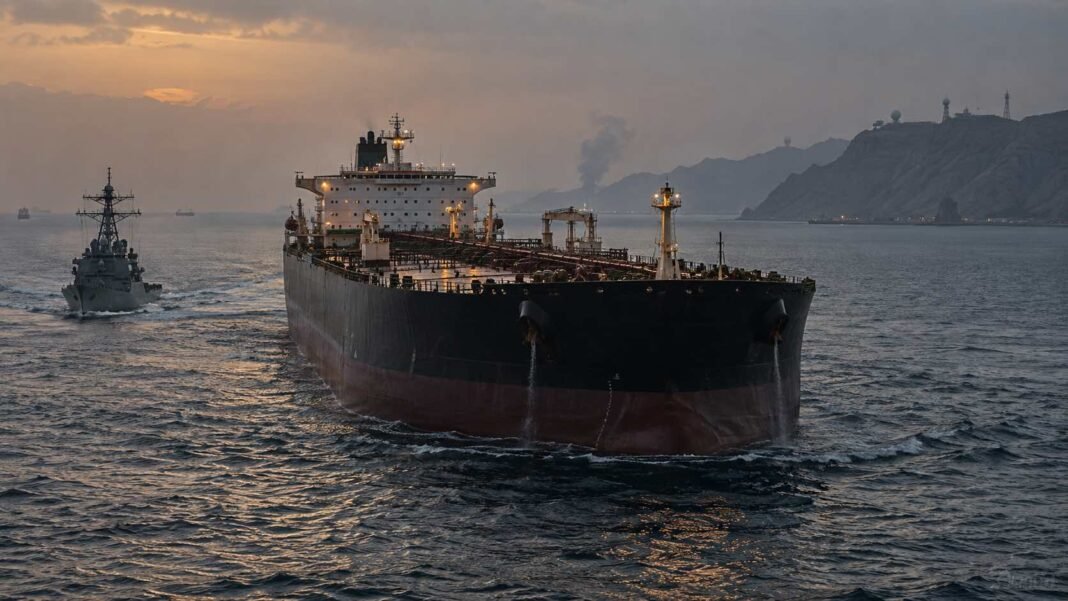
Commercial shipping through the Strait of Hormuz remains about 75% below the level recorded before the U.S.-Iran conflict, while vessels on the busiest southern route continue to face the risk of projectile attacks.
The assessment was released on Sunday, Sept. 27, by the United Kingdom Maritime Trade Operations, or UKMTO, according to Vesti Baku.
Tankers still account for most of the ships moving through the strait. UKMTO said 26 of the 43 projectile-related incident reports it had received since July 26 involved the southern route near Oman.
Iran’s authority overseeing the Strait of Hormuz has warned that vessels using routes it has not authorized could face serious restrictions. Tehran says charterers have in some cases pressured crews to use routes that Iranian authorities consider unacceptable.
Traffic Has Yet to Recover
The latest figures show that activity through one of the world’s most important energy corridors remains far below normal despite diplomatic efforts to halt the fighting.
Before the conflict began, an average of about 125 large commercial ships passed through the strait each day, including tankers, gas carriers, bulk carriers and container ships. On Sept. 21, only two commodity vessels crossed, according to Reuters.
The actual number of transits may have been higher because some crews turn off their Automatic Identification System transponders to reduce the risk of detection.
The Strait of Hormuz handled about one-fifth of the world’s daily crude-oil and liquefied-natural-gas supply before the war. Continued restrictions therefore raise risks for freight costs, marine insurance and the stability of global energy deliveries.