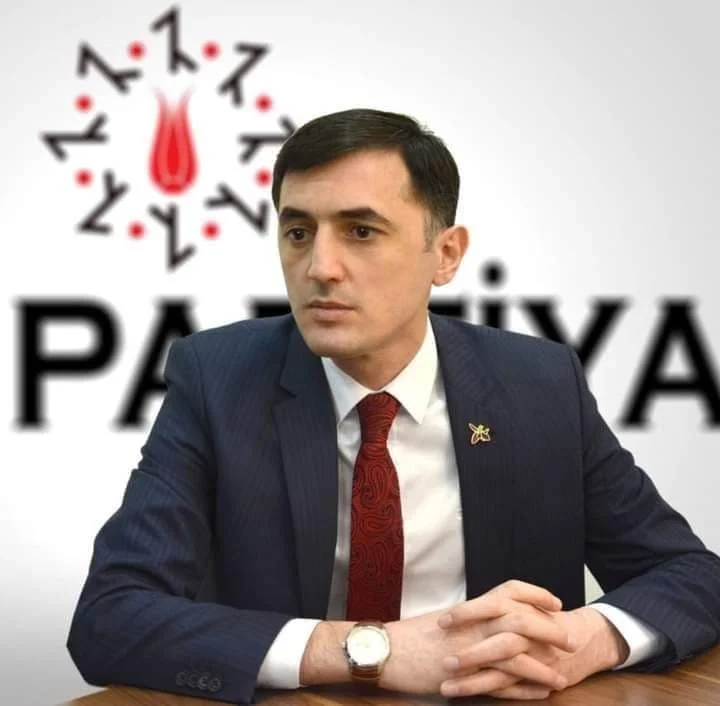
White Party chairman Tural Abbasly has called for work to separate Baku Metro’s Red and Green lines to be halted, arguing that the prolonged disruption imposed on passengers may outweigh the promised reduction in train intervals.
Abbasly said officials have not made a convincing public case for the project and are focusing too narrowly on shorter platform waiting times, according to Vesti Baku.
In a video appearance, the opposition politician argued that any time saved by more frequent trains could be offset by transfers between the separated lines and additional waits for connecting services.
“Am I supposed to endure 11 months of inconvenience so I can travel two minutes faster afterward?” Abbasly said, according to Vesti Baku. He called for a passenger survey to determine whether commuters believe the expected benefits justify the restrictions.
Metro Says Separation Is Needed
Abbasly’s assessment conflicts with Baku Metro’s explanation of the project. In an official notice published Aug. 4, the state-owned operator said separating the two lines is intended to eliminate their operational dependence, reduce station congestion, shorten headways and improve service stability.
The main construction phase began Aug. 15 and is expected to last about 10 to 11 months. Passenger service between the Nizami and 28 May stations is suspended during the work, while new 200-meter tunnels are built to connect the Jafar Jabbarli–Nizami section.
Under the temporary schedule, Red Line trains operate between Icherisheher and Ahmadli every 2 minutes and 30 seconds, while Green Line trains run between Darnagul and Nizami every 3 minutes and 30 seconds. The Jafar Jabbarli–Khatai shuttle retains a seven-minute interval.
Once the project is completed, the Red Line between Icherisheher and Hazi Aslanov and the Green Line between Darnagul and Khatai are expected to operate on independent infrastructure. Baku Metro says the current eight-minute wait on the Jafar Jabbarli–Khatai section will then be eliminated, while later infrastructure work could eventually cut headways on both lines to two minutes.
Wider Transport Disruption
Abbasly also criticized the overlap of metro construction with road and utility work across Baku. He said street closures are making conditions worse at a time when buses and other surface transport are needed to compensate for the disrupted metro connection.
He argued that extended works impose practical costs on residents through delays, extra spending and workplace problems, and suggested changing the start of the working day to reduce pressure on the transport system.
The politician also blamed dense development in central Baku for adding pressure to streets with limited capacity, citing the area around Sahil station. He urged officials to consider elevated rail and other above-ground options rather than treating underground construction as the only solution.
Abbasly said he was open to a proposed cable-car system but argued that fares would have to remain affordable if it is intended for daily commuting rather than tourism. The prices he mentioned were examples of what he considered affordable, not approved tariffs.
The dispute centers on whether the long-term operating gains promised by Baku Metro will compensate passengers for the immediate cost and disruption of rebuilding one of the capital’s busiest transport links.