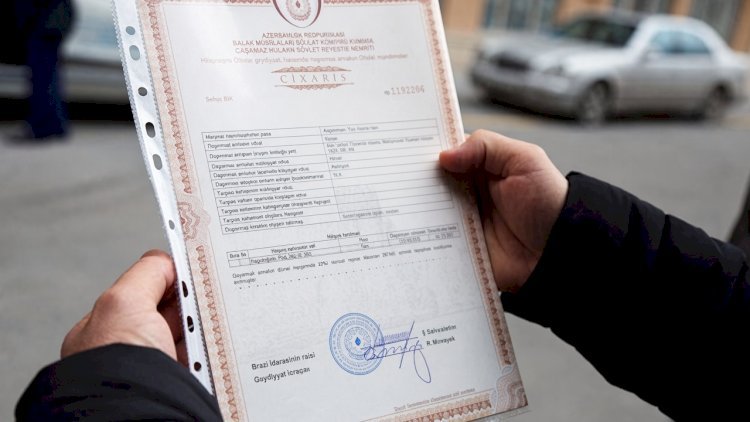
Homes built near pipelines, on unlawfully occupied land or on plots whose designated use does not allow residential construction may face serious obstacles when owners seek a property deed, known locally as a “kupcha.”
But the absence of documents does not automatically mean a home can never be registered. The outcome depends on the legal status of the land, the date of construction and whether the building complies with planning and construction rules, according to a Vesti Baku report citing Yeni Sabah.
Protected Infrastructure Zones
Some of the most significant restrictions apply to buildings near oil and gas pipelines, high-voltage power lines, railways, highways and other infrastructure. Owners need to determine whether a house falls inside a formally designated protection zone or right-of-way and what restrictions apply to that specific plot.
Merely being close to a road or power line does not by itself establish the building’s legal status. The boundary of the protected zone and the rules governing it must be checked.
Land Use and Unauthorized Construction
Holding a document for a land plot does not necessarily authorize every type of construction on it. If a plot is designated for agriculture, industry or another special purpose, a residential house must comply with the legally permitted use of the land.
Article 180 of Azerbaijan’s Civil Code defines unauthorized construction as a residential building or other property erected on land not allocated for that purpose, without required permits, or with substantial breaches of building and planning rules.
Garden houses, however, should not automatically be treated as illegal. Rights to such properties may be registered when the required legal grounds and documentation exist.
Unlawfully Occupied and Hazardous Land
A separate problem concerns homes built on state, municipal or privately owned plots occupied without legal authorization. Living in such a house does not replace evidence of a lawful right to use the land.
Registration may also be complicated for properties on landslide-prone or contaminated sites or in areas subject to environmental restrictions. In those cases, authorities must determine whether residential construction is permitted and whether the building is safe.
When a Separate Permit Is Not Required
Not every individual home requires a separate construction permit. Under Azerbaijan’s notification procedure, a house built on lawfully owned, leased or used land for the proper purpose may qualify if it has no more than three above-ground floors, is no higher than 12 meters and has spans no longer than six meters. The parameters are set out in official guidance from the State Committee on Urban Planning and Architecture.
For homes covered by that procedure, the absence of a separate permit is not enough on its own to declare the building illegal. Documentation requirements also differ depending on whether the house was built before or after January 1, 2013.
Prospective buyers of homes without a property deed should therefore examine two issues separately: the seller’s legal right to the land and the legal basis for registering the building itself. A promise that deeds will soon be issued to everyone is not a substitute for those checks.