AZE.US
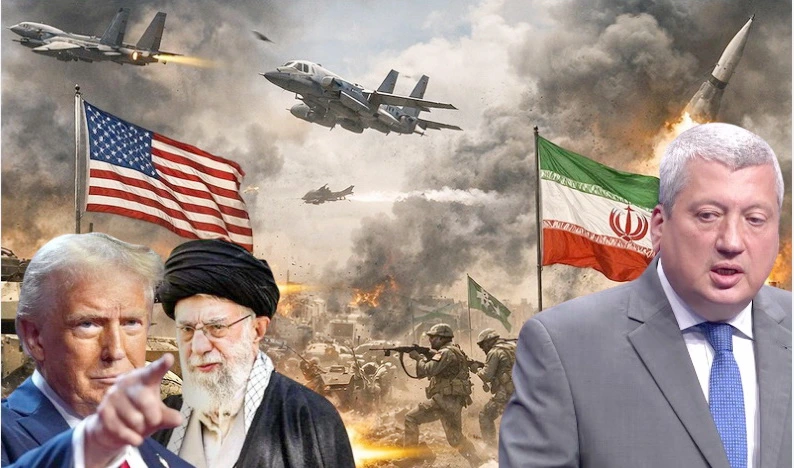
Former Azerbaijani Foreign Minister Tofig Zulfugarov says Iran’s military defeat is becoming increasingly inevitable as the United States and Israel maintain decisive air superiority and continue striking critical infrastructure across the country.
Speaking about the escalating tensions involving Iran, the U.S., and Israel, Zulfugarov argued that modern warfare no longer necessarily requires a ground invasion to produce a strategic defeat.
“If a country loses control of its airspace completely, its ability to resist becomes minimal,” he said. “In such circumstances, continuing the war makes little military sense.”
His remarks come as regional tensions rise and diplomatic channels appear increasingly strained. Iranian Supreme Leader adviser Kamal Kharrazi recently said there was “no longer room” for diplomatic negotiations with Washington and emphasized that Iran was prepared for a prolonged war.
Zulfugarov said the current pattern of operations suggests that U.S. and Israeli forces are focused on destroying infrastructure linked to Iran’s nuclear and ballistic missile programs.
According to him, the destruction of technologically complex facilities could effectively halt those programs, as rebuilding them would require significant time and resources.
He also pointed to recent strikes targeting electric power networks, fuel production facilities, communications systems, and ports in the Persian Gulf, warning that such attacks could significantly disrupt daily life inside Iran.
Another potential escalation scenario, he said, involves Gulf states joining military operations. Zulfugarov noted that the combined air forces of Gulf countries include more than 600 combat aircraft, which could dramatically increase the scale of air strikes.
At the same time, he argued that Iran’s air force currently appears unable to mount effective resistance, while ballistic missile strikes are unlikely to significantly alter the strategic balance.
Zulfugarov warned that unless military operations are halted, the situation could evolve toward a scenario resembling the prolonged destabilization seen in Syria, or even a state collapse comparable to Libya’s post-conflict trajectory.
He said Iran’s leadership faces difficult choices but may need to seek ways to stop the conflict to prevent further destruction and long-term destabilization.