AZE.US
As Eid al-Adha approaches in Azerbaijan, many families are again asking practical questions about the rules of sacrifice: which animals are allowed, how old they must be and whether one sacrifice can be made on behalf of an entire household.
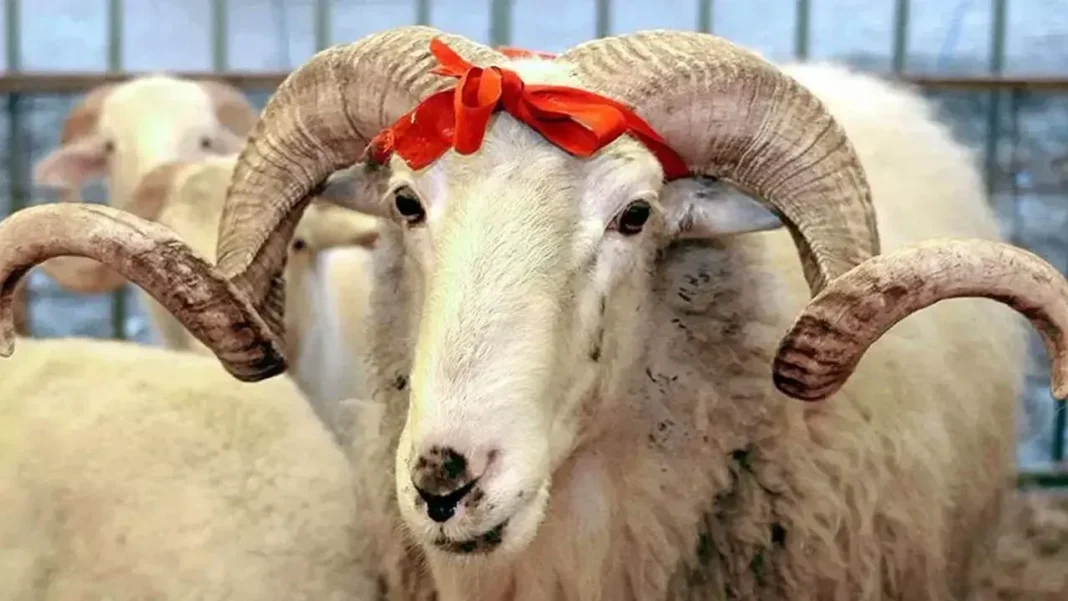
Religious figure Gamat Suleymanov told Oxu24.com that Islamic rules allow specific categories of animals for sacrifice. These include camels, cattle, including cows, calves or buffalo, as well as sheep and goats.
The main requirement is that the animal must be healthy, free of serious physical defects and old enough to qualify for sacrifice.
For sheep and goats, the minimum age is generally one year. In some cases, a six-month-old sheep may also be accepted if it appears physically mature and strong enough. For cattle, the required age is two years, while for camels it is five years.
Suleymanov said the sex of the animal does not prevent the sacrifice from being valid. Both male and female animals may be sacrificed, provided they meet the health and age requirements.
He also said family members living in one household may take part in a sacrifice through a shared intention. For example, when a father or head of household performs the sacrifice, he may include other family members in his intention, and the religious reward is considered to extend to them as well.
In some cases, a sacrifice may also be made with the intention of dedicating it to the soul of a deceased person.
Larger animals have separate rules. A cow or camel may be sacrificed jointly by several people, usually up to seven participants. A sheep or goat, however, is sacrificed on behalf of one person only.
Suleymanov added that the basic condition for the person performing the sacrifice is being Muslim. Performing daily prayers is considered a virtue, but the main criterion for the validity of the sacrifice is belonging to Islam.
The phrase “Bismillah” must be pronounced during the slaughter. Mentioning the name of Allah is considered one of the essential conditions for carrying out the ritual properly.
According to Suleymanov, one of the common mistakes is turning the sacrifice into an argument over price, weight or the animal itself. Once the animal is slaughtered, the meat should be distributed according to religious rules. The central purpose, he said, is not trade or display, but the fulfillment of a religious obligation.
AZE.US