By AZE.US Editorial Team
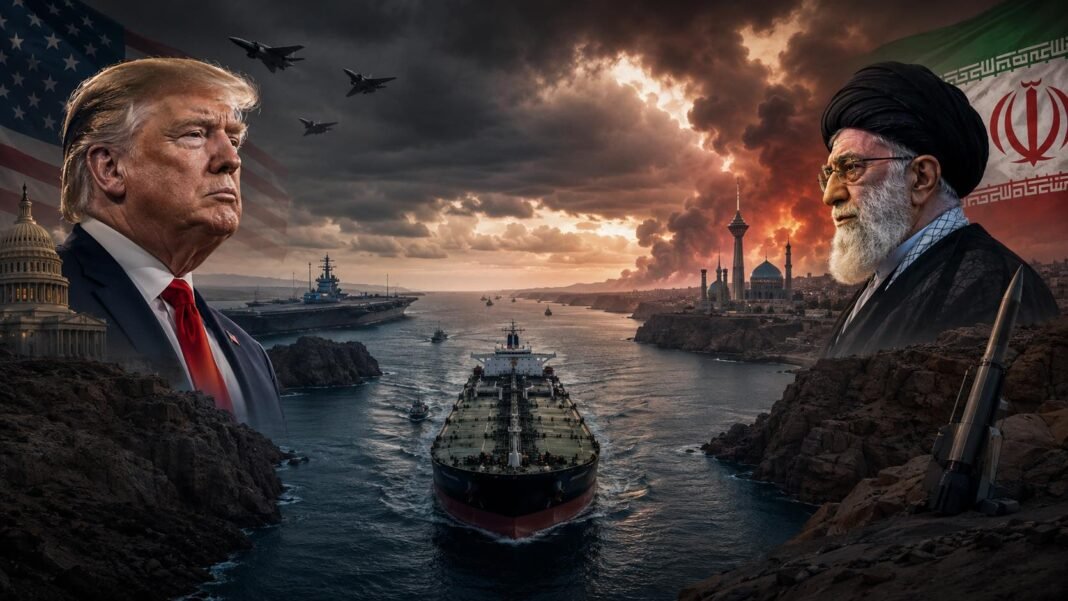
President Donald Trump says a deal with Iran has been “largely negotiated.” In his version, that sounds almost like victory: the war stops, the Strait of Hormuz reopens, and Washington again sets the terms.
But Iran does not accept that picture so easily.
Tehran has already pushed back on the U.S. framing of the Hormuz issue, insisting that the strait remains under Iranian management. That is not a small technical point. It is the core of the dispute.
Trump wants to sell the deal as the result of pressure. The message to his voters is simple: America struck, forced Iran to the table, avoided another endless war and secured one of the world’s most important energy routes.
Iran needs a completely different story.
Tehran cannot afford to look as if it reopened Hormuz because Washington ordered it to do so. For the Iranian leadership, this is not just about shipping lanes. It is about face, sovereignty and domestic survival. A deal that looks like surrender abroad can become a political problem at home.
That is why the real fight now is not only over the terms of an agreement. It is over who gets to explain what happened.
Was Hormuz opened because the United States forced Iran to back down? Or because Iran allowed ships to pass on its own terms?
On paper, the difference may look small. In the Middle East, wording like that can cost more than missiles.
The reported framework could include an extension of the ceasefire, free passage through Hormuz, the return of Iranian oil sales and new talks on the nuclear file. In return, Washington could ease parts of the pressure on Iranian ports and sanctions.
If that holds, Trump gets what he needs politically: not a new major war, but a deal after force. Iran gets economic breathing room. Markets get a chance to calm down.
But none of that means the conflict is solved.
The hardest question remains exactly where it was: what happens to Iran’s nuclear program? Washington wants limits and verification. Tehran does not want to look disarmed under pressure. Israel will judge any deal through its own security lens. Gulf states want tankers to move and missiles to stay out of the sky.
Everyone is talking about peace. Everyone means something different.
This is why the current diplomacy looks less like a peace agreement and more like an attempt to stop the bleeding. First, cool down Hormuz. Then push the most dangerous questions into the next round.
That is often how Middle Eastern crises work. The conflict is not resolved. The parties simply agree on where it will not explode for now.
For the United States, this is a dangerous balance. If Trump makes concessions, his critics will say he gave Iran a lifeline after military pressure. If he strikes again, he risks dragging America into a conflict that could quickly outgrow campaign slogans. If Hormuz remains even partly threatened, oil prices, insurance costs and market fears can turn against the White House.
Iran faces its own trap. It may gain economic relief, but it must not appear politically defeated. The Islamic Republic has built much of its identity around resistance to outside pressure. Any deal that looks like compliance with Washington’s demands can be hard to sell at home.
For the wider region, the lesson is simpler: one narrow strip of water can still put half the world on edge.
Azerbaijan is not in the Persian Gulf, but it cannot treat this crisis as distant. Iran is a neighbor. Energy routes, sanctions, Caspian security, transport corridors and the balance of power around the South Caucasus are all connected more tightly than they may appear on a map.
When Washington and Tehran bargain over Hormuz, they are not only talking about tankers. They are talking about who sets the rules across a wider strategic space stretching from the Gulf to the South Caucasus.
That is why Trump’s claim of a nearly completed deal matters. But Iran’s immediate effort to clarify what it has not conceded may matter even more.
This is the real meaning of the moment.
Everyone wants peace, but no one wants to look defeated. Everyone speaks the language of diplomacy, but each side is preparing its own version of victory.
As long as Hormuz remains part of the dispute, a U.S.-Iran deal will look less like the end of a war and more like a pause between two strikes.
AZE.US