AZE.US
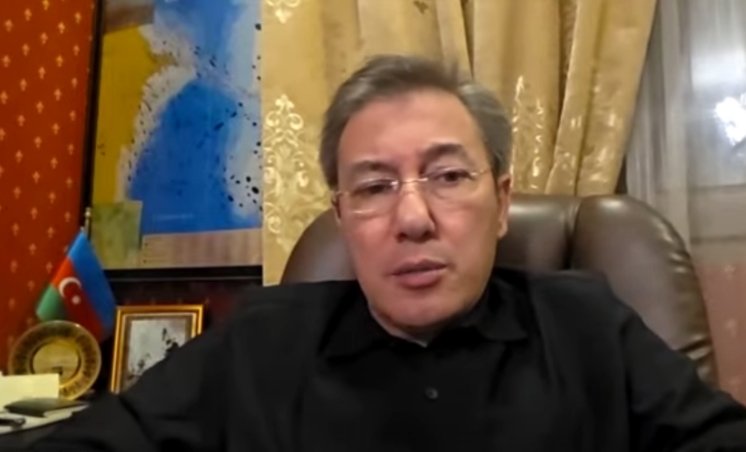
Military pressure on Iran is more likely to consolidate society around the ruling system than lead to its rapid collapse, Azerbaijani political analyst Ilgar Velizade said.
Velizade, head of the South Caucasus Political Scientists Club, made the remarks while discussing the regional situation on the Echo Baku platform.
According to the analyst, many Western narratives about Iran oversimplify the internal dynamics of the country and exaggerate the scale of public opposition to the government.
“In Western media one often sees a dramatic picture: the entire society supposedly hates the regime and is ready to overthrow it,” Velizade said. “But the real Iran is far more complex. That picture simply does not exist in reality.”
He noted that wartime conditions often lead to temporary consolidation of society around state institutions, even where strong political disagreements previously existed.
Velizade drew parallels with Azerbaijan during the early stages of the 2020 Second Karabakh War, when domestic political divisions temporarily faded as the country mobilized in the face of external threats.
According to him, a similar dynamic is now visible in Iran.
“The external threat creates a rallying effect. Even those who previously criticized the authorities often suspend political confrontation during wartime,” he said.
The analyst also stressed that many critics of the Iranian government are not necessarily opposed to the Islamic Republic as a system.
A significant portion of Iran’s political opposition, he said, consists of people who were themselves participants in or supporters of the 1979 Islamic Revolution, but believe the current leadership has deviated from the original ideals of the revolution.
“They do not necessarily want to dismantle the system,” Velizade explained. “They believe the Islamic Republic should function differently.”
At the same time, he acknowledged that Iran faces serious internal challenges, including corruption and economic pressure from sanctions.
However, Velizade said the war could ultimately reshape the country’s internal political balance rather than destroy the state system.
“In the short term we are likely to see stronger positions for security institutions and a consolidation of elites,” he noted.
Despite significant military and economic damage, Velizade believes Iran still retains a substantial capacity to sustain military operations.
He pointed out that many underground military facilities - including missile infrastructure and production sites - remain difficult to neutralize.
According to the analyst, the consequences of the conflict will extend beyond Iran itself.
“This war is already reshaping the region. Even after it ends, the Middle East will not look the same,” he concluded.