AZE.US
The criminal case against Ramiz Mehdiyev, Azerbaijan’s former presidential chief of staff and one of the most influential political figures of the post-Soviet era, is increasingly turning into a broader test of public trust in the country’s justice system.
Mehdiyev remains under house arrest after being charged under articles of Azerbaijan’s Criminal Code related to treason, actions aimed at seizing state power and the legalization of property obtained through criminal means. A Baku court extended his house arrest in February for another four months, according to local media reports.
For many Azerbaijanis, however, the question is no longer only whether Mehdiyev himself will be prosecuted. The more sensitive issue is whether the investigation will also examine the wealth, assets and lifestyle of his family circle and long-standing network of influence.
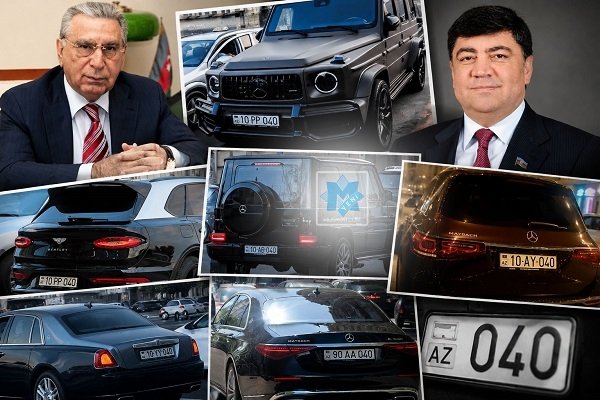
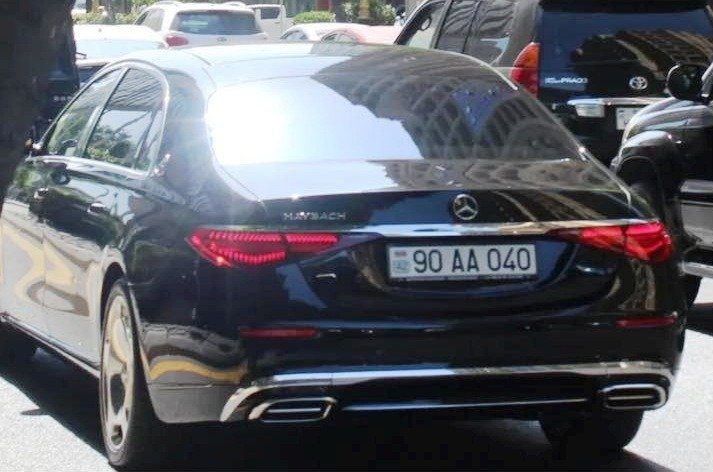
That question has returned to public debate after social media posts circulated images of luxury vehicles allegedly linked to Mehdiyev’s relatives, including former lawmaker Ilham Aliyev and members of his family. The posts refer to expensive cars, including Mercedes-Maybach, Rolls-Royce, Mercedes-AMG G-Class and Bentley models, many of them allegedly carrying license plates associated with the “040” series.


The ownership of those vehicles has not been independently confirmed, and the allegations require legal verification. But the public reaction is revealing. The outrage is not only about luxury cars. It is about the perception that Azerbaijan’s legal system often acts quickly and harshly toward ordinary citizens, small borrowers, activists or critics, while powerful families are treated with far greater caution.
That perception is politically dangerous. A justice system does not lose public trust only when it fails to punish wrongdoing. It also loses trust when citizens believe that the law has different speeds for different people.
Prominent Azerbaijani lawyer Aslan Ismayilov sharply criticized the handling of the Mehdiyev case in a Facebook post, saying the authorities had once again disappointed society. He argued that the case began with loud statements but has since gone quiet, while Mehdiyev’s family and close circle, in his view, continue to enjoy enormous wealth. His words reflect a wider public frustration: people are waiting not for another political spectacle, but for visible legal accountability.
The legal issue is straightforward. If a former top official is charged, among other things, with the legalization of property obtained through criminal means, then public confidence requires more than a closed investigation and occasional procedural updates. It requires credible answers about assets, ownership structures, relatives, business interests and possible channels through which wealth may have been accumulated.
This is especially important because Mehdiyev was not an ordinary official. For decades, he was widely seen as a central figure in Azerbaijan’s political machinery, often described in local media as a “grey cardinal.” International reporting has also noted his long-standing influence and the seriousness of the charges brought against him.
The case has also been linked by Azerbaijani authorities and pro-government media to a wider investigation involving opposition figures. Reuters reported in late 2025 that opposition leader Ali Karimli was placed in pre-trial detention in connection with an alleged coup plot tied to the Mehdiyev case, while Karimli denied the accusations and called them politically motivated.
That makes the issue even more sensitive. If the state uses the Mehdiyev case to move aggressively against political opponents, but appears hesitant to examine wealth associated with the former official’s own circle, the public will inevitably see selectivity.
Azerbaijan’s anti-corruption policy cannot be credible if it stops at public declarations. Nor can rule of law be selective: strict toward the weak, procedural toward the powerful, and silent when the questions become uncomfortable.
The Mehdiyev case is therefore no longer only about one former official under house arrest. It is about whether Azerbaijan is prepared to apply the same legal standard upward - toward old networks, family wealth and the symbols of untouchability that still irritate society.
A luxury car may be private property. But when it appears in the shadow of a major criminal case involving one of the country’s most powerful former officials, it becomes a public question. And the public question is simple: will this investigation follow the money, or only the headlines?
AZE.US