AZE.US
The war in the Middle East is no longer just a distant military crisis for the South Caucasus. It is beginning to cast a shadow over major economic and transit plans that were supposed to redefine the region’s future. Among them is the TRIPP route - a project increasingly presented as a strategic corridor linking the South Caucasus more closely with Europe and Asia.
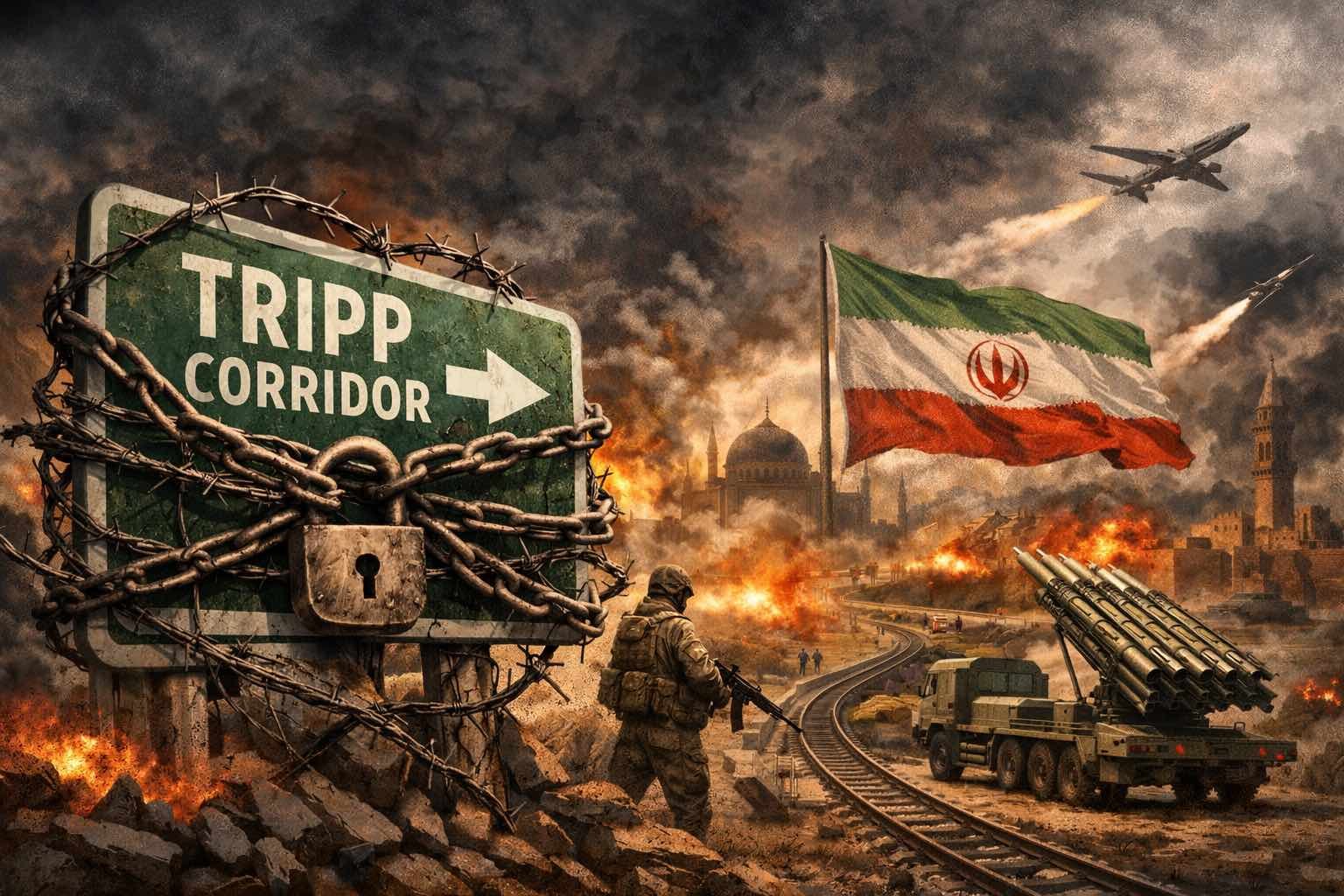
On paper, TRIPP is an infrastructure story. In reality, it is much more than that. The project sits at the intersection of logistics, regional influence and U.S. strategic ambition. That is why the growing instability around Iran and the wider Middle East matters so much. The deeper the conflict becomes, the harder it will be to pretend that this corridor can move forward in a politically insulated environment.
The first threat is practical. Large transit projects are built not by slogans but by engineers, contractors, insurance arrangements and security guarantees. If American specialists are expected to play a role in the construction phase, as some regional commentary suggests, the war could complicate that from the outset.
Even if the South Caucasus is not itself a battlefield, any serious investor or contractor will calculate risk on a wider map. A prolonged regional war raises the cost of involvement, heightens uncertainty and may make outside specialists more reluctant to work in a sensitive geopolitical corridor.
The second threat is political. Washington’s bandwidth is not unlimited. When the U.S. is consumed by a fast-moving crisis involving Iran, Israel and regional escalation, infrastructure plans in the South Caucasus can quickly slide down the list of operational priorities. That does not necessarily mean TRIPP loses strategic value. It means timing becomes more fragile.
And that is where the paradox begins. The same war that could delay TRIPP may also make it more important.
If Iran’s regional position weakens, the logic behind alternative transit routes becomes stronger, not weaker. Any corridor that reduces dependence on unstable or politically compromised channels gains value in the eyes of outside powers and regional states alike. In that sense, the conflict may be increasing TRIPP’s long-term geopolitical relevance even as it undermines its short-term implementation.
This is why the real debate is no longer about whether the project is useful. It clearly is. The debate is about pace, commitment and resilience. Will the political will behind TRIPP survive a broader regional crisis? Will Washington stay focused enough to push it forward? Will local governments be able to protect the project from delay, sabotage or passive resistance dressed up as technical caution?
That last point matters more than many officials admit. Too much of the public discussion around TRIPP still treats it as a neutral road that should benefit everyone and therefore face little meaningful resistance.
That is not how the South Caucasus works. Any new route in this region immediately becomes a contest over influence, leverage and transit rents. The moment a corridor starts to look real, it also starts to attract opposition - open, quiet or disguised.
Some actors may raise security concerns. Others may slow technical approvals. Some may exploit domestic sensitivities. And the more unstable the Middle East becomes, the easier it will be for opponents of the project to argue that now is the wrong time, the wrong climate or the wrong strategic moment.
That is why rhetoric about “political will” is no longer enough. Political will matters at launch. But after that, projects survive only if the sponsors are ready to defend them through turbulence. If the United States truly sees the South Caucasus as a zone of growing strategic interest, then TRIPP is one of the clearest tests of that claim. If Washington retreats every time a bigger fire erupts elsewhere, regional actors will draw their own conclusions.
Armenian Prime Minister Nikol Pashinyan has already hinted at this anxiety, suggesting that the current war may mean the Trump route is no longer among the administration’s immediate priorities. That concern is understandable. In the South Caucasus, delays are rarely neutral. Political vacuums tend to be filled quickly by other powers, other agendas and other pressures.
So no, the war in the Middle East does not automatically kill TRIPP. But it does destroy the illusion that the project can be implemented in a vacuum. The corridor’s future will now depend not only on engineering plans and summer timetables, but on the trajectory of the regional war, the durability of U.S. engagement and the willingness of all sides to absorb greater geopolitical risk.
That is the real shift now underway. TRIPP is no longer just a transport project. It has become a test of whether the West can anchor itself in the South Caucasus through infrastructure, whether regional states can defend their own transit sovereignty, and whether strategic projects can survive when the map around them starts to burn.