AZE.US
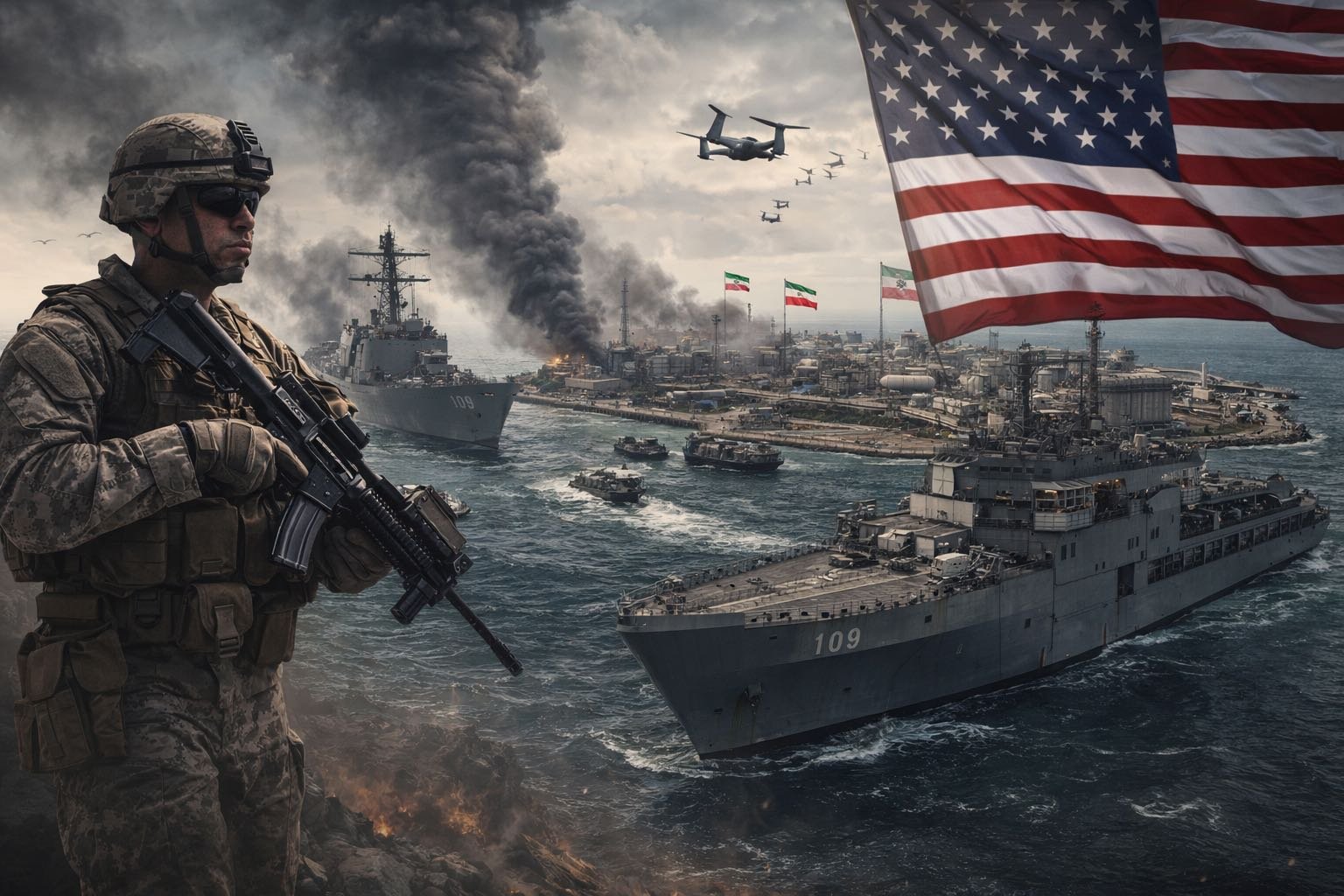
The Trump administration is considering one of its most aggressive options yet in the confrontation with Iran: a possible operation aimed at Iran’s Kharg Island, the country’s main oil export hub.
Reuters, citing Axios, reported on March 20 that U.S. officials have discussed scenarios ranging from a maritime blockade to a direct seizure of the island, though no final decision has been made.
The significance of the idea goes far beyond one island. Kharg is central to Iran’s oil export system, while the Strait of Hormuz remains one of the world’s most sensitive energy chokepoints. Reuters noted that the waterway normally handles roughly a fifth of global oil and liquefied natural gas flows, which is why any escalation there quickly reverberates through shipping routes, insurance costs and energy markets.
Reuters also reported that the United States is sending thousands of additional troops to the Middle East, including a Marine Expeditionary Unit of about 2,500 Marines, as the conflict enters its third week. The deployment does not amount to a decision to send ground forces into Iran, but it underscores how seriously Washington is preparing for broader contingencies tied to Hormuz and regional energy security.
That military buildup comes as the political risks are also rising. Reuters/Ipsos polling published this week found that most Americans believe President Donald Trump is likely to send ground troops into Iran, but only a small minority support a large-scale ground war. That gap matters because any move against Kharg would be seen not as a limited naval maneuver, but as a dramatic widening of the conflict.
The broader context is an energy crisis that is already shaping policy choices. Reuters reported that Washington has been looking at additional ways to ease the market strain caused by the fighting and shipping disruption around Hormuz, even as military options remain on the table. That means the Kharg discussion is not just about battlefield pressure; it is also about how far the United States is willing to go to protect oil flows and prevent a deeper global supply shock.
For regional observers, the key takeaway is that the debate has moved beyond airstrikes and deterrence. Once U.S. officials openly weigh physical control or isolation of Iran’s main export hub, the crisis enters a new and riskier phase - one with direct implications for Gulf security, oil prices and the wider balance of power in the Middle East.