AZE.US
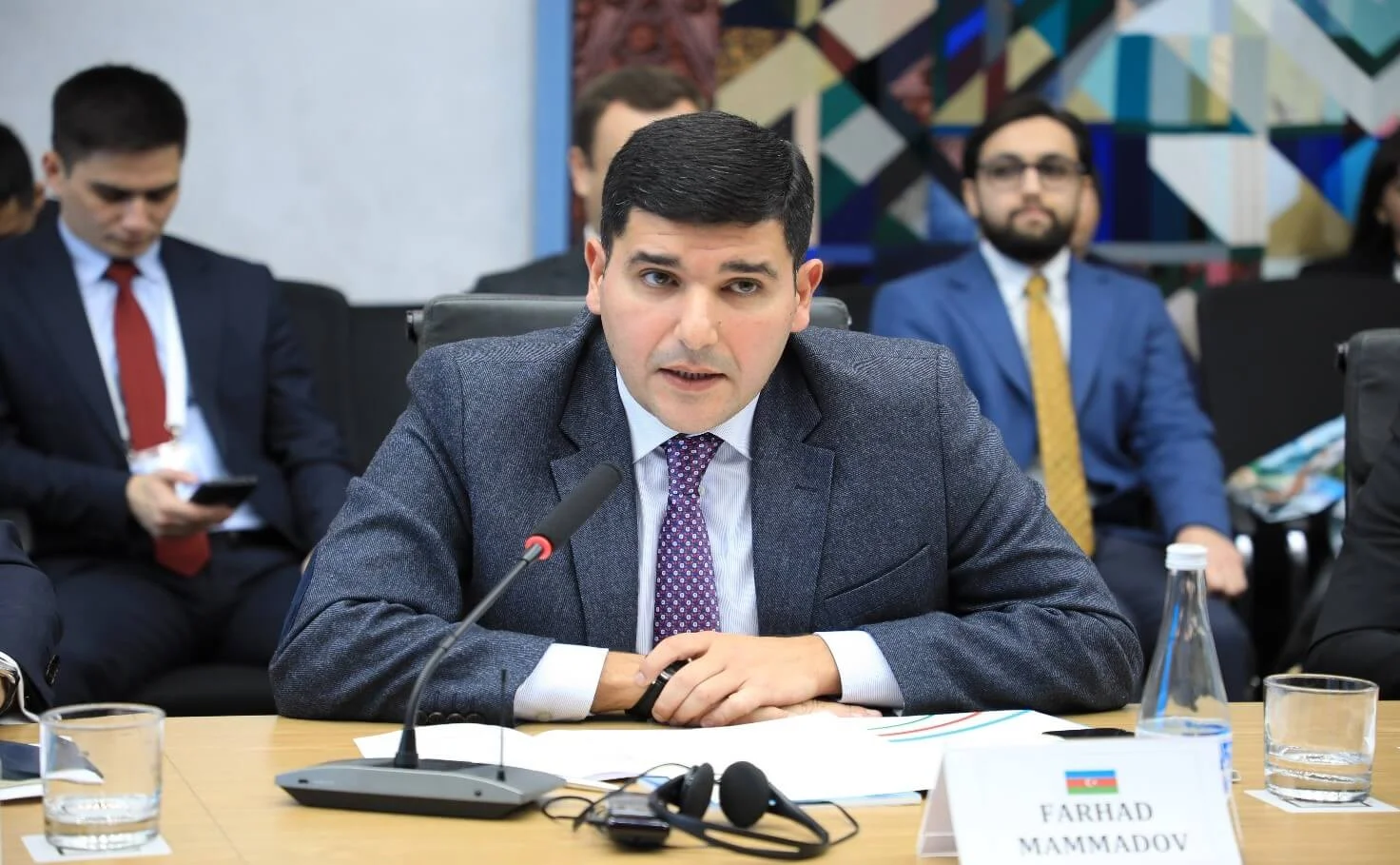
Washington is beginning to look at the South Caucasus as part of a larger regional design rather than as a set of isolated bilateral issues, according to Farhad Mammadov, director of the Center of South Caucasus Studies.
Speaking on the Novosti Kavkaza channel, Mammadov said a recent U.S. visit to Anaklia should not be treated as routine diplomacy. In his telling, the significance lies less in the title of the visiting official than in the function: he described the envoy as an operational figure with regional experience, someone involved in preparing decisions rather than merely delivering protocol messages. Mammadov said that alone makes the visit worth taking seriously.
He argued that the visit signals U.S. interest not only in Anaklia itself, but in Georgia’s broader Black Sea potential. For Mammadov, that matters because the South Caucasus is increasingly tied to transport and logistics calculations, especially routes connecting west to east and opening access toward Central Asia.
He suggested Washington is approaching this with a more open and pragmatic regional view than actors focused narrowly on one corridor or one political formula.
Mammadov also said the United States already has a working vision for Central Asia and the South Caucasus and has moved beyond general discussion into practical implementation.
He pointed to signed agreements, contracts and an existing portfolio linked to Central Asia as evidence that Georgia is being assessed not in isolation, but as one part of a larger strategic puzzle.
At the same time, he warned that the pace of any real progress will depend on events beyond Georgia itself. In his view, two variables will shape whether regional communications and infrastructure plans move from discussion to execution: the outcome of Armenia’s parliamentary elections and the eventual trajectory of the war around Iran.
Only after there is more clarity on both, he suggested, will it become possible to say whether the heavy machinery of implementation truly begins to move.
Mammadov was also skeptical about the durability of any settlement involving Iran. He argued that even if some form of agreement or ceasefire emerges, it is likely to be unstable, because the underlying conflict is too deep and the parties are not really in a position to simply reverse course.
That uncertainty, however, could increase Azerbaijan’s relevance rather than reduce it. In the same discussion, Mammadov said Azerbaijan may yet play some role in a future diplomatic process if regional conditions evolve in the right direction.
Taken together, his argument is that Washington is not merely “checking in” on Georgia. It is testing whether the South Caucasus, with Georgia on the Black Sea side and Azerbaijan further east, can be fitted into a more coherent regional architecture shaped by logistics, strategic access and post-war recalculation.
That broader architecture is still unfinished, but Mammadov’s reading is that the process has already begun.