AZE.US
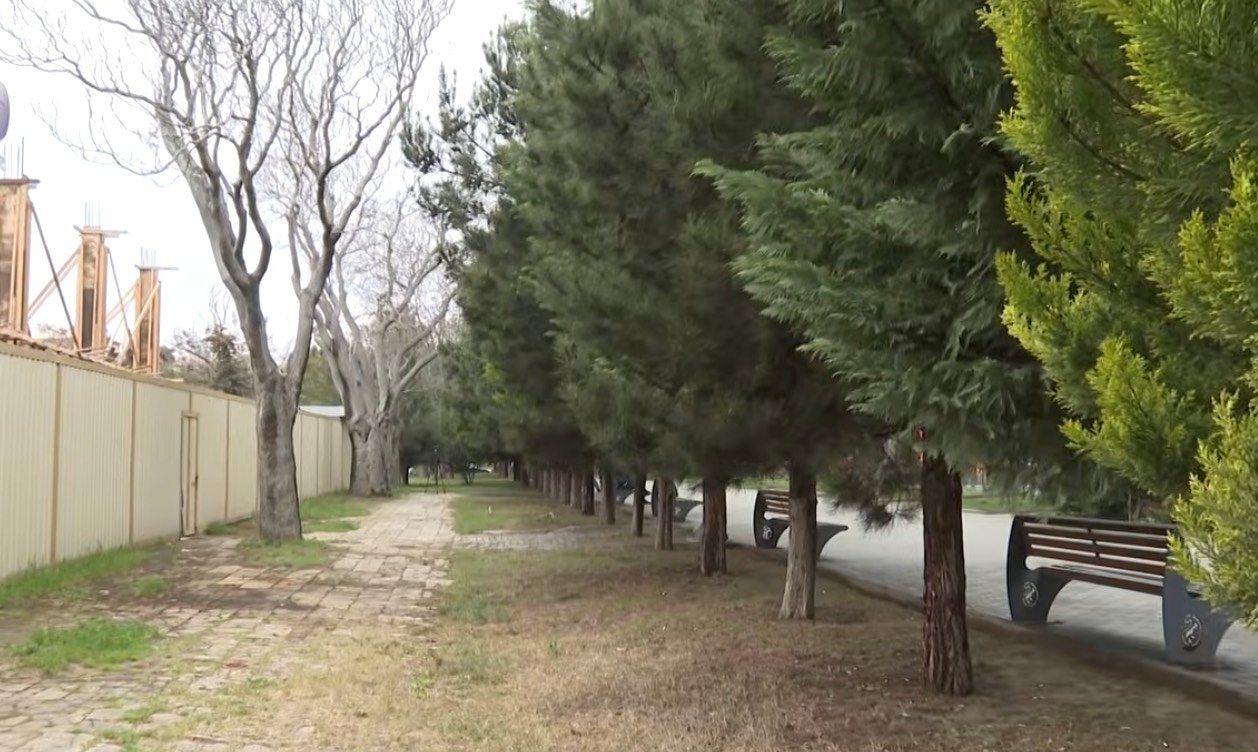
In Baku, construction work has begun in the area known as “Koala Park,” triggering public concern and fresh questions about the city’s shrinking green spaces.
The controversy centers on a site at 15 Anvar Gasimzade Street in the Nasimi district. Residents cited in a local TV report claimed that trees had been cut down and work had started on a new facility that is expected to operate as a cafe.
Footage from the scene showed the area already fenced off, with active construction underway. Workers there said the project had started only a few days earlier.
Local reaction has been mixed. Some residents said the structure on the site had long been abandoned and in poor condition, arguing that the current work is effectively the reconstruction of an old, non-functioning building rather than new development inside the park. Others said any commercial construction in or near a public green area raises valid concerns, regardless of the condition of the previous structure.
A representative of INAM V MMC, identified in the report as the company behind the project, confirmed that the facility is expected to function as a cafe. At the same time, the company rejected allegations that trees had been cut down for the work. According to its representative, there were no full-grown trees on the site, only small plantings, and the area had been reviewed by environmental authorities.
The Nasimi District Executive Authority also pushed back on the criticism. Officials said the address in question involved a privately owned аварийное building that had been cleared to make way for a non-residential property, and that all required construction permits and an approved design plan were in place. They further insisted that the surrounding green zone had not been damaged.
The dispute reflects a broader sensitivity in Baku over any building activity linked to parks and public greenery. Even when authorities present such projects as redevelopment of old private structures, residents increasingly view them through the lens of urban overbuilding and the steady loss of open space.