AZE.US
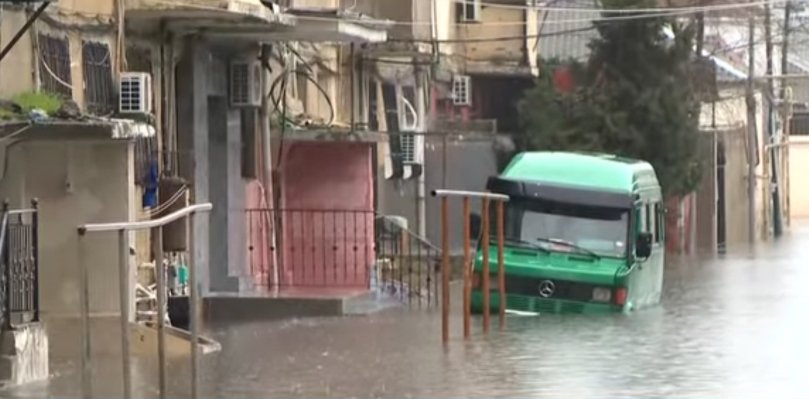
The recent downpours in Baku and across the Absheron Peninsula did more than flood courtyards, basements and ground floors. They also exposed a growing fault line in the real estate market: homes in flood-prone areas are now becoming harder to sell at old prices.
After the latest rains, buyers are paying closer attention to risks that were often treated as secondary. Price, location and paperwork still matter, but they are no longer the only considerations. More buyers are now asking whether a house sits in a low-lying area, whether drainage works properly and whether the local infrastructure can handle another period of intense rainfall.
Market experts say this shift is likely to hit demand for private homes in repeatedly flooded neighborhoods. As interest weakens, prices in those areas may start to slip. Real estate expert Ramil Osmanli says natural and infrastructure-related risks have a direct impact on buyer behavior, and that demand for individual houses in problematic zones could decline in the next one to two months, putting downward pressure on prices.
The logic is straightforward. Buyers are less willing to invest in homes where heavy rain can quickly turn into property damage. In areas where sewage lines are missing, outdated or unable to cope with dense construction, flooding risk becomes more than an inconvenience. It becomes part of the property’s market value.
Residents themselves are drawing the same conclusion. Some say they were simply lucky not to buy in lower parts of a neighborhood. Others say they deliberately looked for homes on higher ground, where water flows away instead of collecting around the house. In other words, elevation is no longer just a geographic detail. It is becoming a pricing factor.
Real estate agents say the latest flooding has already started to reshape buyer preferences. People looking for a house are no longer focused only on whether the property has proper title documents. They are increasingly checking the area’s flood risk, drainage capacity and overall infrastructure before making a decision.
That may soon affect supply as well. Experts expect more individual homes in flood-prone areas to be put up for sale in the coming weeks. But an increase in listings is unlikely to push prices higher. If anything, a larger supply combined with weaker demand could lead to sharper discounts, particularly in low-lying districts with persistent infrastructure problems.
The effect, however, is not expected to be uniform across the market. Higher parts of Baku and central districts are seen as less vulnerable, while villa-style properties in better-serviced locations may continue to hold value or even rise. At the same time, some demand may shift away from risky private homes and into apartment buildings, adding support to parts of the broader housing market.
That said, the decline in flood-prone areas may not be permanent. If drainage systems and sewer infrastructure are upgraded, confidence could gradually return. But until that happens, recent images of submerged courtyards and water-filled ground floors are likely to stay in buyers’ minds.
The latest rains delivered a blunt reminder that in Baku’s housing market, infrastructure is no longer a background issue. It is becoming one of the clearest drivers of value. And if flooding continues to recur, the price impact in some neighborhoods may prove more than temporary.