Azerbaijan is expanding its political and economic ties with China, Vietnam and Central Asia while continuing to strengthen relations with European countries, a strategy experts say is intended to turn the country into a major Eurasian transport and diplomatic hub.
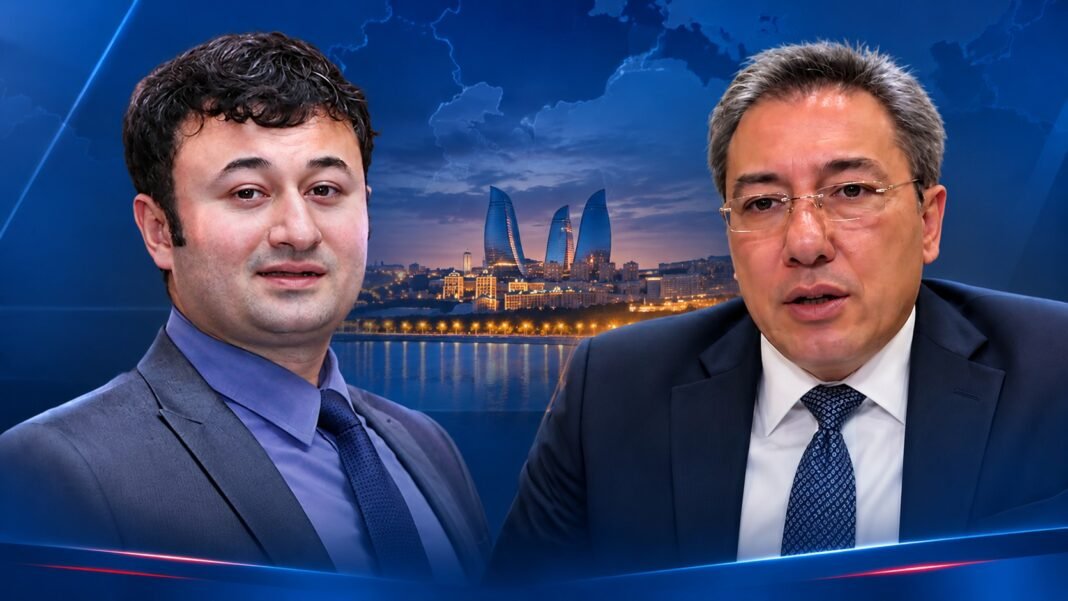
Political analysts Ilgar Velizade and Rovshan Ibrahimov discussed the shift in a special program on CBC television, citing more frequent diplomatic contacts, growing cooperation with Vietnam and development of the Middle Corridor.
Why Azerbaijan Matters More to Europe and Asia
Velizade said Azerbaijan’s role has grown as the war in Ukraine, crises in the Middle East and changes in Eurasian logistics push governments and companies to seek additional trade routes and more resilient partnerships.
The South Caucasus has gained importance as a link between Europe, Central Asia and China. Some European partners are now trying to make up for time lost in their relations with Baku, Velizade said, although Azerbaijan’s multi-vector foreign policy has been developing for decades rather than emerging from a single crisis.
Vietnam Becomes a New Focus
Ibrahimov, a professor at Webster University, said Azerbaijan is trying to diversify a foreign economic policy that was once weighted heavily toward Europe because of energy exports, existing trade infrastructure and political priorities.
Vietnam is one of the growing areas of cooperation. The relationship has a historical foundation: thousands of Vietnamese specialists studied in Baku during the Soviet period, particularly in the oil sector, and graduates of Azerbaijani institutions later helped develop Vietnam’s petroleum industry. Azerbaijani specialists also contributed to the early development of Vietnamese cinema.
Today, the economic dimension is more important. Vietnam has become a major Asian manufacturing center that attracts international companies and investment. For Azerbaijan, closer ties could support trade, energy cooperation and transport logistics.
The Middle Corridor Looks Beyond Central Asia
Velizade said cargo from Vietnam could eventually use the Middle Corridor, which links Asian and European markets across the Caspian Sea and the South Caucasus. That would extend the corridor’s potential beyond China and Central Asia into Southeast Asia.
Building a full international logistics route will require coordination among Azerbaijan, Kazakhstan, China, Georgia and Türkiye, along with continued investment in ports, railways and customs systems. Diplomatic agreements create space for transport and investment projects, while successful projects strengthen political ties.
Baku Does Not Want to Choose One Power
A central principle of Azerbaijani foreign policy is avoiding exclusive alignment with one geopolitical center, Velizade said. A landlocked country positioned among several regional powers benefits from pragmatic relations with the United States, the European Union, Russia, China, Türkiye and Iran without automatically treating cooperation with one as confrontation with another.
That approach can allow Baku to use competition among outside powers to expand its options, although their interests may still clash over transport, energy, trade and security. The challenge is preserving the ability to choose partners and projects independently.
Beyond Energy
Ibrahimov said Azerbaijan is also widening its international role through multilateral diplomacy, including the Non-Aligned Movement, global climate policy and contacts between the Global South and Europe. Hosting COP29 was one example of using an international platform to broaden diplomatic engagement.
But the success of those efforts depends on turning agreements into investment, technology and trade rather than simply holding more summits.
Coordination in the Turkic World
The experts also discussed the Organization of Turkic States. Velizade said cooperation does not require every member to take identical positions on every issue. Azerbaijan, Türkiye, Kazakhstan, Uzbekistan and other members have different geographies, economies and relationships with major powers.
Long-term cooperation, he said, is better served by coordinating where interests overlap while preserving each country’s autonomy.
Measuring the Strategy
Azerbaijan’s turn toward Asia is not a rejection of Europe. It is an attempt to widen the country’s political and economic room for maneuver, attract investment, expand export markets and strengthen its position in Eurasian trade.
The strategy should be judged by measurable results: growth in non-oil exports, transit volumes, foreign direct investment and new manufacturing projects. Without those outcomes, the expansion of international contacts would remain primarily a diplomatic achievement.
Source: Vesti Baku.