Azerbaijan continues to approve tourism-support programs, but official data from one of the country’s most scenic districts has raised questions about whether those policies are creating lasting jobs.
Hotels in the Oghuz district employed just 15 people at the end of 2025, nine fewer than a year earlier, economist Natig Jafarli said in a Facebook post citing State Statistics Committee figures. The total fell from 24 workers at the end of 2024, a decline of 37.5%.
The wage data is equally striking. Oghuz hotel businesses paid a combined 56,600 manats in wages during 2025. Dividing that amount among 15 workers over 12 months produces an average of about 314 manats a month, below Azerbaijan’s 400-manat monthly minimum wage in effect since January 2025.
Jafarli asked whether the official figures fully capture employment in the district’s tourism sector.
Hotels Exist, but the Jobs Are Hard to See
Oghuz has mountains, forests, historical sites, recreation areas and several accommodation businesses. Jafarli named Panorama Resort Oghuz, Afra Hotel, XalXal Hotel and Restaurant, Korifey Hotel and the Qaynama family recreation center among the district’s better-known establishments.
Against that backdrop, an official total of 15 hotel workers appears unusually low. Some employees may be seasonal, registered through other companies or working at businesses classified outside the hotel category. The State Statistics Committee would need to explain which establishments are included and how their workers are counted before a firm conclusion can be reached.
Tourism Programs Need Measurable Results
Jafarli said the figures point to a broader weakness in Azerbaijan’s regional tourism policy. The effectiveness of a program cannot be measured by presentations, advertising campaigns or the number of facilities opened. The more useful indicators are visitor numbers, length of stay, local business revenue, private investment and permanent jobs.
If public money is improving roads and tourist zones but local residents do not see meaningful income opportunities, officials need to establish whether the problem is low demand, short weekend visits, incomplete reporting or businesses operating outside the formal economy. Each explanation requires a different response.
Could the Georgia Border Bring More Visitors?
Jafarli also pointed to Azerbaijan’s closed land border with Georgia. Reopening it could support a road and coach itinerary through Gakh, Sheki, Oghuz and Gabala, linking several districts known for nature, heritage and family recreation.
Such a route could encourage foreign travelers to combine Georgia with northwestern Azerbaijan instead of visiting only Baku. But an open border alone would not guarantee demand. Competitive prices, reliable roads, clear itineraries, professional guides and promotion abroad would still be required.
A Church With Trees Growing on Its Roof
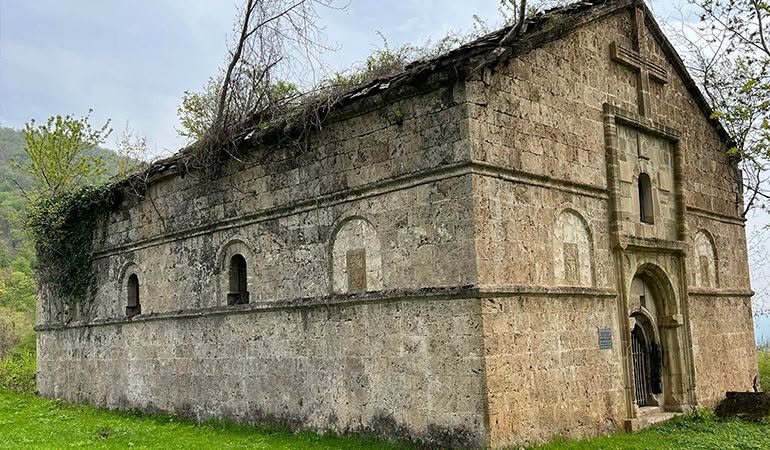
Jafarli illustrated his post with a photograph of an old stone church in Oghuz. Vegetation and small trees are visible on parts of the roof, raising questions about the monument’s condition and maintenance.
Oghuz has heritage connected to Caucasian Albania and the Udi Christian community. Properly researched and presented, such places could attract visitors interested in history, architecture and local culture. That requires conservation, safe access and reliable information. A marketing campaign cannot substitute for protecting the site itself.
Visitors Need More Than a Hotel
Regional tourism also needs a wider range of services if visitors are to stay for several days. Historical tours, hiking routes, craft workshops, farm visits and food programs can create income for guides, farmers, restaurants, drivers and small businesses as well as hotels.
The central question is who receives the money generated by tourism. Oghuz has nature, history and accommodation infrastructure, yet the official employment figures show a wide gap between the district’s potential and the jobs recorded in the statistics. Until government agencies explain that discrepancy, claims about successful regional tourism development will remain difficult to assess.
Source: Vesti Baku.