Vesti Baku
Moscow understands that its former system of influence in the South Caucasus is changing, but it is not ready to accept the new political reality.
Attempts to pressure Armenia through the Collective Security Treaty Organization no longer produce the same results, while the future of Russia’s military presence in the country could become the subject of negotiations lasting for years.
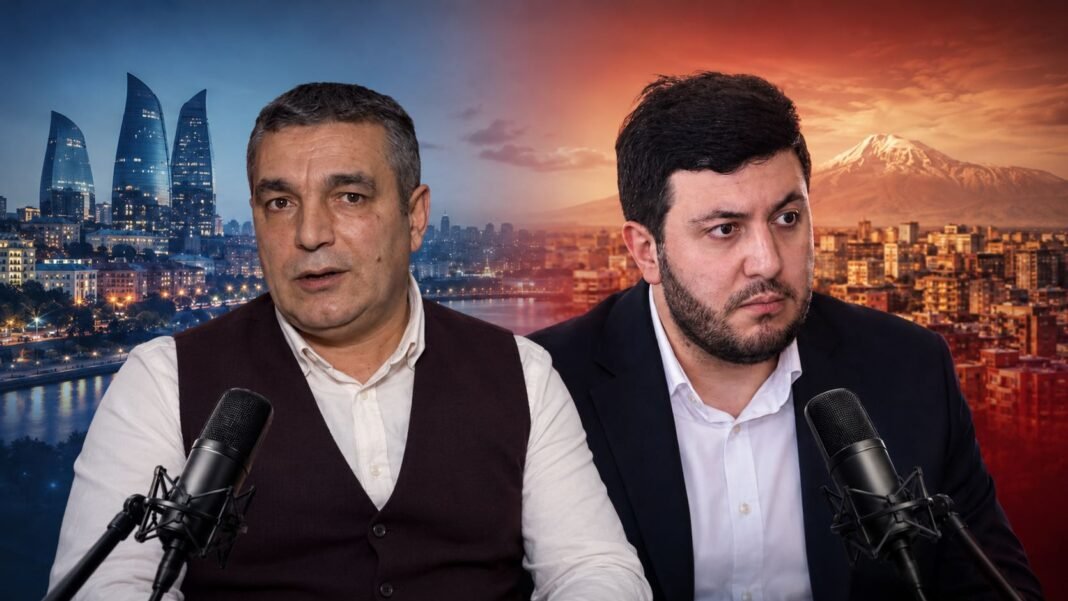
That assessment was offered by Azerbaijani politician Natig Jafarli during the Contact Line program on PressClubTV, where he discussed changes in the regional balance of power with Armenian expert Areg Kochinyan, Vesti Baku reported.
The discussion followed new decisions and statements about Armenia’s participation in the Collective Security Treaty Organization, or CSTO, as well as questions about the future presence of Russian forces on Armenian territory.
Kochinyan said Moscow continues to use Armenia’s CSTO membership and the Russian military base as instruments of pressure on Yerevan. In his view, however, the Armenian government no longer regards Russian security guarantees as having no alternative.
Jafarli rejected the suggestion that Russian authorities fail to understand the scale of the changes that have taken place.
“It understands, but it does not accept,” Jafarli said.
In his assessment, Moscow is aware of the shift but cannot come to terms with the gradual weakening of mechanisms of influence built over decades.
The CSTO Is Losing Its Value as a Pressure Tool
Jafarli criticized the CSTO model itself and questioned whether the organization is capable of performing its stated collective-security role.
He noted that even during Russia’s war against Ukraine, the other members of the alliance are not taking a direct part in Russia’s defense. In his view, that demonstrates the organization’s limited practical effectiveness.
Jafarli said Moscow has used integration structures across the former Soviet space not only for cooperation, but also to retain the ability to shape the foreign policy of neighboring states.
In Armenia’s case, he said, the Russian leadership is trying to show that the decision to end relations with the organization should come from Moscow itself. He described this primarily as a question of political control and a demonstration of influence.
Russia’s Military Base Could Become the Next Dispute
Armenia’s effective suspension of participation in the CSTO does not automatically end Russia’s military presence in the country.
Jafarli identified three issues that will remain on the Moscow-Yerevan agenda: the future of Russia’s 102nd Military Base, the role of Russian forces in guarding Armenia’s borders, and the broader terms under which Russian service members remain on Armenian territory.
He predicted negotiations on those matters could continue for several years.
Kochinyan, for his part, said earlier warnings from Moscow about the possible withdrawal of the base are no longer seen in Yerevan as a serious argument. He said distrust of Russian security guarantees has deepened in Armenian society and that some of Moscow’s actions are viewed as a separate source of risk.
That is the expert’s assessment, not evidence that Armenia’s government has adopted a decision to remove the base.
Leaving the CSTO Would Not Settle the Base Question
The comments came as Armenia continued to scale back its practical participation in the CSTO. Vesti Baku previously reported that Yerevan lost its voting rights in the organization on Nov. 11 because it had not paid membership dues. Armenia formally remains a member, and the Russian base continues to operate in Gyumri.
Kochinyan said ending Armenia’s participation in the CSTO is no longer viewed in Yerevan as the loss of an effective defense mechanism. Instead, Armenian political debate increasingly focuses on whether Russia’s military presence still serves the country’s current security interests.
Jafarli said Moscow is trying to preserve for itself the right to determine the terms on which countries leave integration structures created with Russian participation.
The future of the military base, unlike formal CSTO membership, would require separate negotiations. Jafarli said Russia’s military presence, rather than Armenia’s legal membership in the organization, will be one of the most difficult issues in Moscow-Yerevan relations in the years ahead.
Russia is no longer capable of restoring the old regional order solely through political and military-institutional pressure, Jafarli said. But Moscow’s refusal to accept the new reality will continue to complicate developments across the South Caucasus.
Source: Vesti Baku