AZE.US
Azerbaijan’s State Security Service said it had detained a suspect accused of attempting to blackmail the president’s family using fabricated intimate materials falsely presented as involving Alena Aliyeva.
According to details aired by state television, the case began earlier this year when exiled bloggers, including Mehman and Emin Huseynov and Gabil Mammadov, started circulating what the broadcast described as defamatory content on various online platforms. State television said some of the materials were falsely presented as being related to Alena Aliyeva.
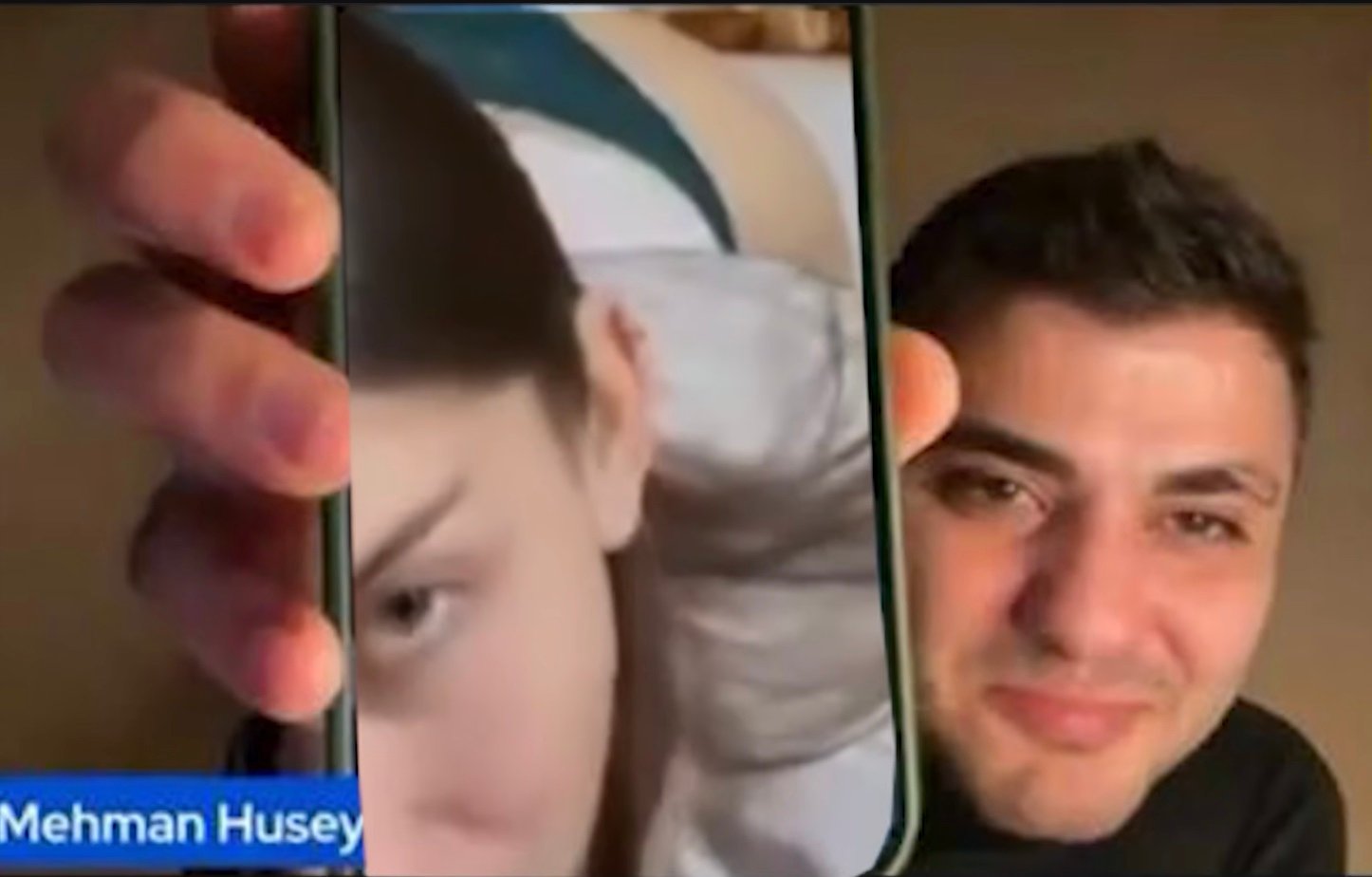
The report said that in one livestream, Mehman Huseynov displayed for several seconds an image fragment linked to the case. It then asked where the fake video materials had come from and who had supplied them.
At roughly the same time, investigators say, a man based abroad tried to contact senior Azerbaijani officials through social media accounts, email and a foreign-registered phone number. According to the version presented on air, he attempted to blackmail them with footage he claimed was connected to Alena Aliyeva and demanded money in exchange for not releasing it.
State television said the suspect demanded 5 million euros to keep the materials from being published. In testimony cited in the report, he said he had initially planned to ask for 10 million euros but later reduced the demand to 5 million euros in order to reach a deal faster.
A criminal case was opened under relevant articles of the Criminal Code, and an Azerbaijani citizen identified by the initials F.S. was detained as the main suspect. The broadcast said his full name and image were not being disclosed because there has not yet been a court ruling in the case.
In testimony aired on television, the suspect admitted to the crime and described the sequence of events in detail. He said that on February 11 he sent messages from his Facebook account to the pages of Mehriban Aliyeva, Arzu Aliyeva and Leyla Aliyeva, claiming that he possessed certain materials from the private life of Alena Aliyeva and wanted to establish contact.
After receiving no response, he said he sent another message on February 15 through the appeals section of the Heydar Aliyev Foundation’s website, again leaving his email address and phone number and repeating his conditions. According to the report, he warned that if nobody contacted him, he would distribute the materials worldwide, including to news agencies, embassies and parliaments.
The suspect further claimed that around February 18 he managed to establish contact with Javid Gurbanov via Telegram. According to the testimony cited by state television, that was where he voiced his demands, saying he had first considered asking for 10 million euros before lowering the sum to 5 million euros.
The broadcast also said the suspect told investigators he had received the disputed materials from Elman Aliyev and Mammadzaki Salimov, who were described in the report as people close to Mehman Huseynov and Gabil Mammadov. Authorities said audio recordings of conversations with those individuals were found on the suspect’s phone.
According to state television, an examination of the videos and images stored on the device showed that they had been taken from adult websites. The woman seen in the footage, investigators said, was not Alena Aliyeva but a woman known on such platforms under the pseudonym Amber Lulu. The report added that investigators know her real identity and place of residence, and said her open social media accounts contain enough photographs to compare appearances.
Based on those findings, the broadcast concluded that the entire campaign against Alena Aliyeva had been built on falsehoods. It also argued that those who organized and amplified the campaign were fully aware that the material being circulated was fake.
At the same time, the report said a number of questions still remain unanswered, including who first passed the videos to the people who later spread them online and whether there was a broader network behind the operation.
State television also aired fragments of audio recordings recovered from the suspect’s phone, saying they pointed to a wider political and information context. In those excerpts, speakers can be heard discussing how far they were “allowed” to go, the idea of operating within a “permitted line,” and broader talk about political change, power and outside influence in Azerbaijan.
The broadcast said the case was being discussed publicly now because the technological environment has changed. In earlier years, it argued, airing such allegations on television could itself have amplified them. But with modern social media and editing tools making it easier to fabricate and rapidly spread such content, the channel said public rebuttal has become necessary.
The report ended with a broader message that blackmail, defamation and the use of intimate or fabricated materials against any person are unacceptable, regardless of political affiliation or public status. It placed particular emphasis on the inadmissibility of such tactics against women and warned that if society ignores slander against one woman today, the same methods could be turned against many others tomorrow.