AZE.US
Azerbaijan has eased penalties for entrepreneurs who fail to return export earnings to the country on time, but the revised rules still leave businesses exposed to automatic fines even when delays are beyond their control.
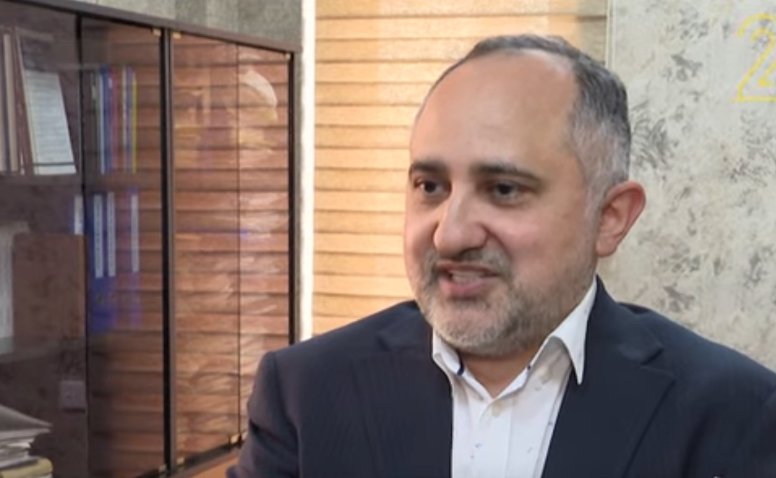
Banking expert and lawyer Akram Hasanov raised the issue in a Facebook post, arguing that the changes are positive but incomplete.
The amendments to the Criminal Code and the Code of Administrative Offenses will take effect on January 1, 2027. They apply when foreign currency proceeds from goods sold abroad are not transferred to Azerbaijan within 180 days.
Under the current rules, if the amount does not exceed 20,000 manats, the violation carries a fine equal to 30% to 50% of the funds not returned.
If the amount exceeds 20,000 manats, the offense is treated as a crime under Article 208 of the Criminal Code and can result in three to five years in prison.
Once the amendments take effect, Article 208 will be repealed. Regardless of the amount involved, the violation will be treated only as an administrative offense, meaning imprisonment will no longer apply.
The fine will amount to 10% to 20% of the outstanding sum for officials and 20% to 30% for legal entities.
Businesses will also be exempt from liability if the money is transferred to Azerbaijan before a court issues its ruling.
Hasanov welcomed the easing of the penalties but questioned why the new rules will not take effect until 2027.
More importantly, he argued that imposing a strict 180-day deadline without examining the circumstances is legally flawed.
The foreign buyer may refuse to pay, declare bankruptcy or face force majeure conditions, he said. In such cases, the Azerbaijani business has already suffered a loss after delivering goods without receiving payment, yet it can still be punished by the state.
“Is this support for business?” Hasanov asked.
He said tax evasion and money laundering should be investigated separately when there is evidence of wrongdoing. However, automatically fining a business solely because the payment deadline was missed makes little legal sense.
Hasanov also pointed to a similar problem under Article 430.4 of the Code of Administrative Offenses.
That provision applies when an Azerbaijani business transfers foreign currency abroad as an advance payment but does not import the goods or recover the money within two years.
In such cases, officials face fines equal to 10% to 20% of the amount, while legal entities can be fined 20% to 30%.
Hasanov said the importer may also be blameless. The foreign supplier may fail to ship the goods, go bankrupt or encounter circumstances beyond its control. Nevertheless, the Azerbaijani company can still be fined.
According to the expert, neither the Central Bank nor customs authorities properly investigate the circumstances before sending cases to court.
“They act not like administrative bodies, but like post offices, simply forwarding the documents to the court and asking for a fine,” he wrote.
Hasanov said courts also frequently impose penalties without determining whether the entrepreneur was personally responsible for the delay.
He highlighted another inconsistency between the rules for exporters and importers.
Starting in 2027, exporters will avoid liability if the money arrives before the court delivers its ruling.
Importers, however, will not receive the same protection. If goods are delivered or the advance payment is returned after the two-year deadline, the business may still be fined.
According to Hasanov, penalties are imposed even when the delay is only one day.
He blamed such inconsistencies on the fragmented way legislation is drafted.
Hasanov argued that bills are often prepared independently by individual government agencies and then pushed through the Cabinet of Ministers, the Presidential Administration and parliament without fully aligning similar provisions.
He also questioned why Azerbaijan continues to use strict currency controls when the country’s foreign exchange reserves reportedly exceed $80 billion.
Hasanov referred to what he described as an unofficial annual limit of 20,000 manats on purchases of foreign currency.
“If everything is fine, what are we so afraid of?” he asked.
AZE.US