AZE.US
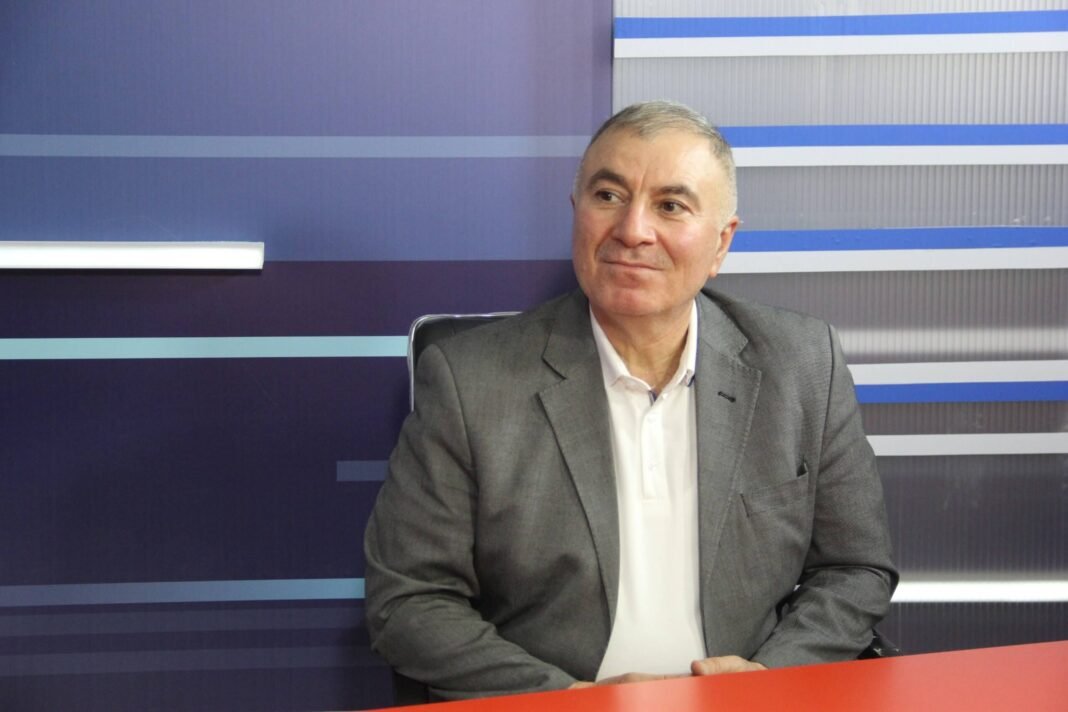
Ukraine’s resistance to Russia matters not only to Europe but also to Azerbaijan and the wider post-Soviet region, an Azerbaijani analyst Ali Mustafa said during an appearance on Media Turk TV.
According to the speaker, countries surrounding Russia increasingly view Moscow as a potential threat to their own security.
“Europe understands that if Ukraine is defeated, it could be next. Countries across the post-Soviet region think in the same way: if Ukraine loses, we could become the next target,” he said.
Mustafa argued that these concerns extend beyond Eastern Europe and the Baltic states to the South Caucasus, Central Asia and northern European countries.
“Ukraine is fighting today not only for itself, but also for Azerbaijan, the South Caucasus and Turkestan,” the Mustafa said, using a historical term for the broader Central Asian region.
He noted that European governments frequently describe Ukraine’s defense as part of their own security, adding that the same logic applies to former Soviet republics.
The analyst acknowledged that Azerbaijan must carefully manage its relationship with Russia and take potential political and security risks into account.
“It is possible that we are doing less than we could. Azerbaijan considers the risks and avoids crossing certain red lines. But we must understand that the future of the post-Soviet region and its freedom from Russian dependence are closely connected to the outcome of the war in Ukraine,” he said.
Mustafa also discussed Ukrainian drone strikes against Russian oil refineries, fuel facilities and other energy infrastructure.
In his assessment, Ukraine has developed a technological advantage that allows it to strike important targets far from the front line, while Russian air defenses have not always been able to prevent such attacks.
The analyst linked the strikes to reported fuel shortages and supply disruptions in parts of Russia. However, he acknowledged that reliable public information about Russia’s strategic reserves and the true condition of its economy remains limited.
“We do not have access to classified or completely reliable data. Our conclusions are based on events and information available in the public space,” he said.
He argued that damage to energy infrastructure could eventually affect transportation, agriculture, industrial production and food supplies, as well as Russia’s ability to sustain military operations.
The speaker conceded that such consequences could also harm ordinary civilians, but described the attacks as part of an effort to deprive Russia of the resources needed to continue the war.
“This is not humane. But is there another way to stop an aggressor? Without fuel, the army cannot fight, and military equipment and ammunition cannot be transported to the front,” Mustafa said.
The remarks reflect the increasingly sharp debate in Azerbaijan over Russia’s role in the region and the broader consequences of the war in Ukraine.
AZE.US