AZE.US
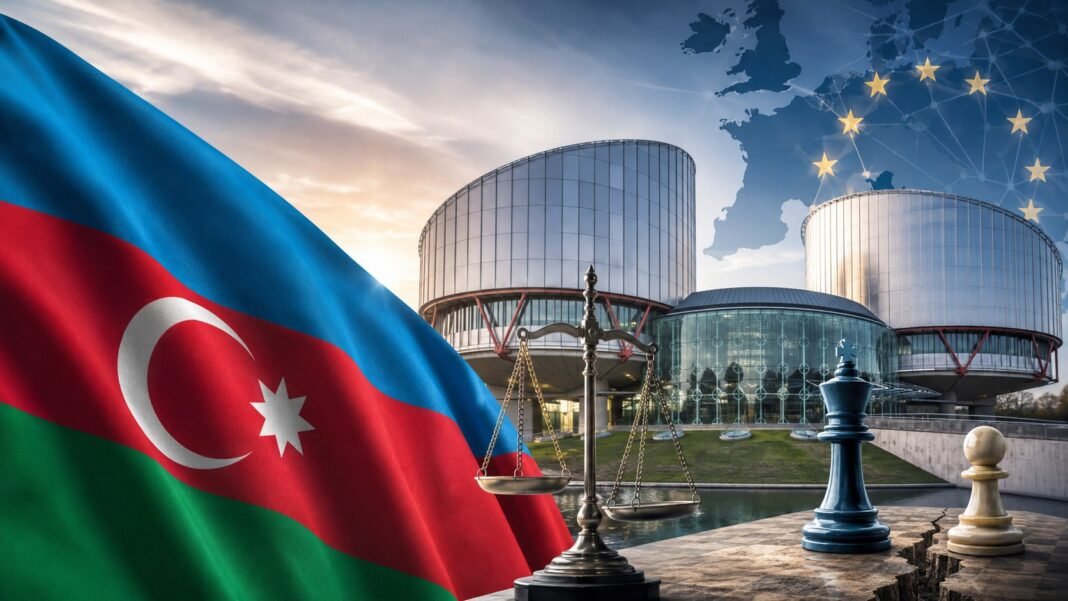
A debate has emerged in Azerbaijan over how the country should proceed in its increasingly strained relationship with the Council of Europe and the European Court of Human Rights.
The discussion followed remarks by President Ilham Aliyev at the Shusha Global Media Forum, where he said Azerbaijan does not recognize rulings issued by judges it did not help elect.
Aliyev noted that Azerbaijan’s delegation has not participated in the work of the Parliamentary Assembly of the Council of Europe, or PACE, and therefore did not take part in voting for judges of the European Court of Human Rights.
His comments raised a practical question: can Azerbaijan reject the court’s rulings while continuing to remain a member of the Council of Europe?
MP: Stopping Membership Payments Would Mean Leaving
Member of Parliament Elman Mammadov argues that Azerbaijan should not withdraw from the Council of Europe.
Speaking to Pravda.az, he said Baku has always accepted what it considers fair rulings by European courts, but rejects decisions it believes are politically biased or directed against Azerbaijan’s state interests.
According to Mammadov, some European institutions apply standards that conflict with Azerbaijan’s laws, national interests and political position.
He also addressed calls for Azerbaijan to stop paying its annual membership contribution to the Council of Europe.
“Suspending the membership payment would mean leaving the Council of Europe. That is not our position,” Mammadov said.
The lawmaker stressed that Azerbaijan remains a member of the organization and continues to be represented there, including through Latif Huseynov, the judge elected in respect of Azerbaijan at the European Court of Human Rights.
Mammadov said relations with European institutions became more confrontational after the 2020 war and Azerbaijan’s 2023 anti-terror operation.
He accused several European bodies, including PACE and some European Union institutions, of taking an increasingly hostile and biased approach toward Azerbaijan after the country restored control over its internationally recognized territory.
At the same time, he argued that Azerbaijan remains closely connected to Europe through energy cooperation, political contacts and bilateral relations with European states.
As an example, he pointed to the recent visit of Slovak President Peter Pellegrini to Azerbaijan, including meetings in Shusha and Khankendi.
Mammadov’s position is that Azerbaijan should remain inside European institutions, but should openly reject resolutions and court rulings it considers discriminatory or politically motivated.
Lawyer: Then Why Continue Paying and Cooperating?
Lawyer and financial expert Akram Hasanov sees a contradiction in that approach.
In a Facebook post, Hasanov said he was less interested in the political side of the dispute than in its practical and legal consequences.
If Azerbaijan no longer recognizes the authority of the European Court of Human Rights, he asked, why does it continue to finance the Council of Europe, keep its judge at the court and respond to the court’s inquiries in cases filed against the Azerbaijani state?
His first question concerned Azerbaijan’s annual membership contribution.
Hasanov argued that a substantial part of the Council of Europe’s budget supports the work of the Strasbourg court. Therefore, he said, refusing to recognize its rulings while continuing to help finance the institution creates an obvious inconsistency.
His second question concerned Latif Huseynov.
According to Hasanov, it appears contradictory for Azerbaijan to say it does not recognize the court’s decisions while an Azerbaijani judge continues to participate in cases whose rulings are accepted by other European states.
His third question focused on the continued cooperation of Azerbaijani state agencies with the court.
Government officials still respond to requests from Strasbourg and submit the government’s position in cases brought against Azerbaijan.
“If we do not recognize the court’s rulings, why are we spending so much time and effort working with it?” Hasanov asked.
He suggested that President Aliyev may not have been given a complete picture of Azerbaijan’s ongoing legal and institutional relationship with the court.
Hasanov Defends the Court’s Role
Despite his criticism, Hasanov said he supports Azerbaijan’s continued participation in the European human rights system.
He acknowledged that cases before the court can take years and that its rulings have limited influence on systemic problems in Azerbaijan’s judiciary.
Still, he said the court can protect individuals from unlawful treatment and pressure domestic institutions to change abusive practices.
Hasanov referred to a case he filed concerning the detention of people unable to repay debts.
The complaint was submitted in 2016, and the court issued its ruling six years later, in 2022.
According to Hasanov, the practice of detaining debtors did not disappear completely after the ruling, but it declined significantly.
He argued that even if the judgment helped only part of those affected, it may have prevented thousands of people from being unlawfully jailed.
For that reason alone, Hasanov said, the court remains necessary as an external legal benchmark and a source of accountability for national judges.
A Political Warning or a Step Toward Withdrawal?
The two positions reflect different interpretations of Aliyev’s remarks.
Mammadov treats the president’s statement as a political warning to European institutions. In this view, Azerbaijan intends to remain in the Council of Europe but will not accept decisions it sees as hostile or biased.
Hasanov interprets the statement more literally.
If Azerbaijan truly rejects the jurisdiction of the European Court of Human Rights, he argues, then its financial, legal and institutional relationship with the court must also be reconsidered.
For now, Azerbaijan remains a member of the Council of Europe. Its judge continues to serve at the European Court of Human Rights, and state agencies continue to communicate with the court.
That leaves the central question unresolved: was Aliyev’s statement a sharp political message to Strasbourg, or the beginning of a broader reassessment of Azerbaijan’s place in Europe’s human rights system?
AZE.US