AZE.US
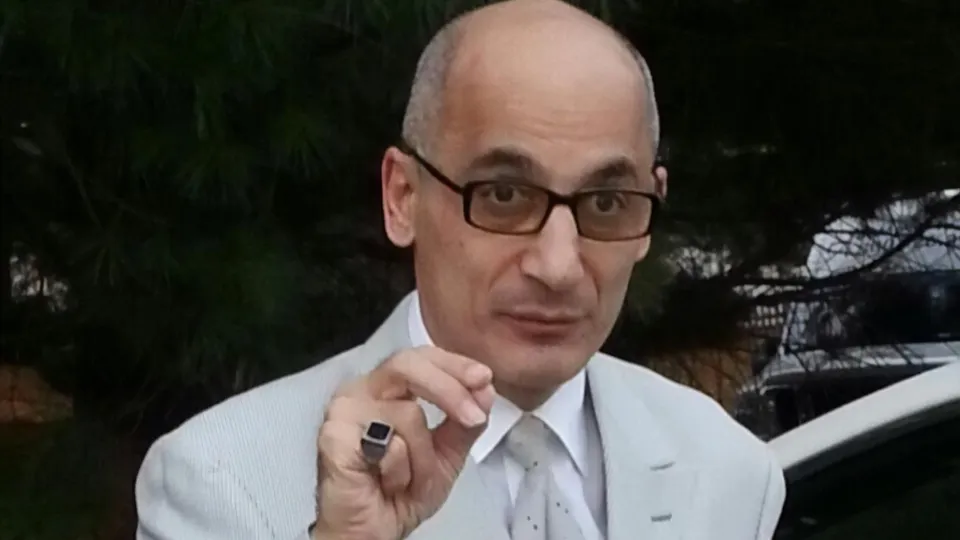
Russia continues to view the South Caucasus through an imperial lens and is struggling to accept Azerbaijan’s emergence as an independent regional power capable of openly defending its national interests, political analyst Ramiz Yunus said.
Speaking on Azerbaijan’s iTV television channel, Yunus said the central message delivered by President Ilham Aliyev at the Shusha Global Media Forum was that Moscow must revise its approach to the South Caucasus because the region’s old balance of power no longer exists.
“The South Caucasus has changed. If the region has changed, Russia, as a major neighboring country, must also change its approach,” Yunus said.
Moscow Is Not Used to Dealing With Baku as an Equal
According to Yunus, Russian political and media circles have reacted angrily to Azerbaijan’s increasingly direct language about the period of the Russian Empire and the Soviet Union.
Aliyev’s references to those eras as periods of occupation and exploitation challenge Moscow’s traditional narrative about Russia’s historical role in the region, the analyst said.
Yunus argued that Russia has long treated former Soviet republics as states that should remain within its political sphere of influence. He pointed to Moscow’s policies toward Ukraine, Georgia, Moldova, Armenia and Kazakhstan as examples of the same underlying approach.
Azerbaijan, he said, has become the strongest example of a former Soviet republic that restored its territorial integrity and developed a foreign policy based on its own national interests.
“Today, Azerbaijan is the only country in the post-Soviet space that has become an independent player and is able to protect its interests,” Yunus said.
Karabakh Changed the Balance of Power
The political analyst said Baku had far less room to speak openly before restoring full sovereignty over Karabakh.
Before the 2020 war, Azerbaijan had to account for Russia’s military and political backing of Armenia. Even after the 44-day conflict, Moscow’s peacekeeping presence in Karabakh continued to limit Azerbaijan’s freedom of action.
That situation changed after Azerbaijan restored full control over Karabakh and Russian forces withdrew from the region.
Yunus said it was only after that shift that the description of Azerbaijan as a “middle power” began to gain wider political significance.
Why Azerbaijan Is Seen as a Middle Power
There is no single definition of a middle power, Yunus said. Nuclear weapons or the size of a country’s military do not automatically determine its influence.
Azerbaijan’s status is instead based on a combination of factors, including its economy, military capacity, geographic position, transportation infrastructure, diplomacy and ability to make independent decisions.
The country has restored its territorial integrity, developed major energy and transit infrastructure and accumulated substantial financial reserves.
Baku has also expanded ties with Turkey, China, Central Asia, the European Union and the United States without becoming fully dependent on any one geopolitical center.
That growing independence, Yunus said, has forced Moscow to become more cautious in its dealings with Azerbaijan.
“Russia can no longer speak to Azerbaijan the way it did five or ten years ago. Today, Moscow has to take Baku’s position into account,” he said.
Anti-Azerbaijan Campaign in Russian Media
Yunus also addressed the wave of criticism directed at Azerbaijan by Russian media outlets and Telegram channels following the Shusha forum.
He argued that the campaign was not spontaneous and was being coordinated from a central political structure.
“There are no coincidences in politics. The Russian information machine is under tight control,” Yunus said.
He linked the campaign to Aliyev’s statements about Russia’s historical role in the South Caucasus, Moscow’s regional policy and Azerbaijan’s support for Ukraine’s territorial integrity.
Russia is particularly irritated, Yunus said, by Baku’s consistent defense of internationally recognized borders.
Azerbaijan’s position applies not only to Ukraine, he added, but also to Georgia and other states whose territorial integrity has been violated.
Russia Will Eventually Have to Change
Yunus said Russia remains politically and psychologically unprepared to abandon its imperial model of relations with neighboring countries.
He compared the war in Ukraine to the Soviet war in Afghanistan, which became a major economic and political burden for the Soviet Union.
Only when the costs of the war become sufficiently high for the Russian state and society, he argued, could Moscow be forced to reconsider its foreign policy.
“If Russia does not want to repeat the fate of the Soviet Union, it must change its approach to the South Caucasus,” Yunus said.
At the same time, he cautioned against underestimating Moscow.
Russia and Iran still retain significant political and military capabilities and may believe that the current international environment could eventually shift in their favor.
Azerbaijan must therefore continue strengthening its state institutions, economy, military and diplomatic influence, Yunus said.
“We have reached the level of a middle power, but now that status must be continuously reinforced,” he concluded.
AZE.US