AZE.US
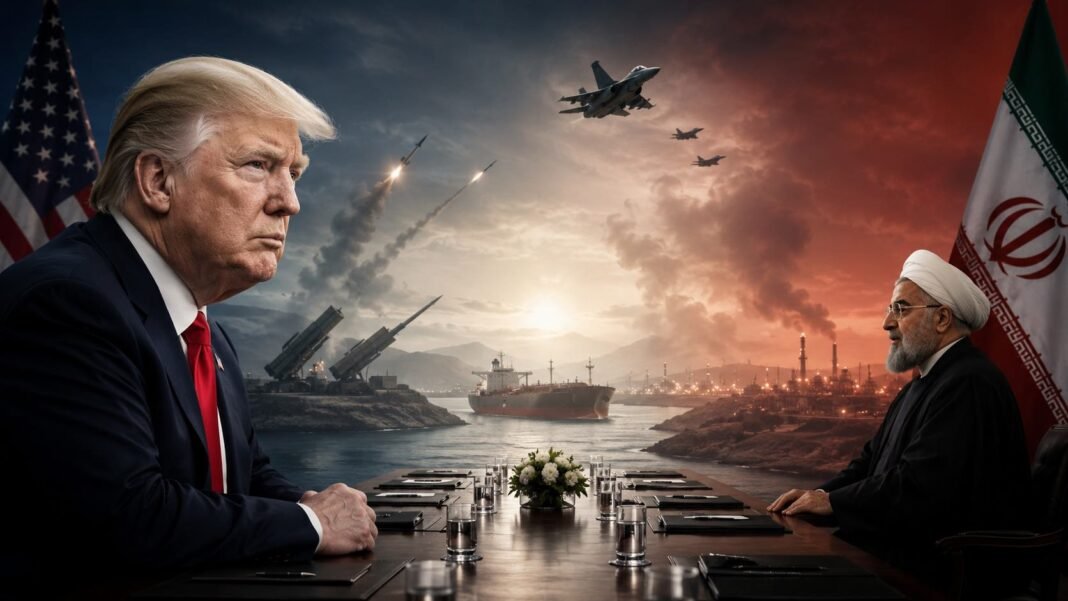
The United States is not seeking an immediate, full-scale war with Iran, but is instead trying to weaken Tehran gradually through blockades, limited strikes and sustained economic pressure, Azerbaijani politician Natig Jafarli said.

Speaking on Pressklub TV, Jafarli compared Washington’s strategy to a “chokehold,” in which pressure is tightened, briefly relaxed and then imposed again.
“The United States uses different versions of the same choking tactic,” Jafarli said. “It imposes a blockade, causes serious damage inside Iran, then loosens the pressure for a while. Iran begins to breathe again and assumes it can outplay Trump. Then the pressure resumes.”
Iran Is Losing International Sympathy
Jafarli said Iran initially gained a degree of international sympathy after the conflict escalated, particularly because of civilian casualties and the deaths of children.
Some European media outlets, politicians and domestic opponents of President Donald Trump also criticized Washington’s actions.
However, Jafarli argued that Tehran’s subsequent behavior has begun to reverse that sentiment.
He pointed to attacks on commercial shipping, attempts to disrupt navigation near the Strait of Hormuz and resistance by parts of the Iranian establishment to previously reached agreements.
“If a protocol has been signed and it allows Iran to sell oil, the question is why Tehran itself is trying to undermine it,” Jafarli said. “Iran’s actions are creating the foundation for a much broader coalition against it.”
He described Iran’s use of the Strait of Hormuz as a pressure tool as especially dangerous.
If Tehran can decide when ships are allowed to pass, he said, Gulf states, Asian economies and European consumers would effectively become dependent on Iranian decisions.
U.S. Benefits From Higher Energy Prices
According to Jafarli, the United States is far less dependent on the Strait of Hormuz than many other countries.
The U.S. is itself a major oil and gas producer, and higher global energy prices allow American companies to expand exports to Europe and other markets.
“The Strait of Hormuz is not critically important for the United States, either in terms of energy supplies or logistics,” he said. “When oil prices rise, America sells its own energy at a higher price. Economically, Washington is not losing. It is gaining.”
The energy crisis also gives the United States additional political leverage over countries that increasingly depend on American oil and liquefied natural gas, Jafarli said.
In his assessment, Washington is using the confrontation not only to increase energy exports, but also to strengthen its influence over major transport routes and energy corridors.
Hormuz Gives Iran Only a Temporary Advantage
Jafarli acknowledged that threatening to close the Strait of Hormuz could provide Iran with short-term leverage.
In the longer term, however, he said the strategy would work against Tehran.
The longer commercial shipping remains under threat, the more actively other countries will develop alternative maritime routes, pipelines and transport corridors that bypass the strait.
“Iran should understand that Hormuz can provide only a temporary advantage,” Jafarli said. “If the situation continues, alternatives will be created. That process has already started.”
Iran could eventually lose one of its strongest geopolitical pressure tools, he added.
No Single Decision-Making Center in Tehran
Jafarli identified fragmentation within Iran’s political system as one of Tehran’s central problems.
He said the civilian leadership, the Islamic Revolutionary Guard Corps, other security structures and influential religious factions appear to be pursuing different interests.
As a result, an agreement reached by one part of the government may be rejected or sabotaged by another.
“The United States says it does not understand who it should negotiate with,” Jafarli said. “It reaches an agreement with one center, and the next day another center appears and destroys it. It may sound almost comical, but it is very close to reality.”
Jafarli argued that Iran’s hard-line factions oppose opening the economy not only for ideological reasons.
The arrival of foreign companies, investors and specialists could weaken the security establishment’s control over large parts of the economy and gradually undermine its political influence.
Proposed $300 Billion Fund Is Not Reparations
Jafarli also addressed reports about a potential investment fund worth approximately $300 billion.
He said the proposal should not be described as U.S. reparations to Iran, as some commentators have suggested.
Under the concept discussed in the interview, Gulf Arab states would provide much of the financing, while American companies would help manage the fund and carry out investment projects inside Iran.
The investments could focus primarily on the oil and gas sector and the development of new industrial facilities.
Jafarli said the prospect of opening Iran to foreign capital is precisely what worries powerful security groups that currently control significant parts of the country’s economy.
“For investment to enter, the country must open up,” he said. “Thousands of companies and tens of thousands of foreign specialists would arrive. It would no longer be possible to control such a system using the old methods.”
“Neither Peace Nor War”
Jafarli said he does not expect an immediate, large-scale ground war between the United States and Iran.
Instead, he predicted an extended period of “neither peace nor war,” marked by maritime pressure, targeted attacks and continued economic isolation.
Washington, he said, is likely to continue striking selected military targets while gradually increasing political and economic pressure on Tehran.
Jafarli also pointed to the relatively restrained reaction of global oil markets as evidence that major investors do not currently expect an uncontrolled regional war.
“If markets truly expected a major war, oil prices would already have moved sharply above key psychological levels,” he said. “That has not happened. Major players appear to see this as a new form of controlled pressure.”
Iran, according to Jafarli, hopes to hold out until political conditions change in the United States or Israel.
Tehran may be calculating that election results could limit the Trump administration’s ability to continue military operations or force Washington to change course.
Jafarli called that calculation mistaken.
He argued that the broader U.S. strategy of controlling energy flows, maritime routes and critical logistics hubs goes beyond the political differences between Democrats and Republicans.
“The events surrounding Iran are no longer only about Iran,” Jafarli concluded. “They are part of a much larger picture in which the United States seeks greater control over global energy and key logistics routes.”
AZE.US