Vesti Baku Editorial Board
There is a distance between proposing an exchange of territory and reaching an agreement on one - and statements made before cameras cannot bridge it.
Recent remarks by Armenia’s leaders have made that clear. Prime Minister Nikol Pashinyan is already describing a border without enclaves, while his deputy Mher Grigoryan says there is no agreement with Azerbaijan. For Baku, the central question now is when Yerevan’s political proposals will turn into concrete commitments.
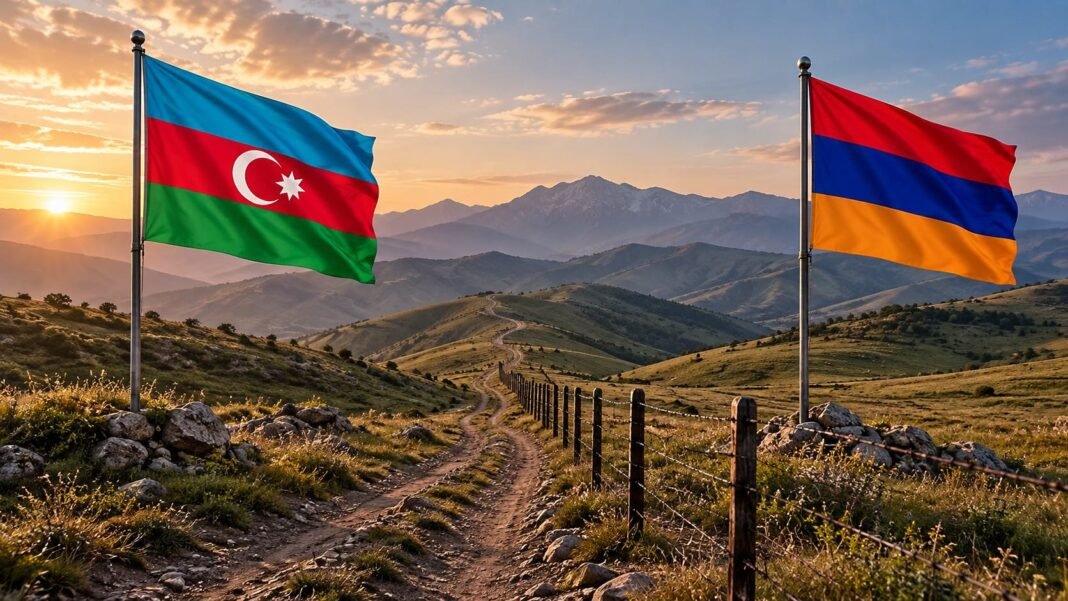
On Oct. 14, Pashinyan outlined a formula: Neither side of the border should retain enclaves or exclaves, and the issue should be resolved through an exchange of territories of equal area. The prime minister referred to his preliminary impressions from contacts with Azerbaijan’s president. But one negotiating party’s preliminary impression does not amount to the other’s consent.
On Oct. 16, Grigoryan was much more definite: “There is no agreement.” The head of Armenia’s border delimitation commission also said that any substantive working-level discussion of the issue in the commission would be disclosed publicly. That statement shows the real stage of the process: A proposal exists, but there is no agreed solution.
Land Cannot Be Measured by Arithmetic Alone
Behind the word “enclaves” are specific territories: Azerbaijan’s Yukhari Askipara, Sofulu, Barkhudarly and Karki, as well as Bashkend, which is controlled by Azerbaijan and is known to the Armenian side as Artsvashen. They are a legacy of the conflict that continues to shape border negotiations.
For Azerbaijan, discussion of their future cannot be reduced to what is convenient for Armenia’s government. If Yerevan proposes an exchange, it must explain exactly which parcels it has in mind, how ownership will be determined and what consequences each side would face.
Equal area does not necessarily mean equal value. Two parcels of the same size can have very different importance for roads, water supplies, agriculture and the security of border villages. The formula of “the same number of square kilometers in return” may work in a political speech, but it is not enough for a state decision.
Baku should assess any option by its long-term consequences. Would it eliminate future disputes? Would it provide reliable transport links? What would happen to the property claims of people who left those territories? Who would implement the deal, and how?
Without answers, an exchange risks moving an old problem to a new border line.
Pashinyan Must Explain the Price of Peace to His Public
The Armenian prime minister faces difficult domestic work. Any territorial decision will give his opponents an opportunity to accuse the government of concessions. But a leader’s political responsibility is precisely to explain the need for a difficult decision before it is taken.
Officials cannot keep telling citizens that peace will bring open roads and economic opportunities while leaving unanswered what decisions must be made to achieve them.
Pashinyan will have to explain why a finally agreed border is better than years of uncertainty, why a mutual renunciation of territorial claims strengthens the state, and why preserving grounds for another conflict costs more than compromise.
Azerbaijan is not obliged to pay for the time Armenia’s government needs for that debate by giving up its own interests.
Why a 2031 Horizon Raises Questions
On Oct. 15, Pashinyan set the goal of securing the signing and ratification of a peace agreement by 2031. That horizon leaves too much time for a process from which practical results are already expected.
For border residents, business owners and future investors, a five-year horizon means continued uncertainty. They need clear rules for work and travel, as well as confidence that the next political crisis will not erase the progress already made.
The issue is especially acute in light of Baku’s position on Armenia’s Constitution. Azerbaijan has consistently demanded the removal of provisions it views as territorial claims against the country, calling that a condition for signing an agreement. The issue will not disappear merely because a new enclave-exchange proposal enters the public agenda.
Yerevan needs a consistent sequence: What decisions are being prepared, in what order and on what timetable? Otherwise, every new deadline will look like another opportunity to postpone earlier promises.
A Compromise Must Close the Dispute
An exchange of territory could be a reasonable solution if it serves Azerbaijan’s interests and genuinely removes a source of future tension. The fact that the option is being discussed warrants neither celebration nor automatic rejection.
What is required is a clear calculation. The terms must be reciprocal, implementation verifiable and the result final. Neither side should retain the ability to renew claims to transferred parcels after the exchange.
Baku therefore should not rush to approve an attractive formula before its substance is known. But Yerevan must also understand that willingness to discuss options matters only when it moves the parties closer to a decision.
Pashinyan has already explained in considerable detail how he envisions peace. Now he must show what commitments he is prepared to make to bring that peace about.
Vesti Baku