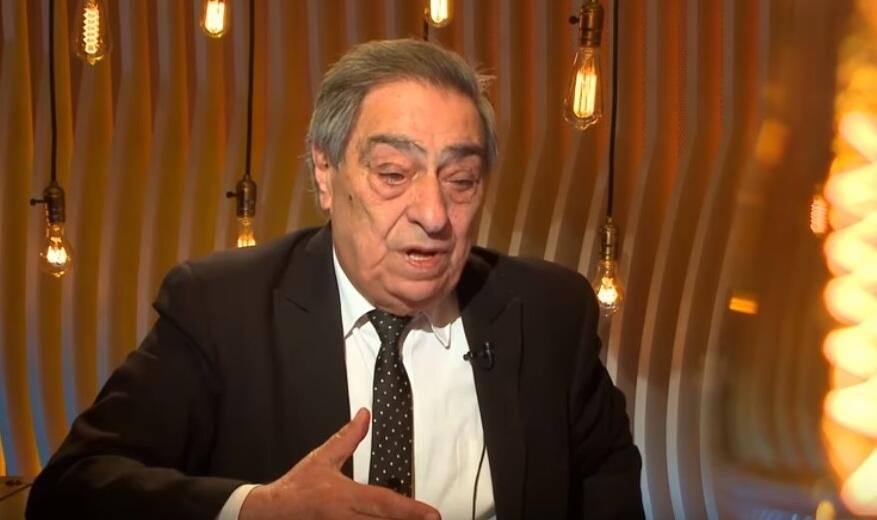
Azerbaijani medical scholar Rashid Mahmudov has sharply criticized nepotism, official arrogance and public sycophancy, arguing that money and connections are displacing professional competence while weak support for science leaves the country dependent on oil revenue.
Mahmudov, a candidate of medical sciences, made the remarks on the “Künc-Bucaq” program while discussing social conditions, education and the responsibility of people holding public office.
He said appointments are too often shaped by family or personal connections rather than knowledge and the ability to perform the job. Mahmudov illustrated the problem with officials inviting relatives into positions even when, as he put it, “the person has no knowledge.”
He was especially critical of some local executive officials, saying they can begin to treat a public position as personal property after receiving an appointment.
“He sits in the chair and behaves as if he inherited it from his grandfather,” Mahmudov said.
Mahmudov argued that responsibility for the situation cannot be placed only on society. He said officials’ conduct, personnel decisions and the systems they establish are a major part of the problem.
A 5,000-Manat Penalty for Sycophancy
Mahmudov also attacked what he described as insincere public praise of those in power. He proposed a 5,000-manat penalty for people who appear on television to engage in sycophancy.
In his view, public condemnation should focus on dishonesty, opportunism and a lack of principle. Serious change will remain difficult, he said, as long as such conduct helps people obtain positions and privileges.
Still Working at 88
Mahmudov said he is 88 years old and continues to work in two places because he must support his family. He said making ends meet from one month to the next is difficult, while adding that his work also allows him to pass knowledge to younger people.
Oil and Resale Trade Cannot Replace Science
Mahmudov criticized the treatment of money as life’s central purpose and said wealth should support education, research, professional training and assistance for people in need.
“There can be no development without science,” he said.
He urged Azerbaijan to create conditions in which young people can become strong specialists and researchers. Otherwise, he said, the economy will continue to rely on oil and on trade built around buying cheaply and reselling at a small markup.
Call for an Educational Television Channel
Mahmudov also criticized the state of television and said he has largely stopped watching Azerbaijani channels except for a limited number of programs.
He urged wealthy people to invest in a science and education channel that could broadcast school lessons and programs on teaching, medicine and other fields. Audience interest depends partly on what broadcasters offer, he said, arguing that viewers need substantive programming that helps them learn and understand the world.
Mahmudov also criticized how the Bologna higher-education system has been implemented in Azerbaijan and said schools should restore comprehensive instruction across subjects. Although Baku has visibly changed, he said, physical development must be accompanied by changes in attitudes toward work, knowledge and responsibility.