AZE.US
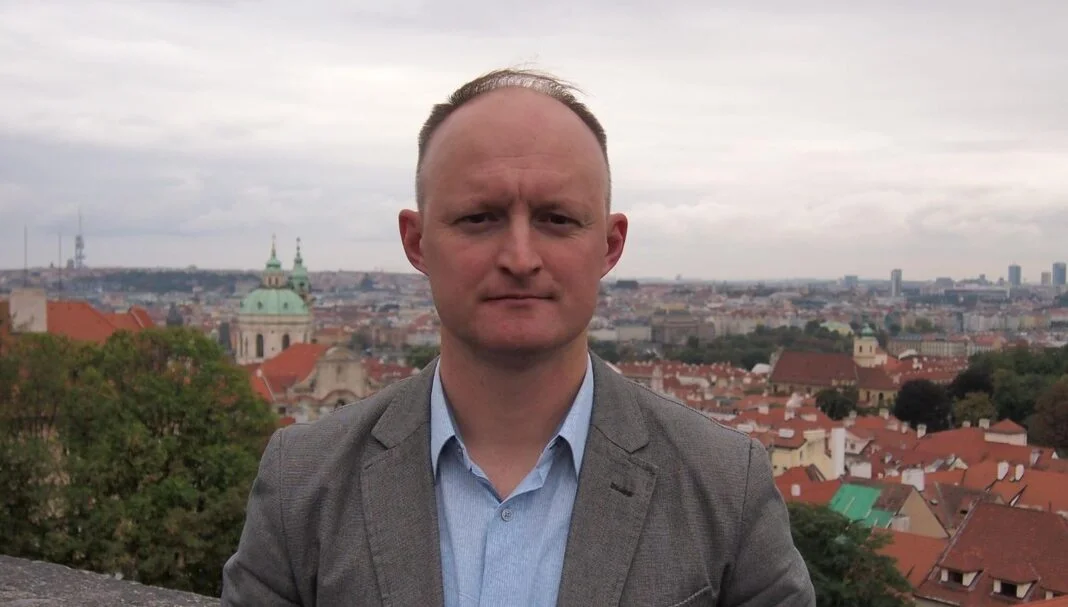
Ukrainian analyst Volodymyr Kopchak said President Volodymyr Zelenskyy’s visits to Baku and Yerevan represent a political blow to Russian influence in the South Caucasus and across the wider post-Soviet space.
Speaking on the YouTube channel Novosti Kavkaza, Kopchak said Zelenskyy’s visit to Azerbaijan had already produced a strong political effect, regardless of the formal agenda or the specific results of the trip. In his view, the symbolism itself matters: Ukraine is no longer absent from the South Caucasus, and Moscow’s former monopoly over regional diplomacy is being eroded.
Kopchak linked the Baku trip with Zelenskyy’s expected visit to Yerevan, saying the two stops should be seen as part of the same broader process. He argued that Ukraine may not be acting as a direct mediator between Azerbaijan and Armenia, but the presence of the Ukrainian president in both capitals has an indirect impact on the peace track.
According to Kopchak, visits of this level strengthen the logic of an Armenia-Azerbaijan settlement outside Russia’s influence. He said the weakening of Moscow’s role is now a separate political track, not merely a side effect of bilateral meetings.
The analyst said Zelenskyy’s presence in the region could also have domestic significance for Armenian Prime Minister Nikol Pashinyan, who has made the peace agenda with Azerbaijan a central part of his political message. Kopchak noted that Armenia still has a large number of undecided voters, and high-profile international signals can affect the political atmosphere ahead of elections.
He also pointed to forces that, in his view, are trying to undermine the Armenia-Azerbaijan peace process. Kopchak said networks that for years operated around the Karabakh issue as pro-Armenian lobbying structures are now acting against the policy of official Yerevan itself, because Pashinyan is moving toward a peace settlement with Baku.
In that context, Kopchak referred to disputes involving European political circles and pro-Armenian lobbying groups, saying their actions now overlap with the interests of those who want to block peace between Azerbaijan and Armenia.
He said Azerbaijan has become an active information player in exposing old corruption and lobbying schemes that helped obstruct the peace process. Kopchak described the current moment as unusual: Baku, he said, is helping highlight forces that are trying to weaken Pashinyan and derail the settlement.
Kopchak also commented on Azerbaijan’s decision not to attend the European Political Community summit in Yerevan. He said Baku would not lose anything essential by staying away, arguing that Azerbaijan can continue developing relations with individual European states and maintain economic ties with the European Union through national governments rather than through a Brussels-led political format.
At the same time, he said the recent visit of an Azerbaijani delegation led by Deputy Prime Minister Shahin Mustafayev to Yerevan was more important for the peace process than the political noise surrounding the European summit.
Kopchak said direct contacts between Baku and Yerevan are moving faster than many expected. Visits by the leaders of Azerbaijan and Armenia to each other’s capitals may still be premature, he said, but the broader process is already ahead of earlier forecasts.
Overall, Kopchak described Zelenskyy’s South Caucasus diplomacy, the direct Azerbaijan-Armenia track and the decline of Russia’s role as parts of the same larger shift. The region, in his assessment, is moving away from the old post-Soviet model in which Moscow claimed the role of chief arbiter over every major conflict.
AZE.US