AZE.US
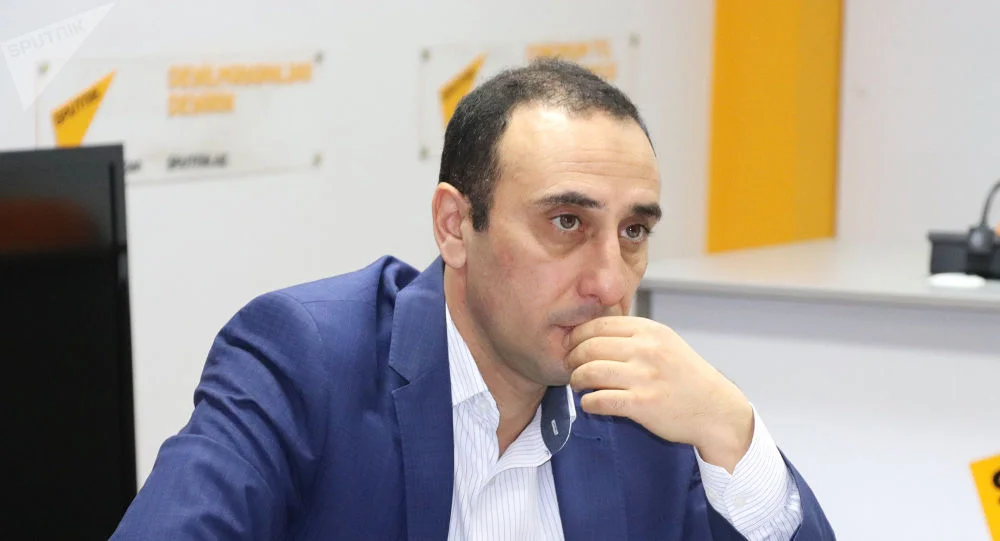
Armenia’s parliamentary election was a major setback for Russia and the political forces backed by Moscow, Azerbaijani political analyst Rizvan Huseynov said.
Speaking on the YouTube channel Novosti Kavkaza, Huseynov argued that Russia’s efforts to influence the election failed to produce the result Moscow expected.
“This was a failure for the Russian side, specifically for those overseeing the Armenian election under Kiriyenko,” he said, referring to Sergei Kiriyenko, a senior Kremlin official.
Huseynov said Prime Minister Nikol Pashinyan’s Civil Contract party secured enough support to form a government, pass legislation and remain Armenia’s dominant political force.
The party, however, did not win the constitutional majority needed to amend the country’s basic law without support from other forces.
Constitution changes could go to a referendum
Huseynov said proposed constitutional changes could instead be put to a nationwide referendum.
Azerbaijan has repeatedly raised concerns about language in Armenia’s constitutional framework that Baku views as containing territorial claims against Azerbaijan.
According to Huseynov, a referendum would allow Pashinyan to share responsibility for any constitutional changes with the Armenian public.
“The entire Armenian people would bear responsibility for the decision,” he said. “That arrangement fully suits Pashinyan.”
Huseynov said the Armenian prime minister has previously sought to frame major political and military decisions, including those connected to the 44-day war in 2020, as a matter of collective responsibility involving state institutions and society.
Pashinyan’s political image
The analyst also discussed Pashinyan’s public image, describing him as a politician who has successfully appealed to rural voters and younger Armenians.
His informal videos, bicycle rides, visits to rural communities and appearances playing drums have helped him reach audiences beyond Armenia’s traditional political establishment, Huseynov said.
He compared the pattern to Turkey, where President Recep Tayyip Erdogan has historically drawn strong support from smaller cities and rural areas while facing greater resistance among parts of the urban intelligentsia.
Huseynov said Pashinyan deliberately positioned himself as an alternative to sections of Armenia’s political and intellectual elite that have taken a harder line on Azerbaijan, Turkey and the peace process.
Azerbaijan’s view of Pashinyan has changed
Huseynov said attitudes toward Pashinyan in Azerbaijan have shifted considerably since he came to power in 2018.
His rise initially generated cautious optimism because he removed the political team associated with former Armenian President Serzh Sargsyan.
That optimism faded as tensions escalated and Pashinyan’s government adopted increasingly confrontational rhetoric before the 2020 war.
Relations deteriorated further during the war, when Armenian forces struck Azerbaijani cities, including Ganja, Tartar and Barda, killing and injuring civilians.
Huseynov said perceptions began to change again after Azerbaijan restored full control over its internationally recognized territory in September 2023 and the two governments intensified negotiations on a peace agreement.
“For us, Pashinyan’s continued election victories are effectively a guarantee that there will be no new war for now,” Huseynov said.
He argued that many Azerbaijanis now see Pashinyan as Armenia’s most acceptable political choice because he is associated with the peace process.
Concern over what comes after Pashinyan
Despite that shift, Huseynov said there is no certainty in Azerbaijan that a future Armenian government would continue the same course.
The main concern is whether revanchist political forces could eventually return to power and challenge agreements reached with Baku.
Huseynov also pointed to the influence of the Armenian Apostolic Church, overseas Armenian organizations and Russia.
He said economic ties, trade and transit projects could make peace more durable by creating practical interdependence between Azerbaijan and Armenia.
“This does not have to mean friendship or brotherhood,” he said. “But trade and joint projects can reduce conflict and strengthen the peace process.”
Russia’s influence is declining
Huseynov said normalization between Azerbaijan and Armenia is also weakening Russia’s role in the South Caucasus.
The fewer unresolved conflicts there are in the region, he argued, the fewer opportunities outside powers have to intervene and maintain influence through confrontation.
He also accused Moscow of using Armenian political, diaspora and religious structures to advance Russian interests.
At the same time, Huseynov said a significant part of Armenian society appears tired of decades of conflict and is unwilling to return to the policies of the past.
A place for Armenia in a wider Caspian region
Huseynov said Armenia could eventually become more integrated into the economic and transport space linking the South Caucasus, the Caspian region and Central Asia.
Azerbaijan would play a central role in that process because of its geographic position and growing transport links with Central Asian states.
Regional integration, he said, should not be based only on ethnic or linguistic ties. It should include all countries interested in security, trade, transit and economic development.
“People need security, the ability to earn a living and confidence in the future,” Huseynov said. “This is a chance for the peoples of the Caucasus and Central Asia.”
AZE.US