AZE.US
President Ilham Aliyev’s official visit to Germany has moved relations between Baku and Berlin to a new level, with military-technical cooperation emerging as one of the most significant elements of the agreements reached during the trip.
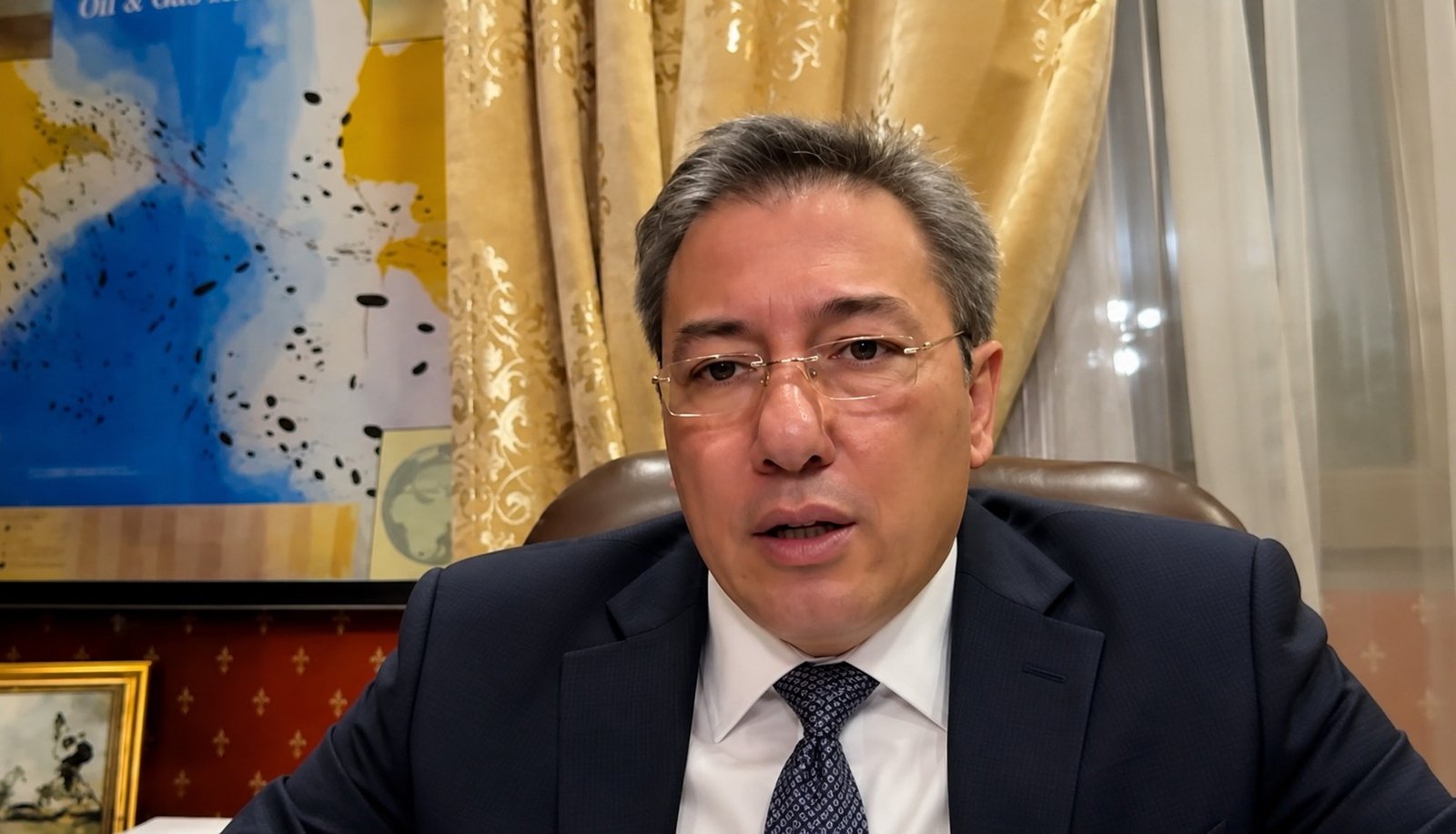
Azerbaijani political analyst Ilgar Velizade, head of the South Caucasus Political Scientists Club, made the remarks on the YouTube program “Modern Conversation with Rasim Babayev.”
According to Velizade, the visit covered political dialogue, trade, energy, transportation and security. He highlighted the inclusion of military-technical cooperation in the strategic declaration signed by the two countries.
“Azerbaijan has never previously signed such an agreement with a major European Union country,” Velizade said.
He argued that the current geopolitical environment has made partners such as Azerbaijan increasingly important to Germany. Cooperation with Baku strengthens Berlin’s position not only in the South Caucasus but also across the wider Caspian and Central Asian region.
Germany has built its relationship with Azerbaijan largely around pragmatic political and economic interests, Velizade said. In his view, Berlin’s approach differs from that of France, which has pursued a more ideologically driven and Armenia-focused policy in the region.
Azerbaijan remains Germany’s largest trade and economic partner in the South Caucasus. Bilateral trade consistently exceeds $1 billion and covers a broad range of sectors.
Baku’s importance to Berlin, however, now extends beyond bilateral commerce. Germany increasingly views Azerbaijan as a critical link in transportation routes connecting Europe with the Caspian region and Central Asia through Turkey and Georgia.
“Access to Central Asia through Azerbaijan is important for Germany,” Velizade said. “Baku’s growing influence, its regional relationships and its transport connectivity have acquired particular significance.”
He said the outcome of Aliyev’s visit suggested that Germany now views Azerbaijan as a middle power capable of pursuing an independent and balanced foreign policy while shaping geopolitical trends in its region.
Velizade also pointed to Aliyev’s description of Germany as the European Union’s leading country. He interpreted the remark as a deliberate message to France, which has traditionally sought a leadership role within the bloc.
“Germany understands that protecting its interests requires balance,” Velizade said. “It cannot put all its eggs in one basket. This is where Berlin’s policy compares favorably with that of France.”
AZE.US