AZE.US
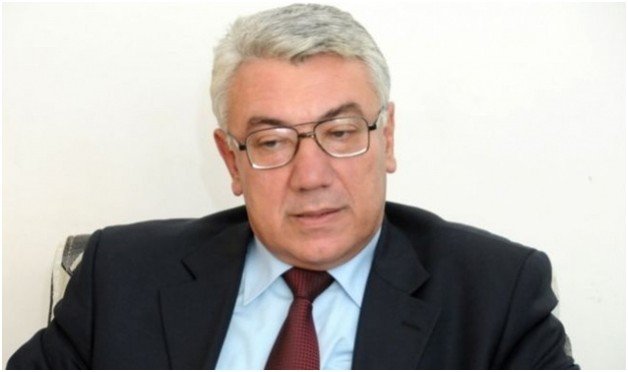
European Commission President Ursula von der Leyen’s visit to Baku helped address many of Azerbaijan’s concerns over the European Union’s approach to the Middle Corridor, political analyst Eldar Namazov said.
Speaking on the Novosti Kavkaza channel, Namazov said the EU had previously expanded cooperation with Central Asia and Armenia while paying insufficient attention to Azerbaijan, one of the main transit countries connecting Asia and Europe.
Baku’s dissatisfaction became particularly visible after Azerbaijan declined to participate in a major forum devoted to the Middle Corridor.
“Azerbaijan made it clear that serious EU work with Baku in this area had not yet begun,” Namazov said. “That message was heard.”
He described von der Leyen’s visit as a response to Azerbaijan’s concerns and said the talks covered nearly all areas in which Baku wants deeper strategic cooperation with the EU.
These include transport links, expansion of the Baku International Sea Trade Port, railway infrastructure in Nakhchivan, green energy projects and an electricity cable planned across the Black Sea.
According to Namazov, the EU is expected to provide about 200 million euros in grants for transport projects in the South Caucasus. That funding could help attract up to 2 billion euros in additional public and private investment.
“Concrete figures, projects and areas of cooperation were identified,” he said. “There was no major issue important to Azerbaijan that the European Union ignored.”
Namazov said a proposal to establish a separate strategic partnership between Azerbaijan and the EU in transport and communications could be particularly significant.
Baku and Brussels already cooperate closely in energy. Transport infrastructure could now become a separate area of partnership, supported by additional financing and joint projects.
Namazov noted that Azerbaijan has spent years financing regional transport and energy infrastructure largely from its own resources.
The country invested in railways, ports, gas pipelines, electricity networks and other facilities that are now used by European countries.
“Once the European Union finally recognized the Middle Corridor as a strategic international route, Azerbaijan had every right to say that its future development should not be financed by Baku alone,” he said.
Namazov argued that Azerbaijan’s earlier investments allowed the country to prepare for possible disruptions to routes passing through Russia and Iran.
Now that the Middle Corridor is becoming strategically important to China, the United States and the European Union, international partners should contribute to the expansion of its Azerbaijani section, he said.
External financing is also important because Azerbaijan continues to spend heavily on defense and reconstruction in Karabakh and East Zangezur.
Large sums are being directed toward demining, roads, housing, electricity networks, gas pipelines and the reconstruction of towns and villages.
“The European Union will now invest in the expansion of the Azerbaijani segment of the Middle Corridor,” Namazov said. “This primarily concerns Nakhchivan and the Baku seaport.”
He also supported the development of an integrated regional energy and transport system that could eventually connect Central Asia, Azerbaijan, Georgia, Armenia and European markets.
According to Namazov, expanding oil, gas, electricity, digital and transport links from China’s borders to Europe could become one of the region’s most important geopolitical projects.
“The European Union has now properly recognized Azerbaijan’s role and identified concrete joint projects,” he said. “I assess Ursula von der Leyen’s visit to Baku very positively.”
AZE.US