AZE.US
Armenia’s political confrontation is entering a new phase following the parliamentary elections, with Prime Minister Nikol Pashinyan strengthening his control over state institutions while opposition groups prepare to challenge him in parliament, the courts and potentially on the streets.
Armenia’s Constitutional Court rejected opposition demands to annul the election results, effectively closing the main legal path for overturning the vote.
Pashinyan’s Civil Contract party won 49.7% of the vote and secured 64 seats, enough to form a government without a coalition, although it fell short of a constitutional majority.
The Strong Armenia bloc led by Samvel Karapetyan received 29 seats, while former President Robert Kocharyan’s Armenia Alliance won 12.
Pashinyan Balances Russia and the West
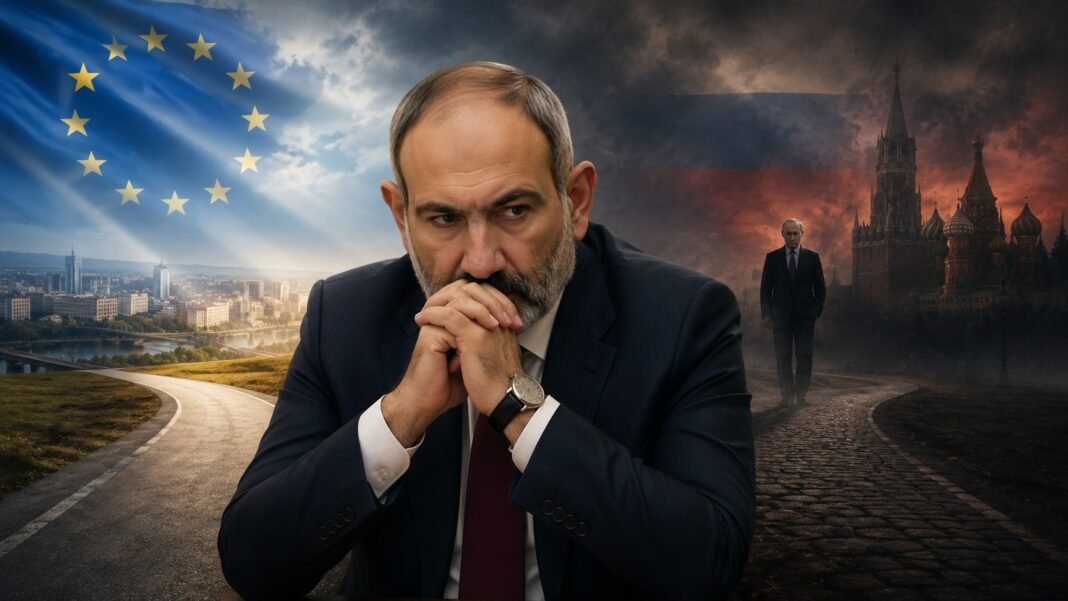
Pashinyan has presented the election result as public support for his policies of peace, sovereignty and closer engagement with the European Union and the United States.
He has accused his main opponents of seeking to return Armenia to confrontation with Azerbaijan and deeper dependence on Russia.
At the same time, Pashinyan has avoided signaling a complete break with Moscow. During a visit to Yekaterinburg, he said Armenia intended to continue developing relations with Russia and remain part of the Eurasian Economic Union.
His current foreign policy appears aimed at expanding ties with the West while preserving access to Russian markets, energy supplies and long-standing economic links.
Tsarukyan Detained for Two Months
One of the most significant developments was the arrest of Prosperous Armenia leader Gagik Tsarukyan.
A court ordered the businessman to remain in pretrial detention for two months. Investigators accuse him of organizing large-scale fraud and money laundering linked to goods, fuel, vehicles and equipment worth approximately $21 million to $22 million that were imported from Iran between 2022 and 2024.
Law enforcement agencies reportedly conducted searches at dozens of addresses linked to Tsarukyan and his business interests.
Tsarukyan has described the case as politically motivated. His lawyers argue that he was himself the victim of fraud because Iranian partners allegedly owed him money.
Several hundred supporters gathered outside the Investigative Committee building, while eight opposition parties described his arrest as part of an effort to weaken and “decapitate” the opposition.
Tsarukyan’s party narrowly failed to enter parliament after receiving 3.996% of the vote, just below the 4% threshold.
Samvel Karapetyan Plans Parliamentary and Street Pressure
Samvel Karapetyan is emerging as Pashinyan’s main parliamentary opponent.
Karapetyan said his bloc would seek a change of government through legal means and had decided to take up its parliamentary seats despite continuing to question the legitimacy of the election result.
He said the opposition would work inside parliament while also watching for political or social developments that could trigger wider street protests.
According to Karapetyan, parliamentary activity and public mobilization should proceed in parallel.
His bloc has also said it plans to engage Moscow over restrictions affecting Armenian exports to Russia.
Kocharyan’s Bloc Rejects a Boycott
Robert Kocharyan’s Armenia Alliance has also decided to enter parliament rather than boycott it.
The bloc said it would use its seats as a political tool against the government. Its stated priorities include resisting constitutional changes, defending the Armenian Apostolic Church, seeking the release of people the opposition considers political prisoners and working toward the removal of the current administration.
Kocharyan’s team is expected to combine parliamentary pressure with public mobilization and international advocacy.
Armenian Society Remains Divided
The election results underline the depth of Armenia’s political divisions.
Pashinyan defeated each opposition force individually and retained a clear parliamentary advantage. However, a large section of active voters supported opposition parties.
Civil Contract received about 727,000 votes, Strong Armenia won around 340,000, Kocharyan’s bloc received approximately 145,000 and Tsarukyan’s party attracted more than 58,000.
Despite this support, the opposition has so far failed to transform its electoral base into a nationwide protest movement.
The demonstrations following Tsarukyan’s arrest drew hundreds of people rather than large crowds across the country. Pashinyan therefore remains firmly in control of the government, the parliamentary majority and the main state institutions.
Armenia Enters a Period of Controlled Conflict
Political confrontation is likely to continue in three main arenas: parliament, the courts and criminal investigations, and limited street protests.
Pashinyan can form a government without coalition partners, but the election did not eliminate the opposition from Armenian politics.
Karapetyan and Kocharyan together control 41 seats, while Tsarukyan’s detention may allow opposition groups to portray the government’s actions as political persecution.
The central question is no longer whether Pashinyan will remain in power in the immediate future. It is whether his opponents can unite parliamentary resistance, public dissatisfaction and street mobilization into a single political movement.
So far, that unity has not emerged.
AZE.US