AZE.US
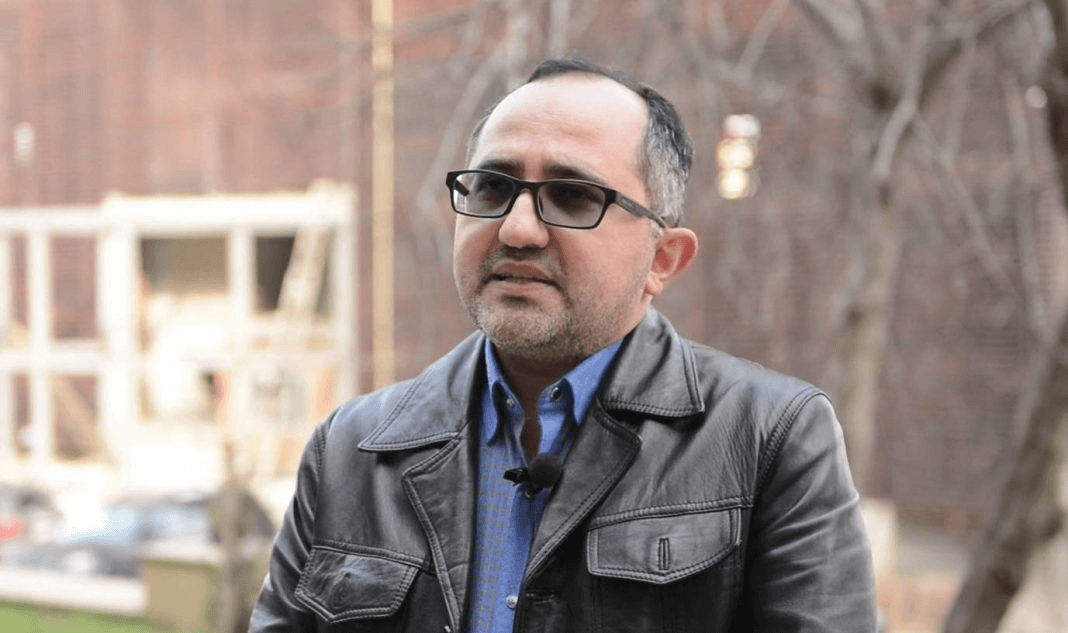
A private construction company cannot forcibly demolish a residential building simply because it has received permission from local executive authorities, Azerbaijani lawyer and property law expert Akram Hasanov said.
As AZE.US reports, Hasanov made the remarks in an interview with the Pozan Media YouTube channel while discussing property rights and the redevelopment of older neighborhoods in Baku.
“Who are you to come and demolish my home? I have a title deed. This is my property,” Hasanov said.
According to the lawyer, property may be compulsorily acquired in only two main circumstances.
The first is when land or a building is needed for a public project, such as a road, bridge, park or other infrastructure. In that case, the government must apply to a court and compensate the property owner.
The second involves a building officially declared structurally unsafe. Hasanov said such a determination must be properly substantiated and handled by the Ministry of Emergency Situations through the courts.
“If a private company wants to construct a new building on the site, it must reach an agreement with the owners. Even if only one owner out of 100 apartments refuses, the building cannot be forcibly demolished,” he said.
Hasanov argued that a decision by the Baku City Executive Authority does not, by itself, give a private developer the right to demolish privately owned property.
He also warned that classifying buildings as “unsafe” should not become a mechanism for transferring valuable land to private construction companies.
Tens of Thousands of Homes Remain Undocumented
Hasanov also addressed the long-running problem of undocumented homes in Baku and its surrounding areas.
According to him, tens of thousands of families have lived in such properties for years, paying for electricity, gas, water and taxes, while the government has not formally registered their ownership rights.
“The state effectively recognizes the house by providing utilities and collecting payments, but it still does not issue a title deed to the owner,” Hasanov said.
Without official registration, residents cannot fully sell or otherwise manage their property, use it as collateral or obtain a bank loan secured by it.
Hasanov proposed a broad property amnesty. Homes that meet safety standards and are not located on oil fields, utility corridors or other hazardous land should be registered, he said.
As one possible mechanism, he suggested issuing title deeds after owners pay a fixed government fee - potentially around 1,000 manats ($588).
“The state budget would receive additional revenue, while citizens would finally have confidence that their ownership rights are officially recognized,” he said.
For homes built in hazardous areas that cannot be legalized, Hasanov said residents should receive compensation. Many such buildings were constructed 20 or 30 years ago while municipal and government agencies failed to intervene, he noted.
After completing the amnesty, authorities should announce that newly constructed unauthorized buildings will no longer be legalized and that those responsible will face prosecution, Hasanov added.
Closed Property Registry Raises Questions
The lawyer also criticized the lack of public access to Azerbaijan’s state property registry.
He said owners of neighboring homes in nearly identical circumstances sometimes receive different decisions: one obtains a title deed, while another is rejected without a clear explanation.
Making property ownership records publicly accessible would allow citizens to identify who owns particular land and buildings and challenge unequal treatment by government agencies, Hasanov said.
AZE.US