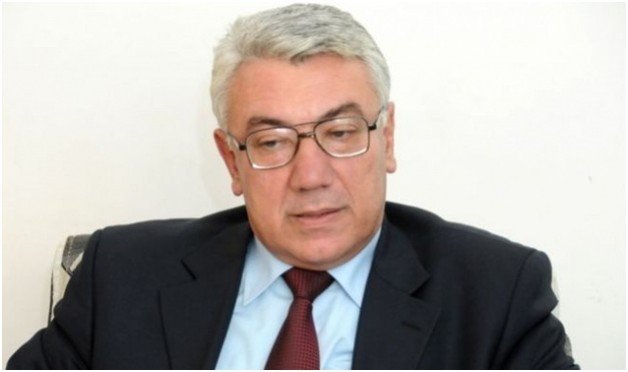
BAKU - Moscow reacts harshly to Azerbaijan’s independent foreign policy, while some figures in Turkey’s governing political establishment are using disputes with Baku to divert attention from domestic problems, Azerbaijani political analyst Eldar Namazov said.
Namazov made the comments in a video interview with journalist Yevgeny Kiselyov. He also warned that delays in the Armenia-Azerbaijan peace process continue to leave the South Caucasus vulnerable to another crisis.
Russia and Azerbaijan’s Independence
Namazov said Russian political and media circles were particularly irritated by statements from Azerbaijani President Ilham Aliyev about Russia’s changed international position, including its role in European energy supplies and the global balance of power.
Aliyev has described the United States and China as the world’s two superpowers. Namazov said Russia’s omission from that list angered people who continue to equate the possession of nuclear weapons with superpower status, noting that India and Pakistan also possess nuclear arsenals.
He criticized arguments invoking the number of Azerbaijanis living in Russia and the money they send home. In Namazov’s view, the diaspora’s position has no bearing on whether Russia qualifies as a superpower, and using it in that debate amounts to political pressure.
Namazov said some Russian circles still regard the independence of post-Soviet states as a temporary departure from an older order. He argued that predictions of Azerbaijan’s failure - from doubts about its energy reserves and export routes to skepticism about its military capabilities - had repeatedly proved wrong.
Disputes With Turkey
Turning to tensions with Ankara, Namazov cited Azerbaijan’s partnership with Israel, debate over reopening the Turkey-Armenia border and political competition inside Turkey. He said cooperation among Turkic states does not give one capital the right to dictate another country’s foreign policy.
Namazov said Azerbaijan’s relationship with Israel had endured difficult periods and included defense cooperation and diplomatic support. He also noted that Baku had tried to help reduce tensions between Turkey and Israel by providing a venue for contacts.
He described criticism by some Turkish figures of Azerbaijan’s school-uniform rules as part of a broader pressure campaign. Namazov defended the rules as consistent with secular education and intended to prevent religious and social divisions inside schools.
He said attention may have been redirected toward Azerbaijan to distract from a financial and political scandal affecting people close to President Recep Tayyip Erdogan. Namazov stressed, however, that Erdogan had not made the critical statements and that Nationalist Movement Party leader Devlet Bahceli, a governing-coalition partner, had supported Azerbaijan and opposed interference in its domestic affairs.
Transit Routes and the Peace Process
Namazov rejected claims that Azerbaijan was artificially promoting itself as an energy and transport hub. He said the country’s role reflected geography: trans-Caspian routes from Central Asia to the West cross Azerbaijan, while the country also sits on the North-South transport axis.
On Armenia, he said Azerbaijan had advanced construction of rail and road infrastructure toward the border while preparations on the Armenian side and steps toward constitutional changes and a peace treaty had been delayed.
Namazov said agreements and reopened transport links would not be enough for lasting peace if territorial revanchism continued to be celebrated. He criticized the public glorification of Garegin Nzhdeh and participants in Operation Nemesis, arguing that normalization also required abandoning ideologies that could justify new territorial claims.
“If this ideological machine is not removed, the danger of entering another conflict and starting a third war with Azerbaijan will remain,” Namazov said, according to the Vesti Baku report.