AZE.Us
The deterioration in relations between Azerbaijan and Russia goes far beyond the Azerbaijan Airlines plane crash, arrests or disputes involving journalists, Russian analyst Sergey Markedonov has said, describing the rift as part of Baku’s broader effort to establish itself as an independent Eurasian power center.
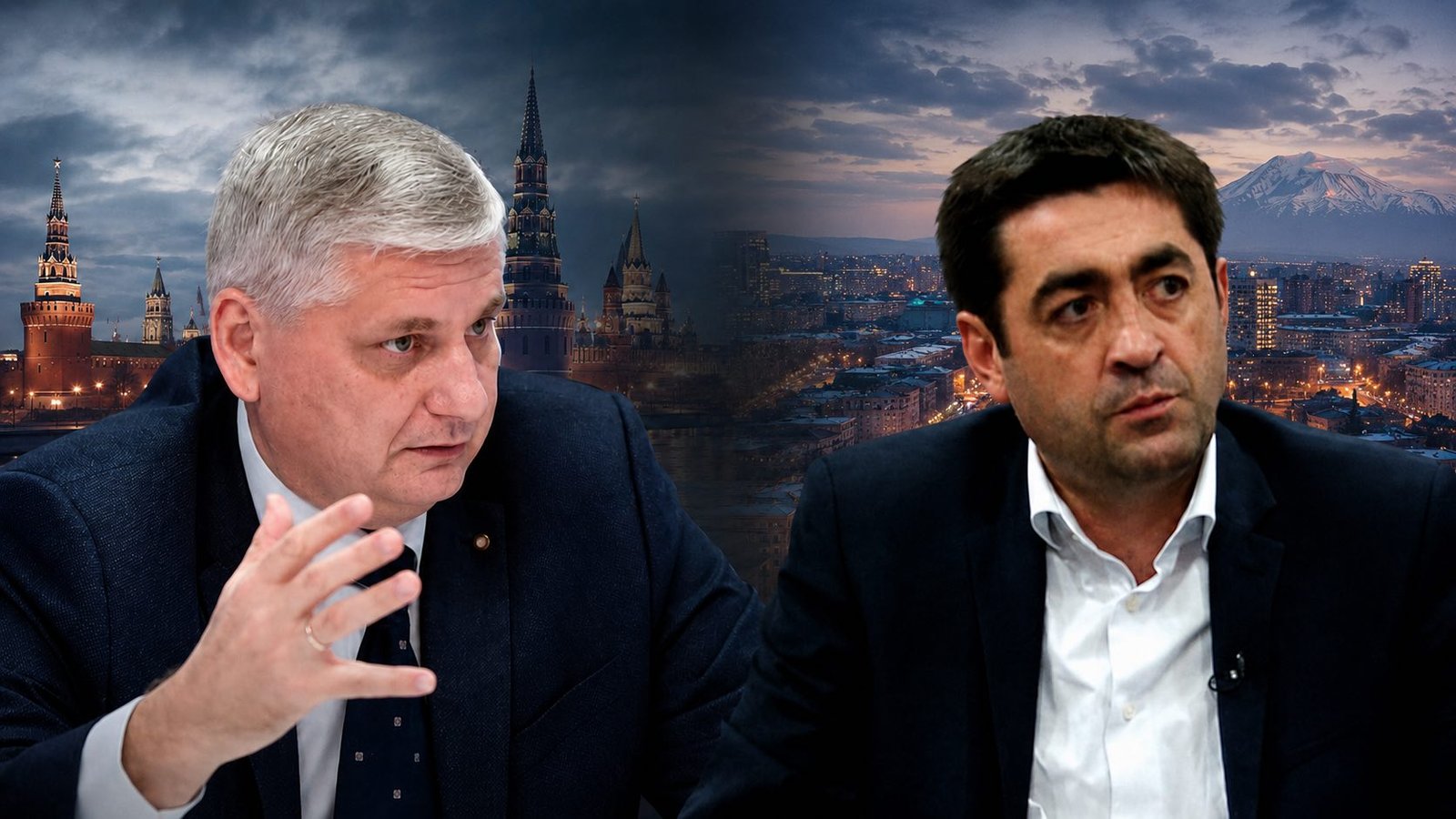
Markedonov, a leading research fellow at MGIMO University and editor-in-chief of the journal International Analytics, made the comments during a debate on the Echo Baku YouTube channel with conflict analyst Arsen Kharatyan, head of the AliQ Media project.
The discussion focused on the emerging political order in the South Caucasus, where Moscow is facing simultaneous - though fundamentally different - tensions with Baku and Yerevan.
“The problems in Moscow-Baku relations are systemic,” Markedonov said. “This is not just about the plane, the detention of a criminal figure, or legal action against media and public-relations figures. The issue is much broader.”
According to Markedonov, Azerbaijan is seeking to demonstrate its autonomy across several foreign-policy fronts and no longer wants to be viewed solely as a South Caucasus state.
Baku increasingly presents itself as a transport and energy hub connecting Central Asia, the Middle East and Europe - a role that leaves less room for Moscow’s former claim to regional primacy.
“Azerbaijan has grown tired of a certain kind of tutelage,” he said, arguing that Baku is asserting its agency “in every direction.”
With Russia heavily focused on the war in Ukraine, Markedonov said, Moscow is increasingly viewed in Baku as an obstacle to Azerbaijan’s attempt to expand its influence across Eurasia and demonstrate that Russia is no longer the region’s exclusive outside power.
He cited Armenian political analyst Alexander Iskandaryan’s formulation that Azerbaijan stopped needing Moscow because it won the war, while Armenia stopped needing Moscow because it lost it.
Markedonov stressed, however, that the causes of Russia’s worsening relations with Azerbaijan and Armenia are not the same.
Armenia’s “De-Karabakhization”
In Armenia, Markedonov said, the dispute with Moscow is only one element of a much broader effort to redefine the country’s political identity and national project after the loss of Karabakh.
He described “de-Karabakhization” as a central ideological trend under Prime Minister Nikol Pashinyan.
In Markedonov’s assessment, the Karabakh movement is no longer merely being reconsidered in Armenia but is increasingly portrayed by the authorities as harmful to the national interest. Unlike earlier speeches and interviews, he said, that position is now reflected in the government’s formal program.
The emerging model envisages reducing Karabakh’s role as a defining national symbol, limiting the political influence of the diaspora and the Armenian Apostolic Church, and recalibrating relations with Russia.
Markedonov argued that pressure on former Armenian leaders and the government’s confrontation with the church should also be viewed within that framework.
He described former President Robert Kocharyan as a living symbol of the Karabakh movement, making action against him politically and symbolically significant in addition to any stated legal grounds.
Concerns Over Political Pressure
The speakers also discussed reports of law-enforcement action involving Kocharyan, members of his family and former President Serzh Sargsyan.
Kharatyan said efforts to recover allegedly stolen state assets had been among Pashinyan’s promises since he came to power in 2018, but argued that the results of that campaign had so far been limited.
He said Armenian society must be shown that any prosecution rests on lawful grounds rather than the prime minister’s personal decision. Kharatyan did not rule out a political dimension to the cases and said he found the methods used against the Armenian Apostolic Church unacceptable.
Markedonov went further, describing recent developments as a coordinated effort to remove meaningful political competitors.
Armenia had once offered an important regional example of political competition, he said, but the current authorities were rapidly undermining that reputation. He pointed to what he described as unprecedented administrative pressure during the latest elections and a continuing campaign against figures capable of challenging the government.
Debate Over Armenia’s European Course
Markedonov also questioned the wisdom of Yerevan’s accelerated rapprochement with the European Union, calling Armenia’s rapid “Europeanization” a strategic error.
He noted that the concept of Russia as an ally had effectively disappeared from Armenia’s new government program, replaced by language about transforming bilateral relations.
Because Russia and the West are now locked in a systemic confrontation, he said, closer Armenian ties with the EU will inevitably trigger a response from Moscow. He also questioned whether France or other European states would be willing to give Armenia meaningful security guarantees or replace Russia’s military presence.
Kharatyan rejected the argument that Moscow should determine Armenia’s foreign-policy choices.
Whether Russia approves of Armenia’s relationship with the European Union is “Moscow’s problem,” he said, adding that public attitudes inside Armenia had changed substantially. Major powers would continue pursuing their own interests, he argued, while Armenia must pursue its own.
At the same time, Kharatyan cautioned against deliberately damaging relations with Russia. Yerevan, he said, still faces difficult negotiations over the Russian military base in Gyumri, Russian border guards, the Armenian railway and other infrastructure controlled or operated by Russian entities.
Russia Will Remain a South Caucasus Power
Despite their disagreements, both speakers said Russia would not disappear from the South Caucasus.
Kharatyan said the region’s political architecture was changing, but Moscow would retain strategic, economic and security interests - just as Turkey and Iran would remain influential regional powers.
“Russia is not going anywhere,” he said. “Its presence is changing, and the relationships are changing. That has to be recognized.”
Markedonov predicted that once the war in Ukraine ends, Moscow will have more time and resources to devote to the Caucasus. That could prompt both Baku and Yerevan to adopt less confrontational rhetoric, although he said there would be no full return to the previous regional order.
The debate highlighted a South Caucasus undergoing a fundamental realignment. Azerbaijan is asserting greater autonomy and expanding its relationships with Turkey, Central Asia and the United States.
Armenia is reconsidering both its post-Karabakh identity and its dependence on Russia. Moscow, though weakened and distracted, remains too large and too deeply embedded to be removed from the regional equation.
AZE.US