AZE.US
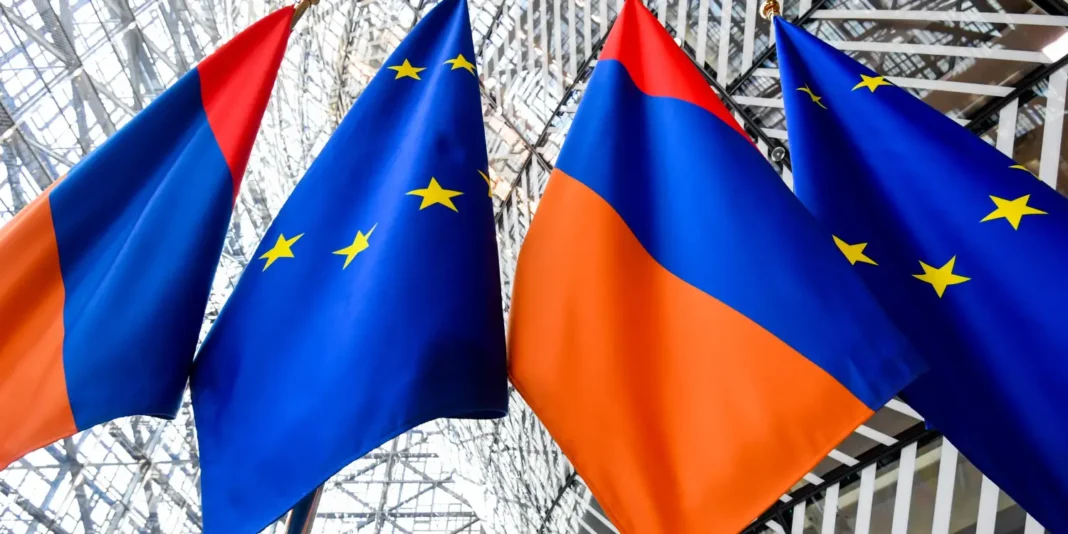
A European Parliament committee has approved temporary trade measures that could remove or suspend tariffs on approximately 80% of Armenian exports to the European Union for two years.
The European Parliament’s International Trade Committee supported the proposal by 35 votes to two, with three abstentions.
The measures have not yet entered into force. The proposal must pass a vote during the European Parliament’s September plenary session before receiving final approval from the Council of the European Union.
The EU Council previously endorsed the European Commission’s proposal without amendments.
Which Products Would Benefit?
The temporary regime would cover a broad range of Armenian products, although tariff quotas would remain in place for several agricultural categories.
According to EU estimates, the measures cover products representing almost 99% of Armenia’s exports of fresh fruit, vegetables and plants to Russia, as well as more than 91% of its beverage and alcoholic-drink exports.
The preferences would remain effective for two years after the regulation enters into force.
Armenia would be required to comply with product-origin rules, cooperate with European customs authorities and refrain from introducing new trade restrictions against EU imports. Continued compliance with the Armenia-EU Comprehensive and Enhanced Partnership Agreement would also be required.
Economic and Political Significance
The European Union says the initiative is intended to help Armenia compensate for Russian restrictions that have disrupted Armenian exports and transit routes.
The decision consequently carries a geopolitical dimension, offering Yerevan greater access to the European market amid deteriorating Armenian-Russian relations.
The EU accounted for only 7.9% of Armenian exports and 13.5% of imports in 2025. Armenia’s ability to benefit from the new preferences will therefore depend on whether its producers can meet European standards and use the available tariff quotas.
For Azerbaijan, the immediate economic impact is likely to remain limited. However, increased access for Armenian agricultural products and beverages could create additional competition in selected European markets.
AZE.US