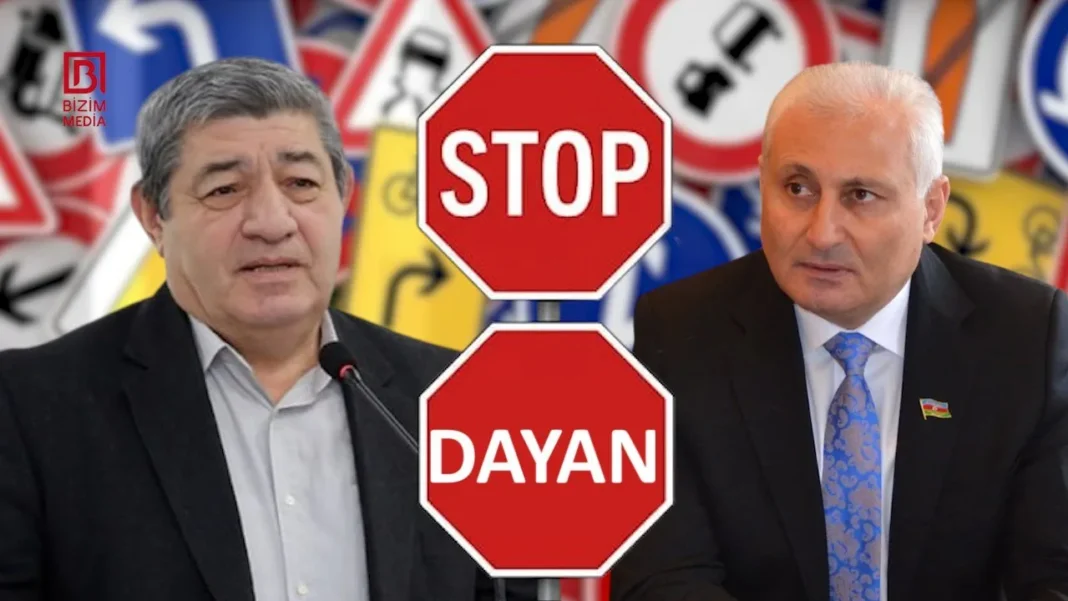
A proposal to replace the international word “Stop” on Azerbaijani road signs with “Dur” or “Toxta” has prompted debate among linguists and the public.
Academician Nizami Jafarov opposed the initiative by lawmaker Hikmet Babaoglu, while Babaoglu said he did not intend to abandon the idea.
Jafarov told Bizim.Media that “Dur” is used in Turkey, while “Toxta” is characteristic of several Turkic languages in Central Asia. He said “Dayan,” meaning “stop,” would be the more natural Azerbaijani choice.
Jafarov nevertheless said not every international word needs a national-language equivalent. The word “Stop” has long been a recognizable part of the international road-sign system, he said, so replacing it should not be treated solely as a matter of protecting the Azerbaijani language.
He said preserving national vocabulary is important but that the purpose of a particular word must also be considered. Everyday speech is different from signs that need to be understood by road users.
Jafarov also told Redaktor.az that “Toxta” could be considered as part of an effort to develop common terminology among Turkic peoples, but no such agreement currently exists.
Babaoglu: “Why Should I Back Down?”
Babaoglu rejected the criticism in an interview with Baku TV and explained his position in detail.
He cited the 1968 Vienna Convention on Road Signs and Signals, arguing that it permits the use of a national language on a mandatory stop sign and that replacing “Stop” would therefore not violate international rules.
Babaoglu said he preferred “Toxta” over the more familiar “Dur” or “Dayan” because, in his view, it conveys several actions at once: stopping, pausing, catching one’s breath and then continuing.
He acknowledged that the word is rarely used in modern conversation and is gradually falling out of active use. That, he said, is precisely why public attention should be drawn back to it.
The lawmaker said he was surprised by the scale of criticism and argued that society should support a diversity of ideas rather than reject proposals merely because they seem unfamiliar.
Asked whether he would withdraw the initiative, Babaoglu said he saw no reason to do so. He added that he was not demanding the immediate replacement of road signs and viewed the idea as a proposal for professional discussion.
What the International Convention Says
The Vienna Convention does allow the mandatory octagonal stop sign to carry an inscription in a country’s national language.
Using the national language would therefore not itself violate the convention. The question of which word Azerbaijan should choose remains open to debate.
Vesti Baku previously reported on Babaoglu’s original proposal.
Source: Vesti Baku.