By AZE.US
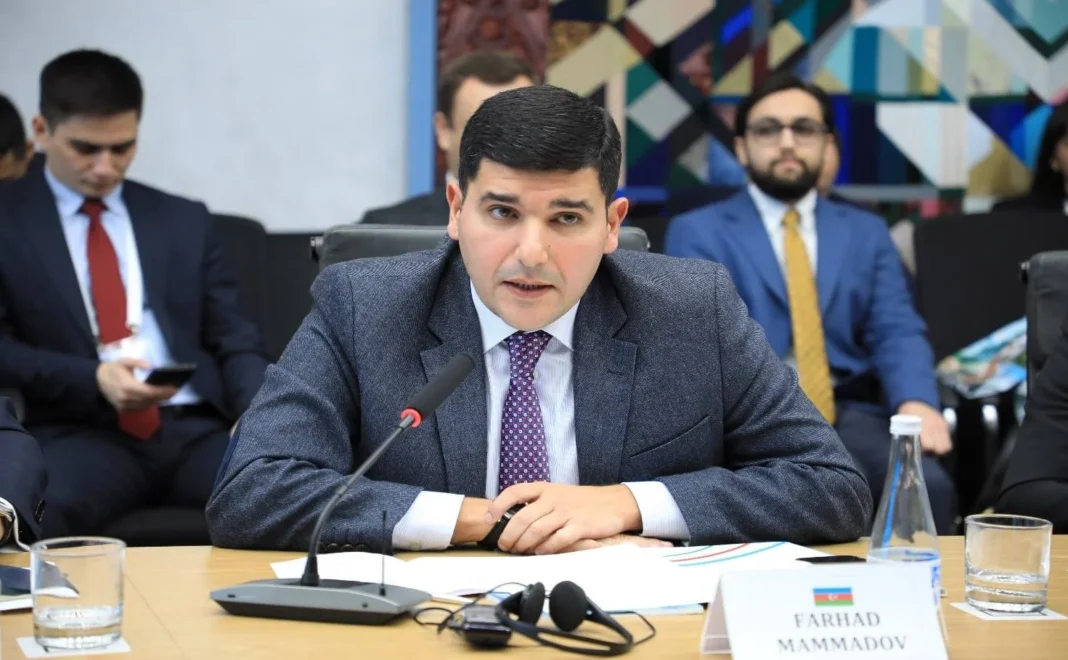
Azerbaijan and Turkey have enough diplomatic channels to contain their current dispute, but simply moving past it without defining clear limits would leave the two allies vulnerable to another crisis, Azerbaijani political analyst Farhad Mammadov said.
In an interview on Caliber’s “Vizavi” program, Mammadov said the disagreement has so far affected only part of the bilateral relationship. He cautioned, however, that it can no longer be dismissed as a social-media quarrel because a Turkish presidential adviser and representatives of the governing Justice and Development Party became involved, drawing responses from Azerbaijan’s governing New Azerbaijan Party and members of parliament.
Presidents Ilham Aliyev and Recep Tayyip Erdoğan meet regularly, while the two governments maintain contacts through their presidential administrations, embassies and state agencies, Mammadov said. Those channels, he added, provide room to halt the escalation before it damages broader strategic cooperation.
Three Disputes Behind the Tension
Mammadov identified three issues driving the friction: Azerbaijan’s partnership with Israel, the possibility that Turkey-Armenia normalization could proceed separately from an Azerbaijan-Armenia peace settlement, and criticism from Turkey over Azerbaijan’s school-uniform rules.
He said the first two are foreign-policy matters on which allies can have different interests. School rules, by contrast, are an internal Azerbaijani matter and should not be folded into political demands from abroad.
The latest tensions grew after Turkish officials and political figures criticized restrictions connected to Azerbaijan’s school dress code. Azerbaijan’s governing party responded on October 13 by defending the rules and warning against outside interference. The dispute has also revived debate over Baku’s ties with Israel and Ankara’s outreach to Armenia. AZE.US previously reported on Mammadov’s assessment of the alliance and sovereignty dispute.
Mammadov said the roots of the disagreement also lie within Turkey, where an ideological approach to foreign policy competes with a more pragmatic, nationally focused course. Baku coordinates with Ankara on regional issues and expects similar attention to Azerbaijan’s interests, he said.
He argued that Azerbaijan’s expectations of Turkey are higher than its expectations of Russia because the Turkish relationship is exceptionally close. That closeness, he said, makes disagreements more sensitive, not less important.
A Graduated Response
Mammadov described Azerbaijan’s approach as “constructive pragmatism”: recognizing a partner’s interests, looking for mutual benefits and defending core principles.
He said Baku’s responses typically escalate in stages. Initial signals appear in the information space, followed by statements from lawmakers and public figures and then formal government positions. If those signals are ignored, the president may eventually make a direct assessment. The current dispute, he said, has not exhausted the space for negotiation.
Azerbaijan should resist pressure and avoid changing course merely because of coordinated information attacks or political criticism, Mammadov said. At the same time, he warned that a prolonged crisis carries costs and that reopening dialogue does not automatically restore a relationship to its earlier condition.
He cited Azerbaijan’s dispute with Russia after the Azerbaijan Airlines crash as an example of Baku stating its position early, waiting for an investigation and responding in stages. Temporarily containing a dispute without addressing its cause, he said, allowed that crisis to expand into other areas, including pressure on Azerbaijani organizations in Russia and on Russian cultural and information structures in Baku.
That experience, Mammadov said, is a reason to stop the tension with Turkey before it affects a wider range of shared interests.
Sovereignty Is Not Negotiable
Commercial questions such as energy prices and project terms can be negotiated, Mammadov said. Sovereignty, independence and territorial integrity cannot.
He said the European Union’s difficulty reaching a full strategic partnership with Azerbaijan illustrates how disagreements over basic political principles can block broader cooperation for years.
Mammadov also criticized the Biden administration’s mediation in the Armenia-Azerbaijan process, including the role of former Secretary of State Antony Blinken. He said a constructive mediator helps implement agreements through investment, organization and the opening of transport links, while attempts to impose outside interpretations can produce new disputes.
Allies inevitably have disagreements, Mammadov said. He pointed to Azerbaijan’s relations with Central Asian states, where sensitive issues have at times been managed or postponed while cooperation continued.
The central lesson, he said, is that Azerbaijan’s willingness to work constructively should not be mistaken for weakness. If actions that Baku regards as irresponsible carry no consequences, he warned, similar episodes are likely to recur.
Source: Vesti Baku, based on Farhad Mammadov’s interview with Caliber.