By AZE.US Editorial Team
The peace process loses credibility when promises of an imminent agreement are paired with a timeline stretching several years into the future. Armenian Prime Minister Nikol Pashinyan has called the signing and ratification of a peace treaty with Azerbaijan a top priority, while setting a deadline of 2031. For a region that needs open transport routes and predictable security, that is an unusually comfortable calendar for delay.
At an October 15 Cabinet meeting, Pashinyan said he intended to complete the signing and ratification process during the current political team’s mandate, which runs through 2031. One of the South Caucasus’ most important security questions has therefore been folded into a five-year government program.
Politically, the formula is convenient. It allows Yerevan to describe peace as its central goal while leaving ample time to explain why that goal has not yet been achieved. Azerbaijan and other regional stakeholders, however, are not obliged to adjust transport plans, economic calculations and security expectations to the length of an Armenian government’s mandate.
Five Years for an Already Agreed Text
In August 2025, the Armenian and Azerbaijani foreign ministers initialed the agreed text of a peace treaty. The Washington declaration recorded that milestone and the need for further steps toward signing and ratification.
After such progress, the public is entitled to a clear account of the remaining obstacles: what still prevents signature, which decisions are required, who must make them and by what date.
The phrase “by 2031” does not answer those questions. It establishes a distant outer limit within which officials can repeatedly point to complicated circumstances. Declaring peace a priority should increase a government’s accountability for producing it, not create a longer window for postponement.
For Baku, the approach is understandably troubling. The region knows the cost of negotiations that continue for years, accumulate mediators and procedures, and still fail to deliver a final settlement.
TRIPP Must Move Beyond Documents
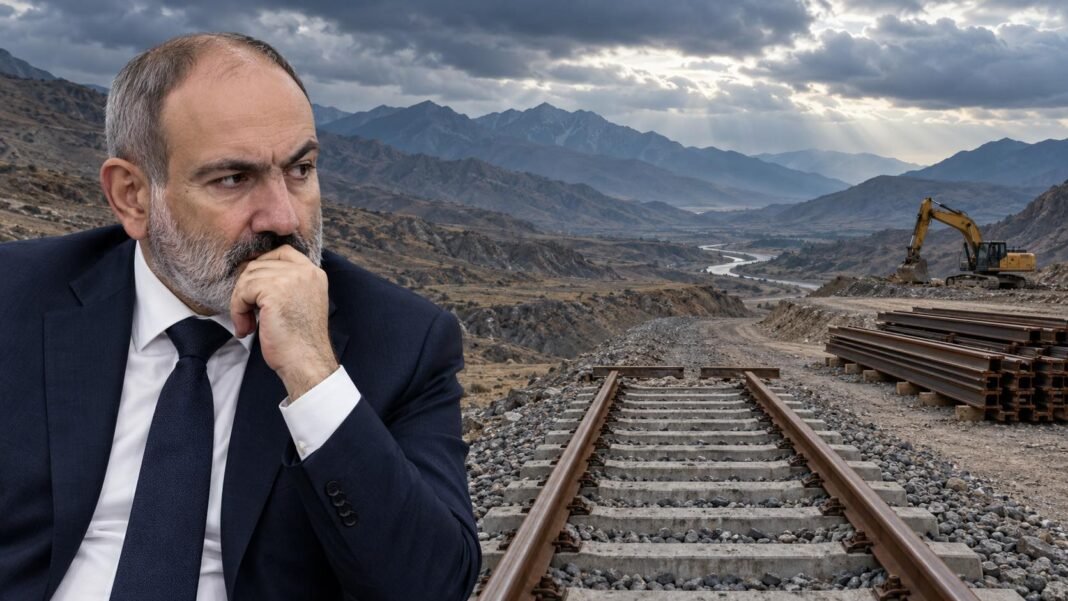
The same test applies to the Trump Route for International Peace and Prosperity, or TRIPP. After repeated declarations about its historic importance, the practical question is increasingly urgent: when will visible work begin on the Armenian section?
An international infrastructure project requires legal procedures, engineering and financing. But each stage should move construction closer and produce results that partners can assess.
A framework agreement between Armenia and the United States published in May 2026 envisages a joint company to implement TRIPP, outlines participation principles and preserves Armenian sovereignty and jurisdiction over the project area. The political credibility of that structure now depends on turning it into an operating route.
Yerevan should provide a schedule: when design work will be completed, when major construction will begin, which sections will receive financing first and which interim benchmarks will measure compliance. Those answers would be more useful than another statement about the project’s historical significance.
Obstacles Require Decisions
Armenia’s railway system remains affected by Russian management arrangements. That is a substantial issue that cannot be resolved through speeches alone. But resolving such conflicts is precisely the job of government.
If Yerevan makes international commitments, it must determine how they fit with existing agreements, infrastructure restrictions and the interests of outside actors. Otherwise, a basic question emerges: how prepared was the political decision in the first place?
A specific delay can be explained if officials also present a plan to overcome it. Trust becomes harder to maintain when the list of obstacles expands while the schedule for practical results remains vague.
Uncertainty Helps Opponents of Peace
Pashinyan should also account for the political price of delay. Every stalled stage gives opponents of normalization another argument: agreements do not work, transport projects remain on paper and neighboring states cannot be trusted.
That environment strengthens revanchist forces. They need only point to the absence of tangible results to claim that the peace agenda has delivered nothing.
A durable process is built through completed obligations, agreed procedures, opened connections and signed documents. Each concrete step narrows the space for political reversal.
Baku Needs Verifiable Results
Azerbaijan should judge the process against measurable criteria. Was a deadline agreed and met? If not, was the cause explained? Was a revised schedule published? Was financing confirmed?
This approach puts the debate where it belongs: on responsibility and implementation, not rhetoric. Armenia also has an interest in that clarity. Functioning transport links and legally settled relations with its neighbors would benefit Armenian businesses, the state budget and citizens.
Pashinyan may plan his government’s work through 2031. Peace with Azerbaijan requires a more convincing answer than the end date of a political cycle.
If peace is truly the top priority, it needs an immediate next step, a concrete deadline and an official responsible for delivery. Otherwise, 2031 risks becoming the symbol of another postponement presented to the region as strategy.
Source: Vesti Baku Editorial.