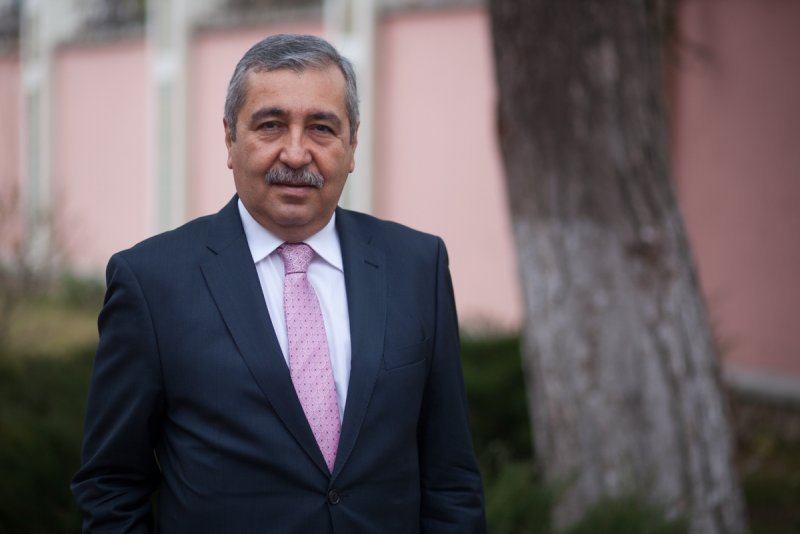
The continued detention of an Azerbaijani serviceman in Armenia and Prime Minister Nikol Pashinyan’s 2031 deadline for completing a peace treaty are weakening confidence in Yerevan’s approach to normalization, Azerbaijani law professor Namik Aliyev said.
Aliyev, a doctor of law, told the Daily Europe Online YouTube channel that progress depends on implementing concrete understandings, including the return of people who cross the undemarcated border by mistake and the removal of legal obstacles to a final agreement.
Soldier’s Case Becomes a Test of Trust
Aliyev said the two sides had an informal understanding that soldiers and civilians who accidentally entered the neighboring country’s territory would be returned. Such a practice is particularly important along sections of the border that have not been fully delimited and demarcated, he said.
He said Azerbaijan had returned Armenian servicemen in previous cases after notifying the other side and argued that Armenia should take the same approach toward Azerbaijani serviceman Nasimi Musayev.
Armenian authorities detained Musayev on October 1 after saying he crossed into the Syunik region. Armenian investigators have alleged that he entered a home and shot and wounded a resident. Musayev has said he did not intend to cause harm.
Aliyev described the soldier’s continued detention as inconsistent with the informal understanding and said such practical cases shape public confidence in whether normalization commitments will be honored.
Why the 2031 Timeline Raises Questions
Aliyev also criticized Pashinyan’s statement that Armenia should complete the signing and ratification of the peace agreement by 2031. The Armenian prime minister announced that goal at a Cabinet meeting on October 15, linking it to the current political team’s term.
Aliyev called the timeframe unjustifiably long. He said caution before Armenia’s parliamentary elections could be explained by domestic political pressure, but that concrete decisions would be expected afterward.
“I do not believe this,” Aliyev said when asked about prospects for signing the already initialed agreement under Yerevan’s current approach.
Constitutional Preamble at Center of Dispute
Aliyev identified the preamble to Armenia’s Constitution and its reference to the Declaration of Independence as the key legal issue. Azerbaijan argues that language in the declaration related to Karabakh creates a basis for territorial claims.
He said the problem could be addressed by changing the preamble without waiting for an entirely new constitution. Armenia’s wider constitutional reform remains a domestic matter, he said, while Azerbaijan’s concern is the removal of provisions that could call recognition of its territorial integrity into question.
“This is not Azerbaijan’s whim or a demand by the victorious side. It is elementary legal logic,” Aliyev said.
He warned that leaving the disputed legal basis intact could create a constitutional challenge after a treaty is signed, complicating ratification or implementation.
Aliyev Disputes Constitutional Court Reading
Aliyev also challenged an interpretation he attributed to Armenia’s Constitutional Court that treats the preamble as unamendable. He pointed to Article 203 of the Constitution, which explicitly lists Articles 1, 2, 3 and 203 itself as unchangeable, without separately naming the preamble.
He argued that expanding the list through judicial interpretation creates another barrier to legal changes needed for a settlement.
International Law and a Durable Agreement
Despite his criticism, Aliyev said a lasting peace must protect the rights of both countries. An agreement that unfairly limits Armenia’s rights could fuel resentment and lay the groundwork for another conflict, he said.
He argued that Azerbaijan needs a legally reliable treaty grounded in international law and designed to prevent future attempts to revise the parties’ obligations.
Aliyev identified pressure from revanchist and nationalist forces in Armenia as a major risk, saying it could prevent the government from consistently implementing its stated normalization policy.
He rejected suggestions that his criticism of Armenia was linked to recent disputes in the Azerbaijani and Turkish media over school uniforms and hijab rules. Those controversies involved individual political forces and did not change the character of relations between Azerbaijan and Turkey, he said.
Aliyev said his concerns about Yerevan instead rest on the serviceman’s case, constitutional questions and the timeline for signing the treaty. Progress, he said, requires Armenia’s government to move from declarations to specific decisions that demonstrate its commitment to ending the conflict.
Source: Vesti Baku, based on Namik Aliyev’s interview with Daily Europe Online.