Vesti Baku Editorial Board
Young people are urged to have children earlier, more often and with greater confidence. But before demanding children from them, society should answer a different question: What kind of life are we offering future parents and the child?
A discussion about Azerbaijan’s falling birth rate on the “Bakı Reallığı” program brought familiar ideas about family into conflict. A child as happiness. A child as responsibility. A child as the continuation of a family line, support in old age or a way to strengthen a relationship.
The discussion raises a question rarely heard in demographic debates: Why does a person who has not even been born already have so many obligations to adults?
The child is expected to keep the parents together, fulfill a grandmother’s hopes, carry on a grandfather’s surname, enter a prestigious profession, care for a father in old age and, at the same time, improve national statistics.
The child’s own life often comes last on that list.
Young People Are Asked for Confidence They Are Not Given
It is convenient to explain reluctance to have children as selfishness. Critics can blame social media, foreign culture, a love of travel or an unwillingness to “endure what our parents endured.” Once that explanation is accepted, none of those making the accusations has to change anything.
But someone delaying parenthood may be asking entirely responsible questions.
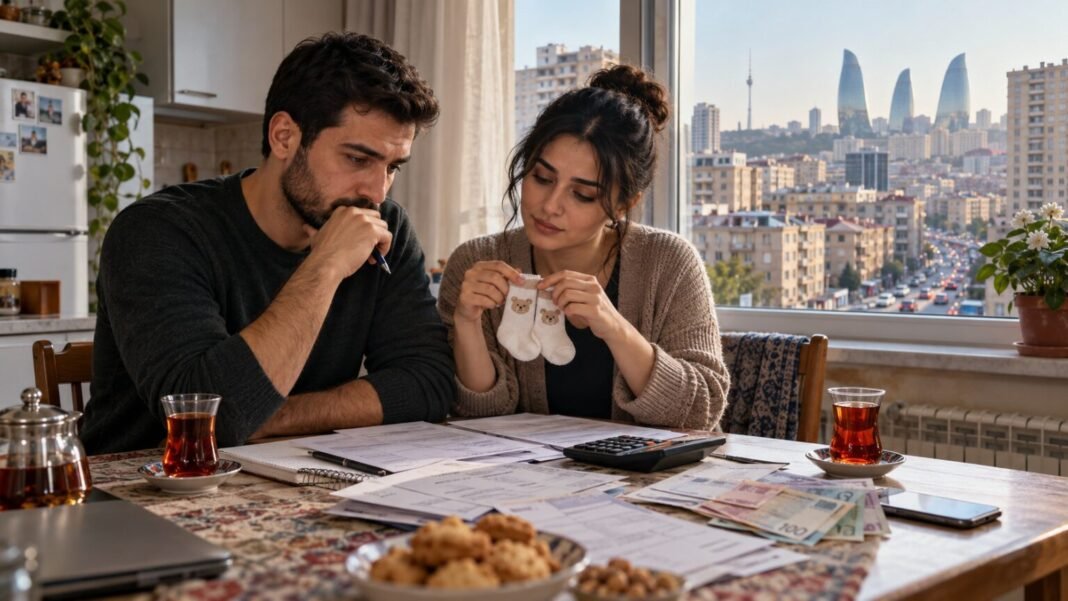
Where will we live? Who will stay with the baby? Can we survive on one salary? Will the mother still have a job after maternity leave? What happens if the child becomes ill? Who will help if the relationship breaks down?
Those questions cannot be answered with the phrase, “God will provide for the child.” For a person of faith, it may offer hope. But hope does not replace income, housing or daily care.
It is especially easy to urge courage when someone else will face the sleepless nights, lost earnings and need to ask for money.
Loving children does not eliminate the need to calculate costs. On the contrary, love is precisely what makes responsible people count them.
Why Is Support for Families Dismissed as Laziness?
A recurring objection in these debates is that people have children for themselves and therefore should bear all the costs themselves. Requests for child benefits can then be portrayed as an attempt to live at someone else’s expense.
But society cannot simultaneously declare the birth rate a matter of national survival and treat every cost associated with that future as the parents’ private problem.
If society needs new generations, support for families must take concrete forms: affordable child care, medical treatment that does not trigger financial panic, employment compatible with raising children and clear, stable support programs.
A cash payment alone will not solve every problem. That does not make it useless. Food, clothing and care are real expenses for families, even if outsiders consider them insufficient grounds for assistance.
Government support does not buy a child from the parents. It shares part of the expense that society itself describes as socially important.
Motherhood Cannot Be Left to Women Alone
It is revealing how quickly praise for the beauty of parenthood turns into claims that nature supposedly gave women the strength to endure everything.
It is a convenient formula. The mother will cope with sleep deprivation because she has instinct. She will leave work because the child matters more. She will ask her own mother for help. She will endure. She will get used to it.
But fatherhood requires participation in the child’s daily life: feeding the baby, putting the child to bed, going to the doctor, staying home when needed, listening and noticing a partner’s exhaustion. Providing money is essential, but it does not exhaust parental responsibility.
A woman who wants to understand how her life will work after childbirth should not have to apologize for planning ahead. She has the right to rely on a partner, not merely on her own endurance.
Children Do Not Repair Relationships
The claim that a marriage without children will inevitably run out of purpose assigns an adult responsibility to an infant.
If spouses have nothing to say to each other, cannot negotiate, do not respect boundaries and turn ordinary disagreements into power struggles, the arrival of a child will not relieve them of the need to solve those problems.
It is unfair to bring a new person into a family in the hope that the child will keep it from breaking apart.
It is equally unfair to assign a child the task of fulfilling a parent’s abandoned ambitions. A father dreamed of becoming a doctor, but the son is expected to study medicine. A mother wanted a prestigious career, but the daughter must achieve it for her.
Care gives children opportunities. Control demands that they use those opportunities only according to someone else’s script.
Respect Matters More Than Debt
The desire to help aging parents is understandable and worthy of respect. But there is a major difference between closeness and lifelong indebtedness.
“I want to be with you” and “you owe us because we raised you” create very different relationships.
Parents decide to have a child. The child does not sign a contract promising to repay the cost of being raised. Love is difficult to preserve when every independent choice is presented as ingratitude.
It is harder still to speak seriously about the value of children while judging them according to whether a boy or a girl is born. Society cannot demand respect for motherhood while pressuring women over the sex of a future child.
The decision to become a parent also does not require the approval of relatives or a public tribunal. Those who want children but postpone parenthood need conditions that allow them to make that choice without feeling they are leaping into financial and family uncertainty.
A simple first step would be to stop blaming young people and listen to what they actually fear.
A child should enter a family prepared to offer space, time and care. The child’s own life deserves that consideration long before anyone asks what benefit the child will bring to others.
Source: Vesti Baku editorial.