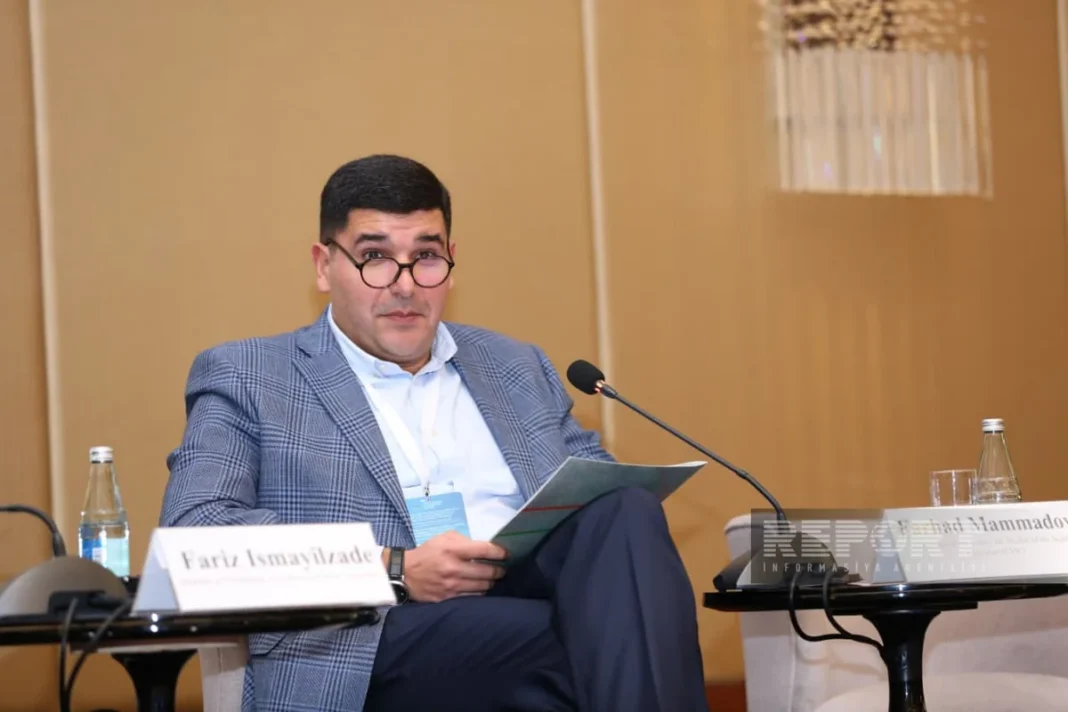
Azerbaijani President Ilham Aliyev’s decision not to attend an Organization of Turkic States summit in Ankara amounted to a political signal to Turkey, political analyst Farhad Mammadov said.
Mammadov said the current disagreements remain largely in the political and information spheres and have not affected economic, military or defense-technical cooperation between the two allies.
He made the assessment in an interview with the Novosti Kavkaza channel, arguing that the episode had prompted Turkish experts to reconsider a relationship many in Turkey had come to take for granted.
Aliyev did not attend the Oct. 30 summit in the Turkish capital despite a personal invitation from President Recep Tayyip Erdogan. Foreign Minister Jeyhun Bayramov represented Azerbaijan. Azerbaijani media cited prior commitments, while the absence fueled public discussion of strains between Baku and Ankara. Azerbaijan’s Foreign Ministry confirmed Bayramov’s participation and said he addressed the summit, which adopted the Ankara Declaration.
Mammadov rejected suggestions that Azerbaijan might leave the Organization of Turkic States or had lost interest in it. He said Baku’s ministerial representation, initiatives and continued participation in the organization’s institutions showed that Turkic cooperation remained an important part of Azerbaijani foreign policy.
Alliance Requires Respect for Independent Policy
The analyst identified several sensitive issues in relations between Baku and Ankara, including the possible reopening of the Turkey-Armenia border, Azerbaijan’s cooperation with Israel and what he described as attempts to influence Azerbaijan’s domestic political agenda.
Allies can discuss foreign-policy differences, Mammadov said, but he argued that carrying those disputes into Azerbaijan’s internal politics crossed an acceptable line.
He also stressed that communication between the two governments continued. The presidents remained in contact, foreign ministers were meeting and diplomatic channels were working, he said. The immediate task for diplomats was to contain the disagreements and prevent them from spreading into practical cooperation.
Same-day reports by The Associated Press and Reuters also linked the tensions to criticism in Turkey of Azerbaijan’s school-uniform rules, Baku’s objections to outside interference and the two countries’ differing approaches to Israel.
Mammadov said some groups in Turkey were using Azerbaijan’s relations with Israel to pressure Baku, while others approached ties with Turkic states through what he described as a hierarchy in which Turkey expected seniority.
“The main goal now is to isolate the influence of anti-Azerbaijani groups in Turkey on decisions concerning Azerbaijan,” Mammadov said.
Diplomatic Signals Are Accumulating
According to Mammadov, Azerbaijani diplomacy registers individual actions by its partners even when Baku does not respond immediately. The level of representation at official events, responses to requests and reciprocity can all carry political meaning, he said.
He cited Azerbaijan’s representation at an event marking Turkey’s Republic Day and linked it to the level at which the Turkish government had previously been represented at an Azerbaijani national celebration.
Such steps, he said, were intended to communicate dissatisfaction and encourage a change in approach. He argued that the current tensions should produce a clearer understanding of mutual obligations and each country’s sensitive issues.
At the same time, Mammadov cautioned against underestimating the depth of the relationship. He pointed to the Trans-Anatolian Natural Gas Pipeline, SOCAR investments, transport projects and the role of Turkish companies in reconstruction work in Azerbaijan.
Those projects rest on years of joint work, major investment and established institutions, he said, adding that the political dispute had not yet triggered a reassessment of practical cooperation.
Central Asian Cooperation Does Not Compete With OTS
Mammadov also rejected the idea that Azerbaijan’s closer participation in Central Asian formats weakened the Organization of Turkic States.
Central Asian countries have their own regional agenda, including cooperation with Tajikistan, he said. That format addresses issues extending beyond Turkic cooperation, while Azerbaijan can participate in both tracks and retain its role in transport links connecting Turkey with Central Asia.
The analyst said the path out of the current dispute depended on whether the two sides could listen to each other and establish durable channels for managing disagreements. The depth of the alliance, he said, provided a sufficient foundation for doing so.