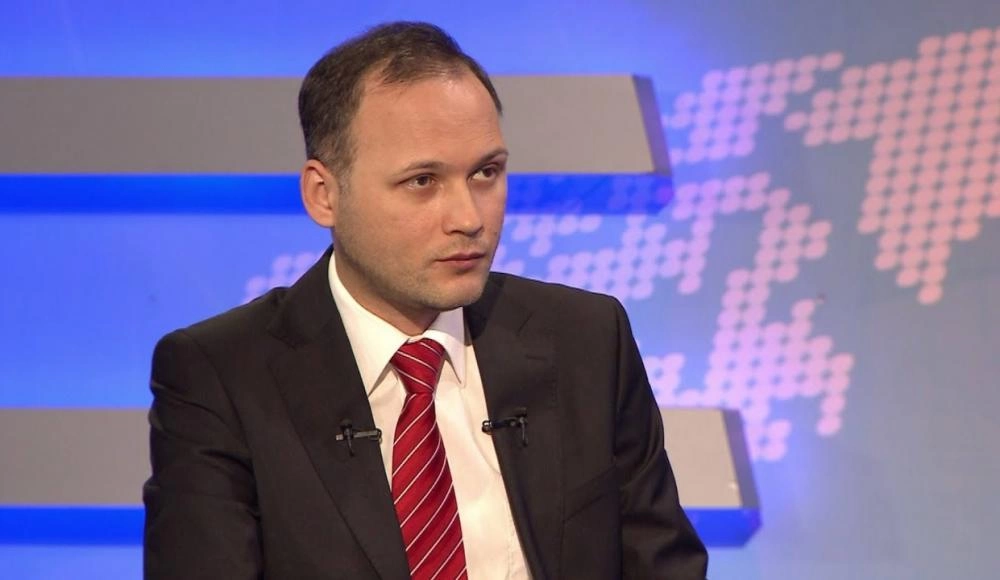
Recent tensions between Azerbaijan and Turkey have not threatened the two countries’ strategic alliance, but they have exposed serious disagreements long obscured by the slogan “One Nation, Two States,” independent analyst Ali Hajizade said.
Hajizade discussed the past month’s events and their effect on bilateral relations in an interview with the Apostrof YouTube channel, according to a Vesti Baku report.
Military, political and economic cooperation between Baku and Ankara remains built on a solid foundation, Hajizade said. The deeper problem is that the two closely related nations do not always view national identity, religion and their respective state interests in the same way.
Two States Mean Two Sets of Interests
Hajizade said it was a mistake to assume that ethnic and historical ties automatically produce identical political priorities.
Azerbaijan and Turkey operate under different geopolitical conditions, possess different resources and employ their own foreign-policy tools. Those differences eventually produced a clash in their approaches, he said.
He did not characterize the recent information campaign against Azerbaijan as an effort to destroy the alliance. Instead, he said, it appeared intended to pressure Baku into making certain decisions or abandoning others.
In his assessment, the campaign failed to achieve its objectives and ultimately imposed political costs on those who initiated it. Official rhetoric has since quieted, although arguments and mutual accusations continue on social media.
Religion and National Identity
Hajizade said one of the most important sources of tension was the difference between Azerbaijani and Turkish society.
For many Azerbaijanis, he said, national identity and the interests of the state take priority regardless of personal religious beliefs. Atheists, Shiite and Sunni Muslims, and people with other worldviews may disagree over religion while remaining united on core national issues, especially Karabakh.
Turkey, in his view, has an influential religious-conservative constituency for which confessional solidarity can sometimes outweigh ethnic ties.
Hajizade argued that anti-Israel sentiment and criticism of Azerbaijan spread most visibly in this environment. He linked the trend to ideological changes over the past 10 to 15 years, during which religious rhetoric gained much greater influence over Turkish political and public life.
Secularism and Attitudes Toward Ataturk
Hajizade also pointed to changing attitudes toward Mustafa Kemal Ataturk, the founder of the Turkish republic.
He said Turkey’s secular state model was undergoing a serious ideological crisis. Ataturk played a central role in preserving Turkish independence after the collapse of the Ottoman Empire, when large areas of the country were under foreign control, Hajizade noted.
Today, however, some religious-conservative circles sharply criticize the Kemalist legacy. Hajizade described this as part of a deeper conflict between secular national identity and religious-political ideas, one that also influences how parts of Turkish society view Azerbaijan.
How Anti-Israel Rhetoric Turned Against Baku
The interview also addressed antisemitism and conspiracy theories about Israel.
Hajizade said years of anti-Israel rhetoric in Turkey had created an environment in which some public figures began to treat propaganda narratives as fact. Independent decisions by Azerbaijan were consequently portrayed as evidence of Israeli influence.
Claims that Baku’s policies are supposedly directed from Tel Aviv have come not only from anonymous social-media accounts but also from some journalists, academics and public commentators, he said.
Hajizade warned that such rhetoric can move beyond public debate and distort real political assessments and decisions.
The Hijab Dispute Was a Pretext, Not the Cause
Hajizade rejected the idea that the recent deterioration was caused solely by debate over school uniforms and religious clothing.
He said the hijab controversy was used as a convenient pretext for a broader information campaign. Questions about the role of religion in Azerbaijani schools should remain the country’s internal matter, he argued.
Allowing religious dress in schools could lead to further debates over mixed education for boys and girls, the content of school programs and the place of Azerbaijan’s secular cultural heritage in education, he said.
For Hajizade, however, the central issue was not disagreement between secular and religious groups but attempts to draw outside actors into the dispute. Azerbaijan’s domestic disagreements should be settled without interference from Turkey, Iran, Russia or Western countries, he said, because every foreign government will ultimately pursue its own political interests.
Why Iran’s 1979 Revolution Matters
Hajizade cited Iran’s 1979 Islamic Revolution as a warning about using religion as a political instrument.
The movement against the shah initially brought together leftists, liberals, religious organizations and other groups. Its ultimate result, however, was the establishment of an Islamic political system.
He said that historical experience was relevant to Azerbaijan’s debate over the role of religion in the state. Turning religious questions into tools of political struggle can produce consequences that extend far beyond the original demands, he argued.
The Alliance Remains, but the Disagreements Are Real
Despite his criticism, Hajizade said the current dispute did not signal the collapse of the Azerbaijani-Turkish alliance.
The principal mechanisms of cooperation continue to function, and neither government has taken steps indicating an intention to revise the strategic relationship, he said.
At the same time, the information campaign demonstrated how quickly differences in social values and political priorities can produce conflict even between the closest allies.
Hajizade’s central conclusion was that “One Nation, Two States” does not erase Azerbaijan’s independence, its secular statehood or its right to make decisions based on its own national interests.