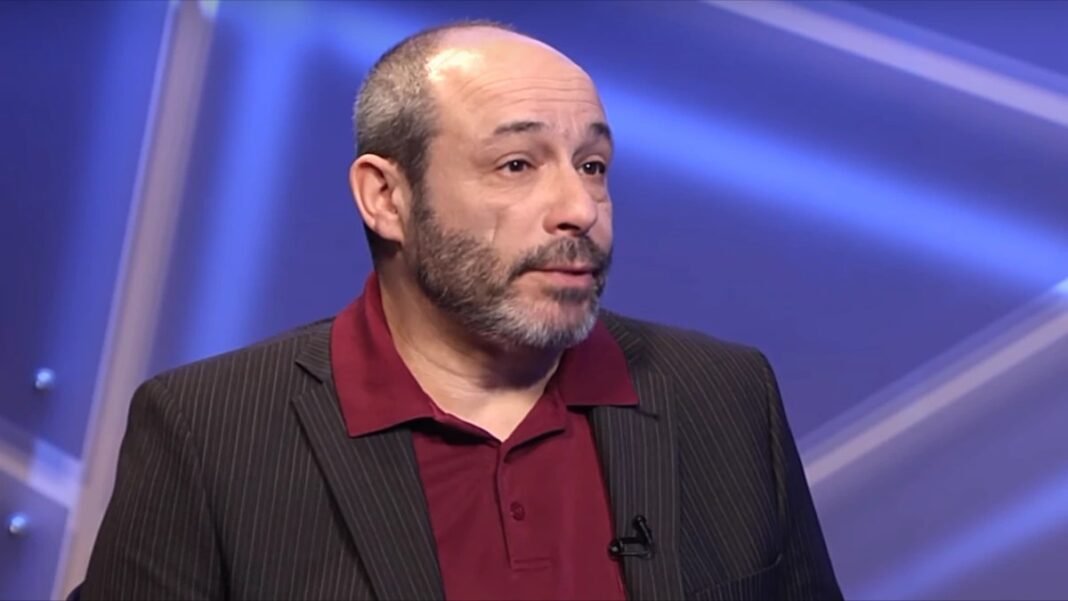
Democratic victories in the U.S. midterm elections have raised expectations among Armenian lobbying organizations seeking a tougher Washington policy toward Azerbaijan, but the diaspora’s influence over Yerevan’s decisions remains limited, journalist and political commentator Vadim Dubnov said.
Prime Minister Nikol Pashinyan is likely to continue putting Armenia’s domestic political interests first, Dubnov said in the Novosti Kavkaza program.
The discussion focused in part on the Armenian National Committee of America, or ANCA, which stepped up its calls for action against Azerbaijan after the election. The group had endorsed Abdul El-Sayed, who won Michigan’s open U.S. Senate seat on Nov. 3.
During the campaign, El-Sayed publicly backed ANCA and opposed U.S. military aid to Azerbaijan. After his victory, the Democrat reiterated that he would support what he described as the Armenian people’s security, dignity and right to self-determination.
ANCA Sees an Opening After the Election
ANCA is seeking tighter restrictions on U.S. assistance to Baku, the release of Armenian detainees held in Azerbaijan and the return of Armenians to Karabakh. It has also raised questions involving Armenia’s security and Armenian cultural heritage.
Dubnov said such positions should be distinguished from the actual ability of individual U.S. lawmakers to shape regional policy. Support for diaspora demands by particular politicians, he said, does not mean those demands will automatically become official U.S. policy.
Democrats won control of both chambers of Congress in the midterms, giving them greater capacity to scrutinize the Trump administration’s policies, including military assistance and the Section 907 waiver involving Azerbaijan. But the executive branch will continue to play the central role in foreign policy.
Diaspora Influence May Be Overstated
Dubnov did not dismiss ANCA’s political weight in the United States. The organization maintains relationships with lawmakers, participates in election campaigns and promotes its initiatives in Congress.
He argued, however, that its ability to determine Armenia’s own policy is considerably more limited than is often assumed. Armenian diaspora groups helped finance numerous projects after the country gained independence, but that support did not always translate into control over political decisions in Yerevan.
Dubnov also noted that the many organizations making up the Armenian diaspora do not share a single position. They may unite around certain issues involving Karabakh or criticism of Pashinyan, he said, but that does not amount to a common practical strategy.
Demands that fail to account for the political situation on the ground may help mobilize diaspora communities, Dubnov said, without necessarily changing events in the South Caucasus.
Why Pashinyan Is Unlikely to Follow ANCA
Dubnov described the principal tension as one between the agenda of Armenian organizations abroad and the priorities of Armenia’s current government.
Pashinyan has previously said that the diaspora cannot act as a mentor to the Republic of Armenia and that Yerevan should not dictate the diaspora’s agenda. Dubnov said a new balance of power in Congress was unlikely to change that position.
In his assessment, Pashinyan manages relations with foreign partners primarily through the lens of retaining control over Armenia’s domestic political environment. Relations with Baku, Tbilisi and Ankara have more immediate consequences for the Armenian government than statements by individual American legislators.
Pashinyan may use foreign-policy opportunities to strengthen his position, Dubnov said, but he has no interest in allowing diaspora groups to determine Armenia’s state policy.
TRIPP Has Not Removed Baku-Yerevan Disagreements
The discussion also covered the Trump Route for International Peace and Prosperity, or TRIPP, which is envisioned as an important part of a new regional transportation system.
Dubnov remained skeptical that it would begin operating quickly. Progress on framework documents and technical preparations does not mean Azerbaijan and Armenia have settled the fundamental issues, he said, pointing to the lack of final clarity over border and customs controls along the route.
Dubnov said Yerevan was trying to present TRIPP and the signing of a peace agreement with Azerbaijan as separate processes. That approach could give Pashinyan more room to negotiate with Washington without linking every stage of the transport project to Baku’s approval.
He cautioned, however, that separating the two tracks would not automatically resolve the remaining disputes between Azerbaijan and Armenia.
Why a Final Peace Agreement May Take Time
Dubnov expressed doubt that a final peace agreement would be signed soon. Baku’s demands, including a change to Armenia’s Constitution, remain part of a complicated political calculation, he said.
He did not expect constitutional changes in Armenia to happen quickly because the process involves both procedural requirements and serious domestic political risks for Pashinyan. Dubnov also questioned whether amending the Constitution would by itself guarantee that a peace agreement would be signed.
In that context, he described the peace process as not only a bilateral diplomatic task but also part of Armenia’s internal political contest.
Pashinyan Benefits From a Weak Opposition
Despite criticizing some of the Armenian prime minister’s decisions, Dubnov said Pashinyan had used limited political resources effectively.
After Armenia’s defeat in the 2020 war, Pashinyan reshaped the political agenda in ways that left his opponents in a weaker position, Dubnov said. Armenia’s opposition faces difficulties because of its own political record and because the prime minister has forced it to compete on unfavorable terms.
Pressure from the diaspora does not necessarily weaken Pashinyan, he added. The prime minister may instead use disagreements with Armenian organizations abroad to reinforce his position as the leader authorized to make decisions on behalf of the state.
What the U.S. Elections Could Actually Change
Dubnov urged observers not to overstate the effect of the midterms on U.S. policy toward the South Caucasus. Democratic control of Congress could make it harder for President Donald Trump to advance some initiatives, particularly those involving budget decisions, he said.
Still, he did not expect ANCA’s demands to become an automatic foreign-policy program for Washington. Even major shifts in the U.S. political system do not eliminate the need to account for the interests of states in the region, he said.
For Pashinyan, relations with Azerbaijan and other neighboring countries, as well as Armenia’s domestic political situation, will remain the main priorities. Dubnov’s central conclusion was that the interests of the Armenian diaspora and Armenia’s government can diverge sharply, and support for ANCA among U.S. politicians does not mean Yerevan will abandon its own peace agenda.
Source: Vesti Baku.