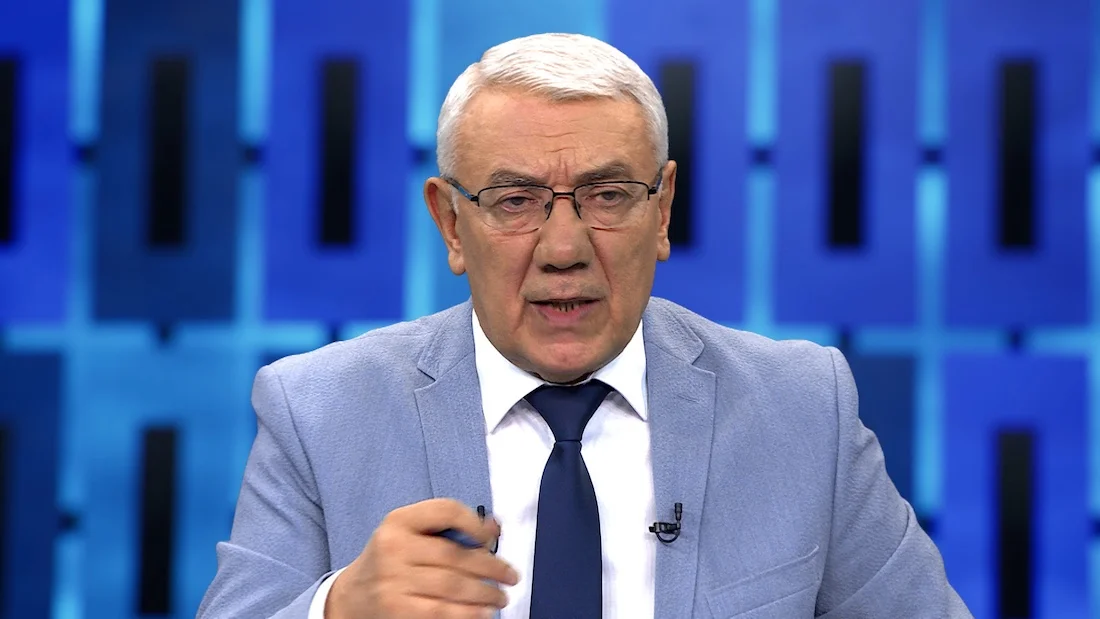
Democratic control of the U.S. Congress will not create serious problems for Azerbaijan despite an expected increase in Armenian lobbying activity, Azerbaijani political analyst Eldar Namazov said.
Baku has faced periods of significantly stronger pro-Armenian influence in Washington and still achieved its principal national objectives, Namazov said in a 90-minute interview with the Novosti Kavkaza YouTube channel.
The discussion covered the consequences of the U.S. midterm elections, the outlook for President Donald Trump’s administration, tensions involving Iran, Azerbaijan’s relations with Turkey and the future of the Trump Route for International Peace and Prosperity, or TRIPP.
Democrats won control of both the Senate and the House of Representatives in the Nov. 3 elections. The Associated Press said it called the Senate at 11:36 p.m. Eastern time on election night and the House at 1:24 a.m. Wednesday.
Why Voters Turned Away From Trump
Namazov said the results reflected deeper changes in American society rather than a routine transfer of congressional seats between the two major parties.
In his assessment, U.S. politics has increasingly been shaped by two opposing ideological currents. Left-progressive forces have gained strength within the Democratic Party, while the MAGA movement has come to dominate the Republican Party, pushing traditional centrists in both parties into the background.
Namazov interpreted the Democrats’ defeat in 2024 and their current success as successive voter reactions against different political extremes. He cautioned that the Democratic victory did not necessarily amount to an endorsement of the party’s entire ideological agenda. A substantial share of voters, he said, were primarily casting ballots against Trump’s policies.
Sharp political swings could continue if centrists fail to regain influence within both parties, he added.
What Will Change in Washington
The new balance of power will place additional constraints on the Trump administration, Namazov said. Democrats will be able to shape budget decisions, control congressional committees and influence the confirmation of some presidential nominees, while Trump will retain broad executive powers, including the veto.
Namazov said Trump would probably seek a major foreign-policy achievement during the remaining two years of his term. He identified Russia’s war against Ukraine and the confrontation with Iran as two of the administration’s most important challenges.
The White House will not want the term to end without a significant international result, he said, although intensified domestic political conflict could restrict the administration’s options and divert resources from foreign policy.
Why Baku Is Not Alarmed by the Armenian Lobby
Namazov urged observers not to overstate the ability of Armenian lobbying organizations to affect Azerbaijan after the election.
He noted that influential U.S. lawmakers, including members of Congress and congressional committee leaders, have taken pro-Armenian positions in previous years. In his view, that did not prevent Azerbaijan from restoring control over Karabakh or carrying out its main strategic objectives.
Armenian organizations are likely to intensify their work in Congress, issue public statements and seek new restrictions on Baku, Namazov said. He was skeptical, however, that they could substantially alter the executive branch’s practical decisions.
He criticized demands advanced by the Armenian National Committee of America, including calls for the release of Armenian detainees held in Azerbaijan and the withdrawal of Azerbaijani forces from Karabakh. That agenda, he said, does not reflect current realities and is not aligned with the political interests of Armenia’s present government.
Namazov also pointed to the continued economic interests of U.S. companies in Azerbaijan, particularly in the energy sector. Those ties, he said, provide an additional basis for cooperation regardless of the positions taken by individual lobby groups.
Section 907 Is Unlikely to Disappear Soon
Namazov said he did not expect the immediate, permanent repeal of Section 907 of the U.S. Freedom Support Act, which restricts certain forms of assistance to Azerbaijan.
Legislative restrictions can remain in place for decades after the circumstances that produced them have changed, he said. For Baku, practical relations with Washington are more important than the provision’s formal legal status.
Namazov said the United States could continue temporarily waiving the restriction, but he considered a definitive repeal unlikely under the newly elected Congress.
Why Namazov Expects TRIPP to Continue
Namazov said TRIPP and transportation links between mainland Azerbaijan and Nakhchivan through Armenia serve the interests of Baku and Washington as well as other major international participants seeking to expand the Middle Corridor.
He therefore did not expect the shift in congressional control to end the transport initiative. Some technical or financial mechanisms could change, he said, but the strategic interest in the route would remain.
Private investment could also reduce the project’s dependence on decisions by Congress, Namazov said. Azerbaijan’s priority is a direct connection with Nakhchivan and onward to Turkey, and alternative routes through Armenia should not unnecessarily add distance or cost, he added.
Turkey-Azerbaijan Tensions Are Easing
Namazov said the recent tensions between Baku and Ankara had begun to subside and that Turkey’s leadership was taking steps to restore the previous atmosphere of cooperation.
He pointed to Turkish President Recep Tayyip Erdogan’s announcement that he intended to visit Azerbaijan on Nov. 8 for Victory Day. Erdogan made the announcement while speaking to reporters after a trip to South Korea; the plan was also confirmed in current Reuters reporting.
Namazov said the episode was a reminder that even strategic allies contain political groups with different views of bilateral relations. Some Turkish political and public figures, he argued, do not fully account for Azerbaijan’s importance to Turkey’s own strategic interests.
He expected Ankara to take steps to prevent similar disagreements from disrupting cooperation in the future. Azerbaijan, meanwhile, has built an international network that allows it to retain independence in its decisions, he said.
Iran Risks After the Republican Defeat
Namazov said a possible escalation involving Iran was among the most concerning international consequences of the election.
Until the new Congress takes office, the Trump administration retains some political room for independent foreign-policy action, he said. The White House could view Iran as an arena in which to demonstrate results after the Republicans’ defeat, although Namazov stressed that renewed strikes were far from inevitable.
Continued economic pressure on Tehran could prove more effective for Washington than another large military operation, he said, arguing that airstrikes alone would be unlikely to produce a change in Iran’s political system.
Any renewed escalation along Azerbaijan’s southern border would create additional risks for Baku and would require close attention, Namazov said.
Armenia’s Peace Policy Is Unlikely to Reverse
Namazov also did not expect Armenia to make a fundamental policy shift after the U.S. elections. Prime Minister Nikol Pashinyan’s government understands the need to normalize relations with Azerbaijan and Turkey, he said.
Some Armenian political groups could interpret the Democratic victory as an opportunity to pressure Yerevan and revisit existing understandings, but Namazov called those expectations unfounded.
He cited statements by Armenian officials about preparing a new Constitution and continuing the peace process. A return to confrontation would expose Armenia to additional political and economic risks, while normalization would open access to new regional transport links, he said.
Namazov concluded that the election would not force Azerbaijan to reconsider the principal direction of its foreign policy. Baku retains enough autonomy to work with Washington, strengthen ties with Ankara and advance the peace process with Yerevan regardless of the domestic political contest in the United States, he said.
Source: Vesti Baku.